The short version
- Set a home court. It anchors your local ladder.
- Start slightly below your ego, not above it.
- Play friendlies to test your level; play competitions to prove it.
- Log every result. A rating needs results to work with.
- Review one thing from your video at a time. More data is not the goal.
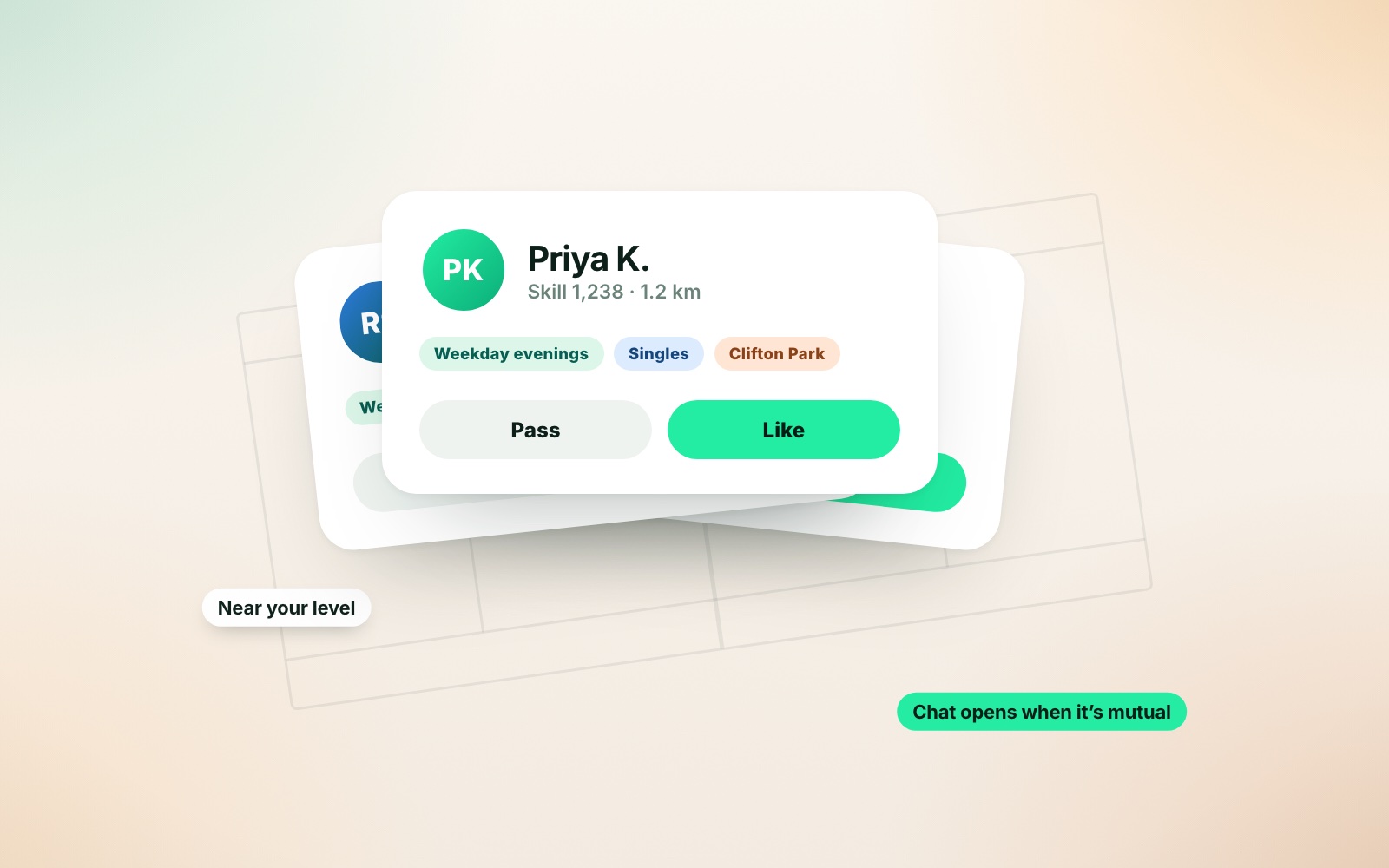
The hardest part of local tennis is not the tennis. It is the first message. Who do I ask? Are they any good? Will I be wasting their time? Most players solve this by asking the same three people they have always asked, which is why their level stops moving.
If you want to find your level in tennis, a ladder gives you a better starting point than a guess. Here is how to use one.
Why “what level am I?” is hard to answer
Labels like beginner, improver and intermediate are elastic. One club’s intermediate is another’s team player. Self-assessment bends too: people who took lessons as juniors rate themselves on how their strokes look, and people who learned by playing rate themselves on who they beat.
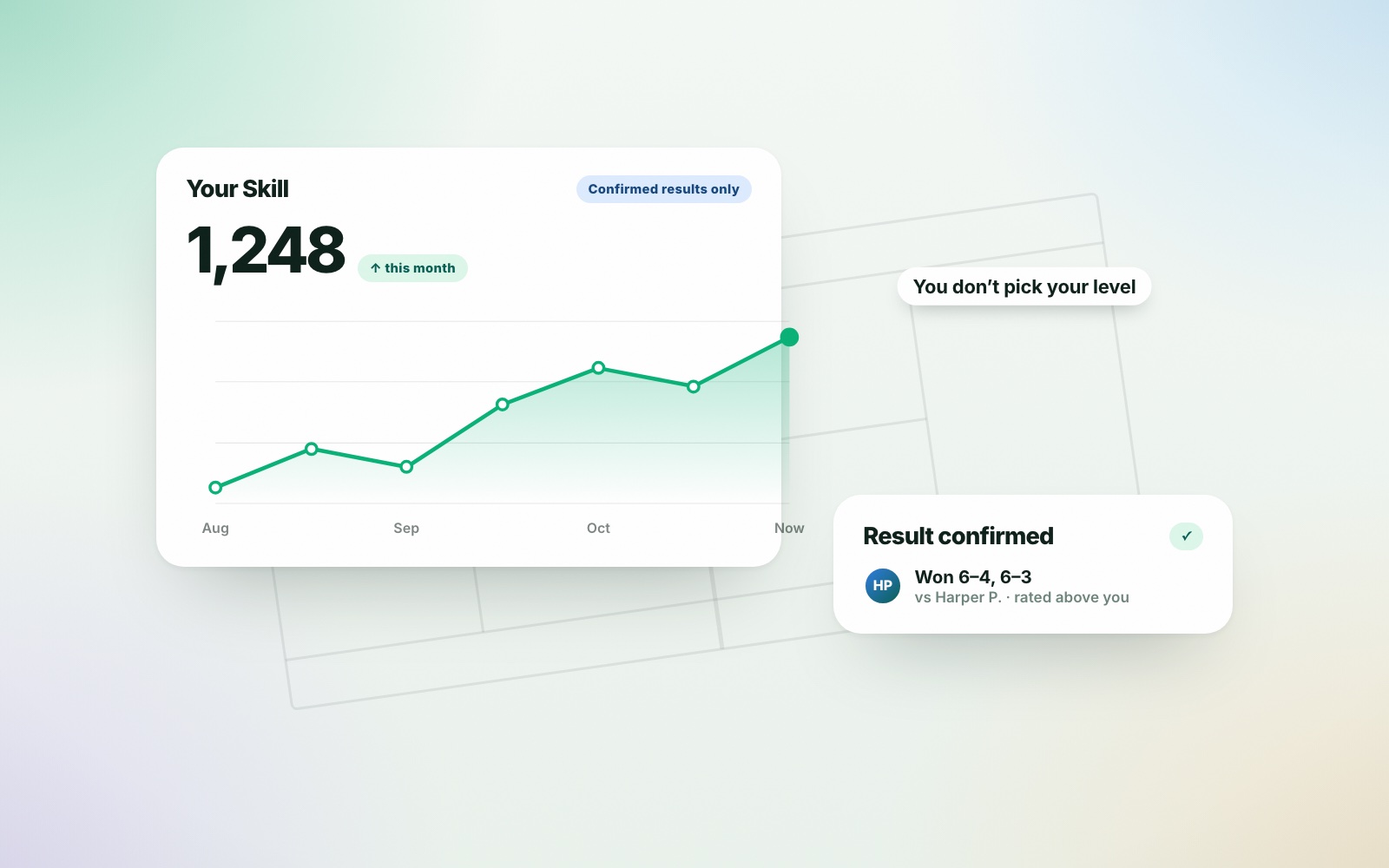
The only measure that travels is results against known opposition. That is what a rating is for, and it is covered in tennis ratings explained.
1. Set your home court
Your home court is the anchor for everything local. It decides which court ladder you appear on, which competitions are closest and which players you are most likely to run into.
Pick the court you really play at, not the one you wish you played at. If you split your time, pick the one you can get to on a normal week. If you do not have one yet, start with finding tennis courts near you.
2. Look at the ladder, not the group chat
The group chat tells you who is available. The ladder tells you who is at your level. Those are different questions.
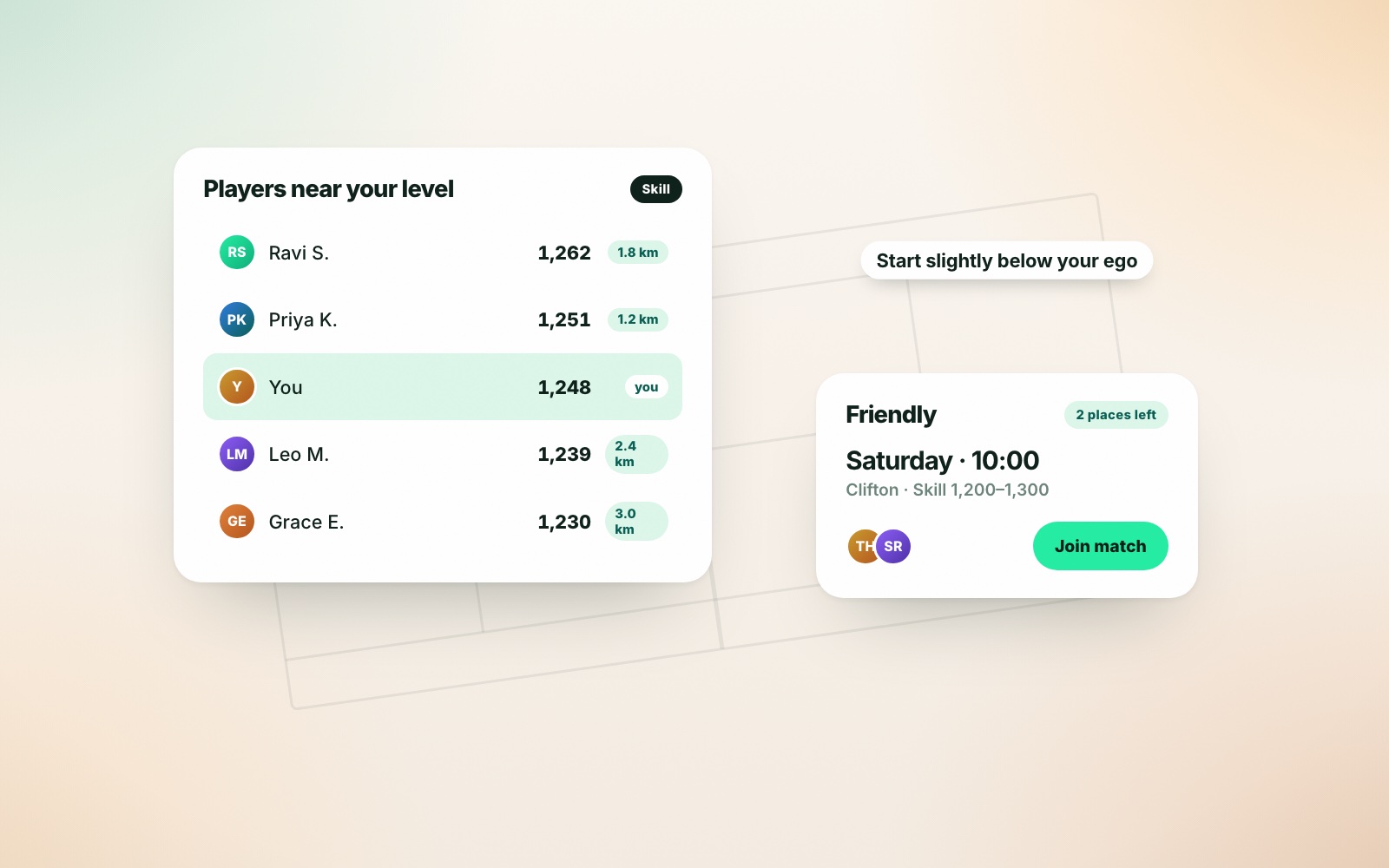
Look at the players around your rating. Are the names familiar? Have you played them? If the answer is no, that is the point. You have found the next circle of players.
3. Start slightly below your ego
Everyone thinks they are one level higher than they are. That is normal. The mistake is entering a competition two levels above, losing three matches in straight sets and concluding that competitive tennis is not for you.
Start where you can be competitive. Win a few. Move up. The rating will correct itself faster than your pride will.
4. Use friendlies to test the water
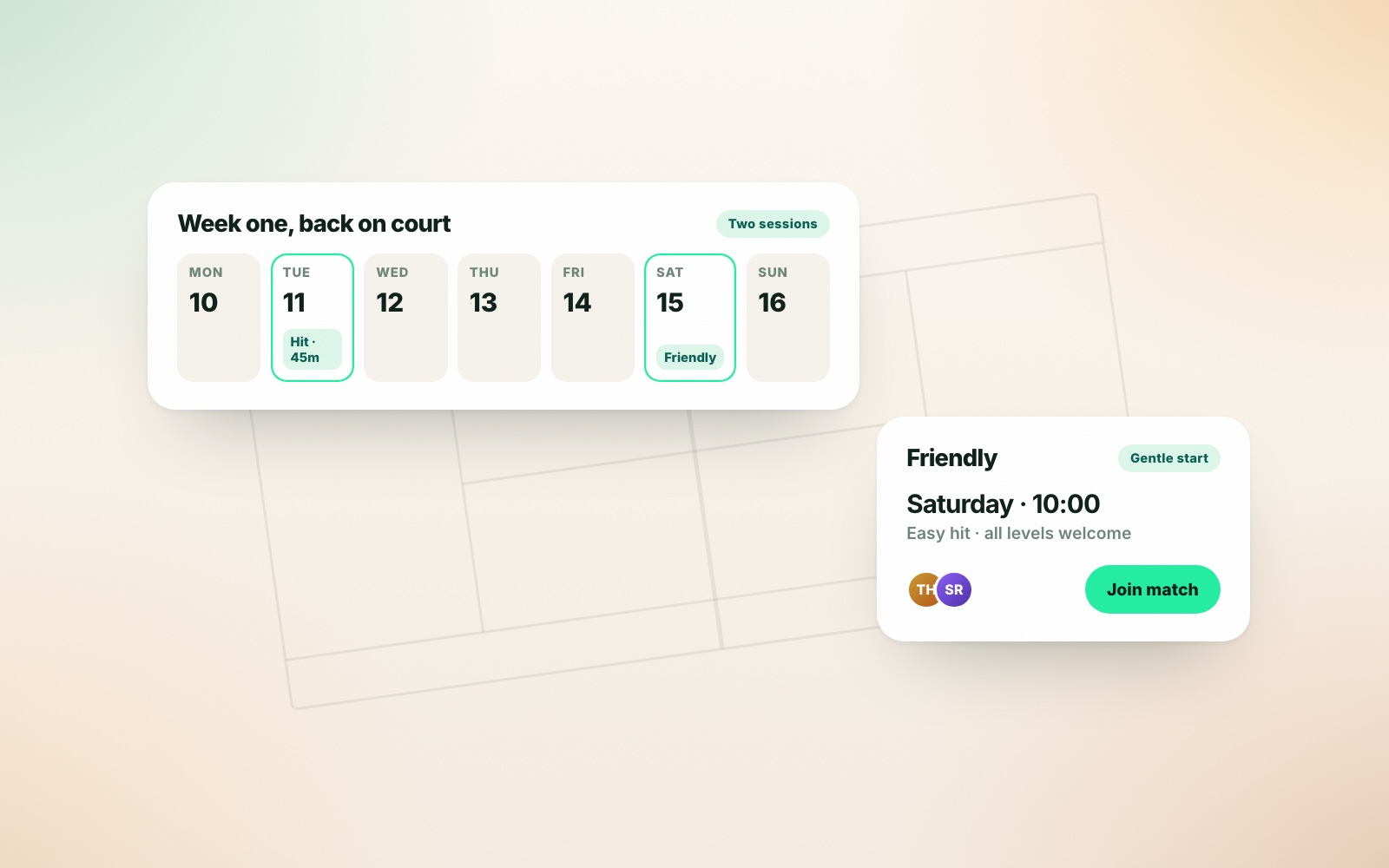
Friendlies are the low-stakes version. Post one with a skill range, pick a court and a time, and see who joins. It is a way to meet players without committing to a league or a tournament. There is a guide to arranging a friendly if you have not done it before.
If you are returning after a break, this is where to start. Your rating begins in the same place as everyone else’s and adjusts quickly over your first few matches.
5. Log every result
A rating only works if the results go in. That means logging the matches you want to count and confirming the score when your opponent logs it.
On ContactFrame a result that nobody disputes is confirmed automatically after 24 hours, so there is no reason to leave a match unrecorded.
6. Step up to a league when the friendlies feel comfortable
A league puts you in a division with players at your level for a season. It is the quickest way to find out where you stand, because everyone in the table has played the same people. If the idea is new, read how to start playing competitive tennis as an adult.
7. Review one thing
Once you have a few matches behind you, film one. The numbers start to say something. Maybe few of your first serves go in. Maybe your backhand breaks down under pace. Maybe you win the long rallies and lose the short ones.
Pick one. Not five. One. Work on it for a month, then look again. That is the difference between playing a lot and getting better. How to analyse your own match video shows what to look for.
What about playing up?
Playing up is useful occasionally. It shows you the speed and the patterns you need. But if every match is a step too far, you stop learning and start surviving. The best development is usually a mix: most matches at your level, a few against players slightly above it.
The first match is the hardest
After that, it is just a game. Set your court, find a name, send a message. The Ladder does the rest.
Common questions
How do I know what level of tennis player I am?
Play rated matches and let the results tell you. Self-assessed labels like intermediate mean different things to different people, while a handful of confirmed results against players of known level places you quickly.
What tennis level should I pick if I am unsure?
Take the lower of the two you are considering. A run of close matches teaches you more than a run of heavy defeats, and a results-based rating will move you up soon enough.
How many matches does it take to find my level?
A handful is enough for a rough picture. On ContactFrame your rating is marked provisional at first and moves quickly in those early matches so it settles fast.
Is it worth playing people better than me?
Occasionally, yes. It shows you the pace and patterns you need next. But most of your matches should be close ones, because that is where you learn to solve problems.
How do I find tennis players at my level near me?
Use a ladder that sorts local players by a results-based rating. On ContactFrame you set a home court and see the players, leagues and friendlies around it at your level.