The short version
- Topspin comes from the racket travelling upwards through contact at speed, not from flicking the wrist.
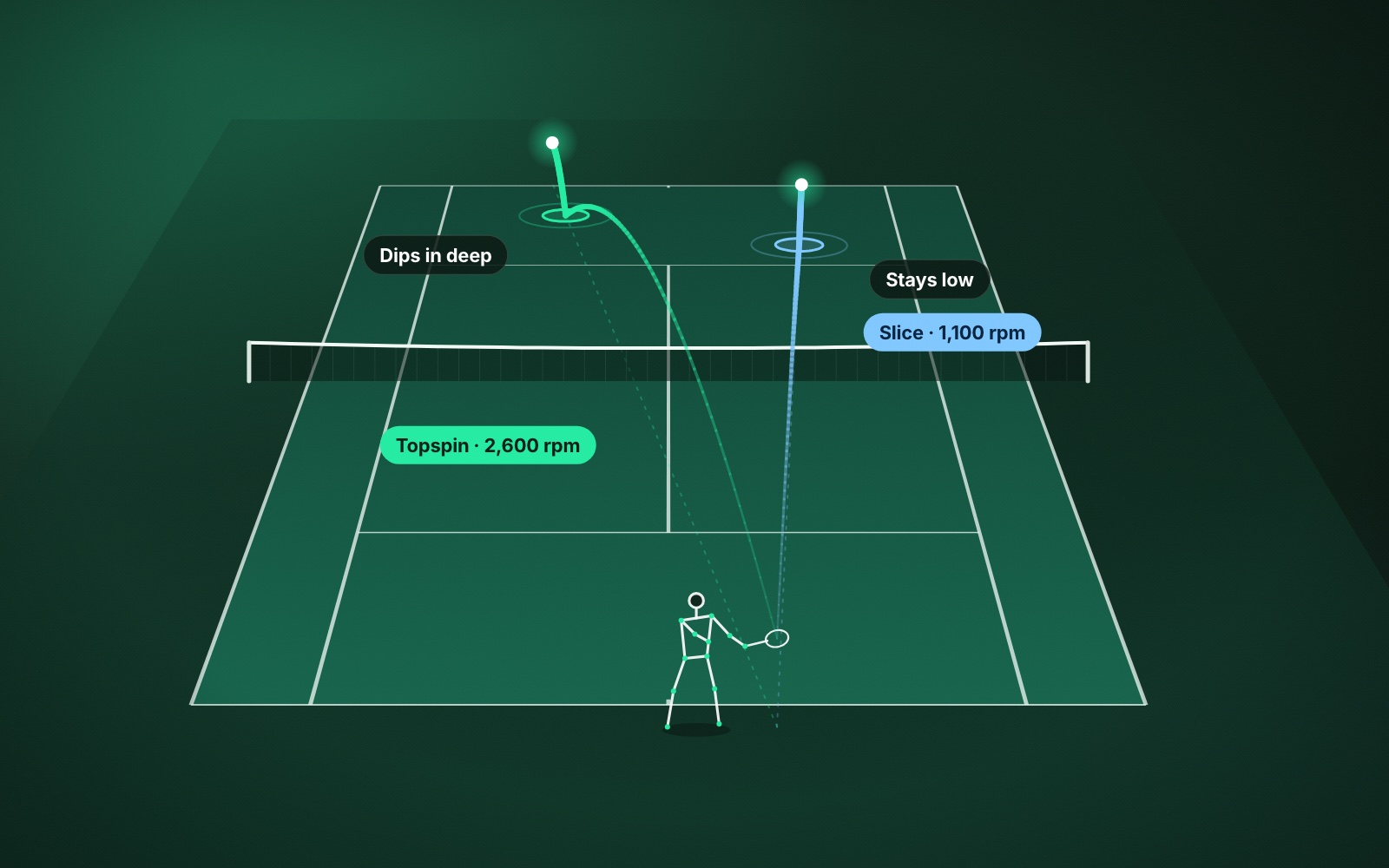
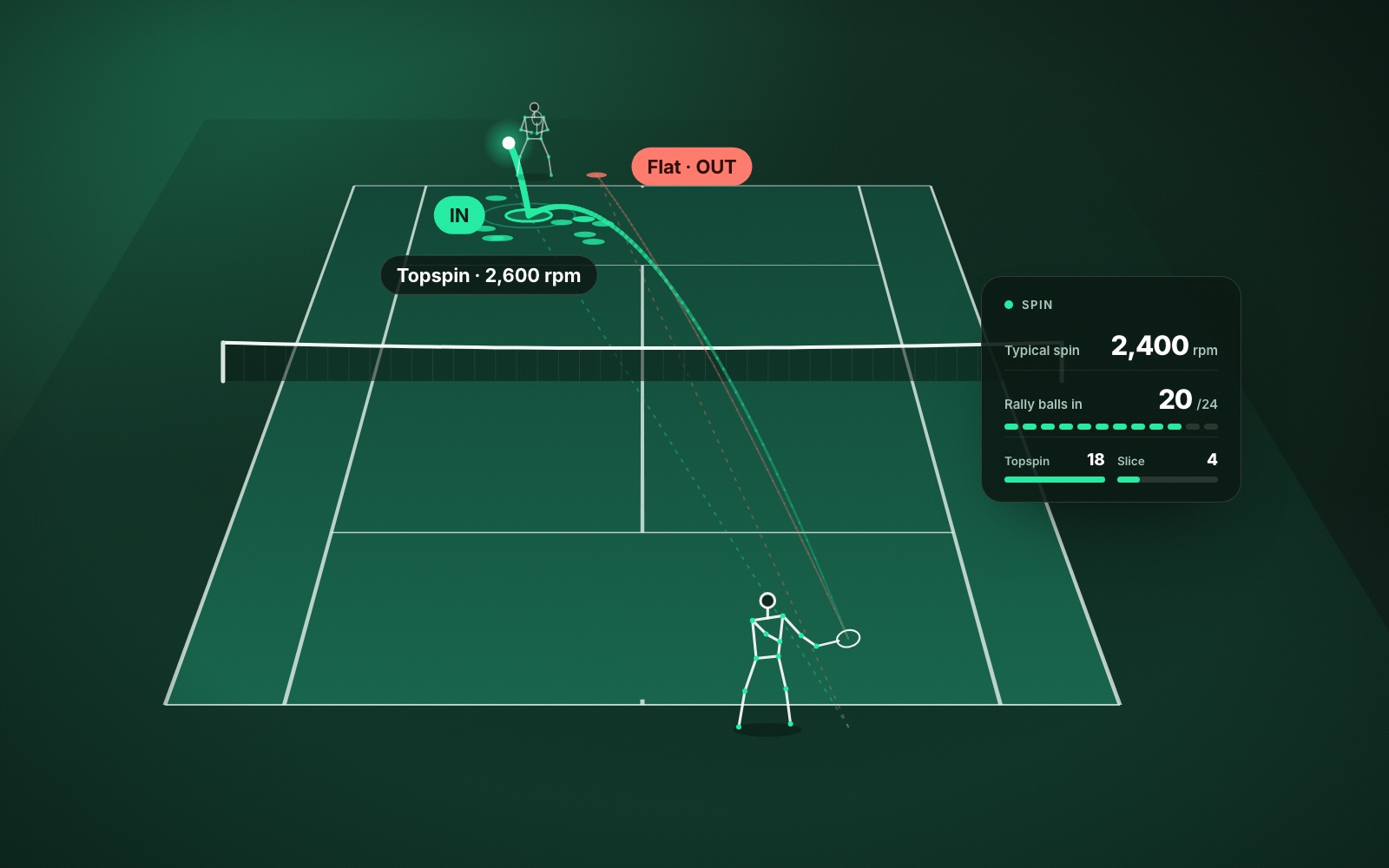
- ContactFrame measures spin in rpm and labels it topspin or slice, shown only when the reading is solid.
- Read spin alongside speed, depth and how many landed in. More spin with a short, slow ball is not progress.
- Set the session focus to Topspin and compare your own sessions, not someone else’s numbers.
- Expect four to eight weeks before extra spin survives in a match.
You have been told to “brush up the back of the ball” for years. You do it, or you think you do, and the ball still sails long when you swing hard. The trouble with learning how to hit more topspin is that spin is invisible from where you stand. You see the ball leave, you see roughly where it lands, and you guess the rest.
Measured spin removes the guessing. Once topspin is a number in rpm, you can try a change, hit twenty balls, and know whether it did anything.
Why you cannot feel how much topspin you hit
Effort and spin are easy to confuse. A big, muscular swing feels spinny. If the racket travelled mostly forwards, though, the ball came off flat, however hard you worked.
The reverse happens too. Players trying for spin often flick the wrist over the ball at the last moment. That feels like a lot of brush, but it tends to produce a weak, short ball and an inconsistent contact. Real topspin comes from the whole racket path: starting below the ball and rising through it quickly, with the legs and body driving the swing.
What topspin buys you is margin. A ball with spin dips, so you can aim a metre or more over the net and still land it inside the baseline. That is why it matters more to a club player than any amount of extra pace.
How to film a topspin session
A Ball machine session is ideal because every feed is the same, so any change in the numbers comes from you. A Practice session with a steady partner works too. Choose Topspin as the session focus in ContactFrame.
Set the phone in landscape on a tripod, two to three metres behind the baseline, at about net height or higher, with the whole court in the frame. Keep the sun out of the lens and leave the phone alone once the four corners are lined up. Good light and a steady camera matter for spin in particular, because ContactFrame only shows rpm when it is confident in the reading.
Hit at least forty balls. With a spin reading left blank on some shots, you want plenty of solid ones to average.
The topspin numbers to read
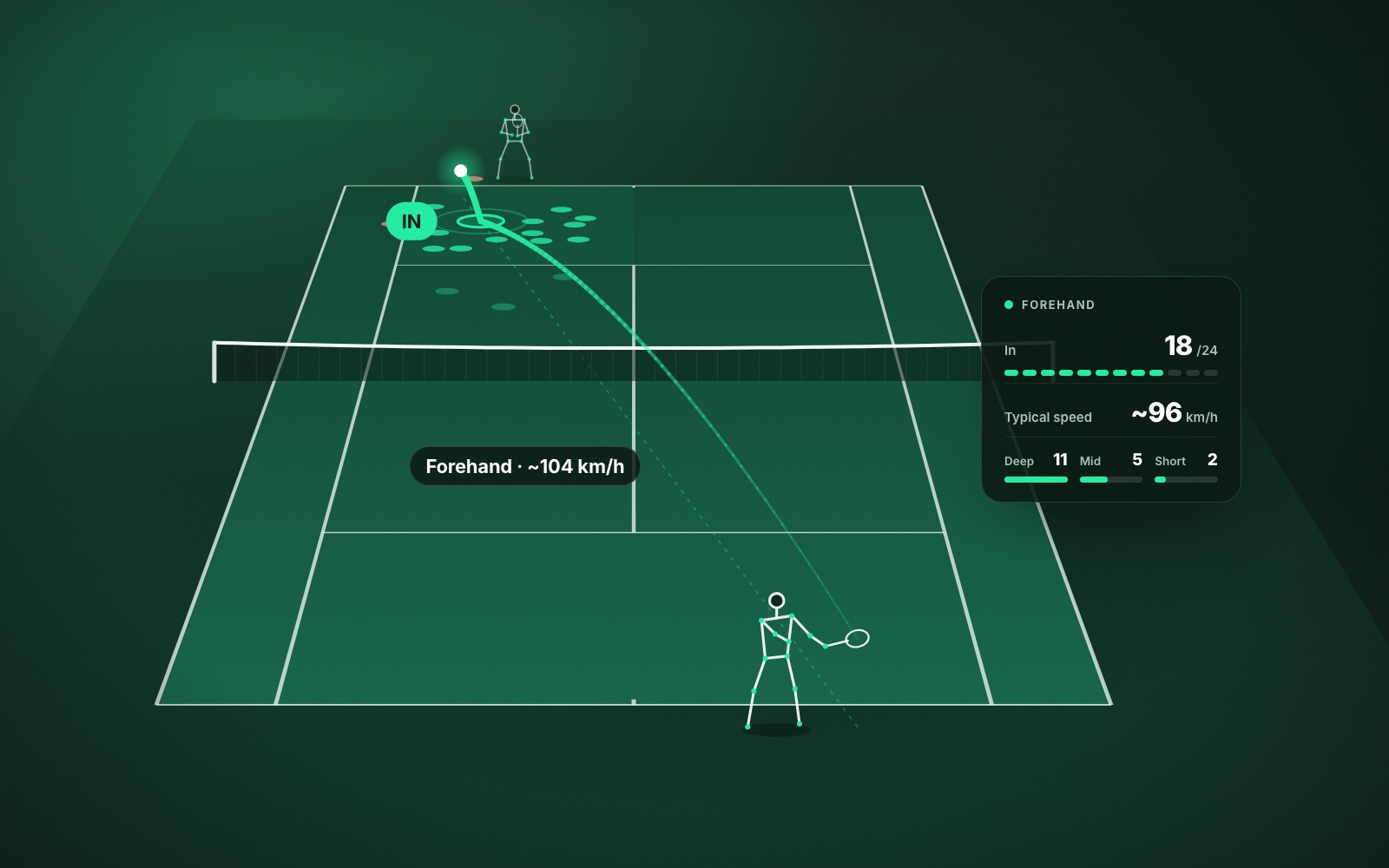
- Spin by shot type. ContactFrame shows spin for forehands and backhands separately. Most players have a clear gap between the two.
- Speed. Check that your speed has not collapsed as spin went up. A small drop is expected and fine.
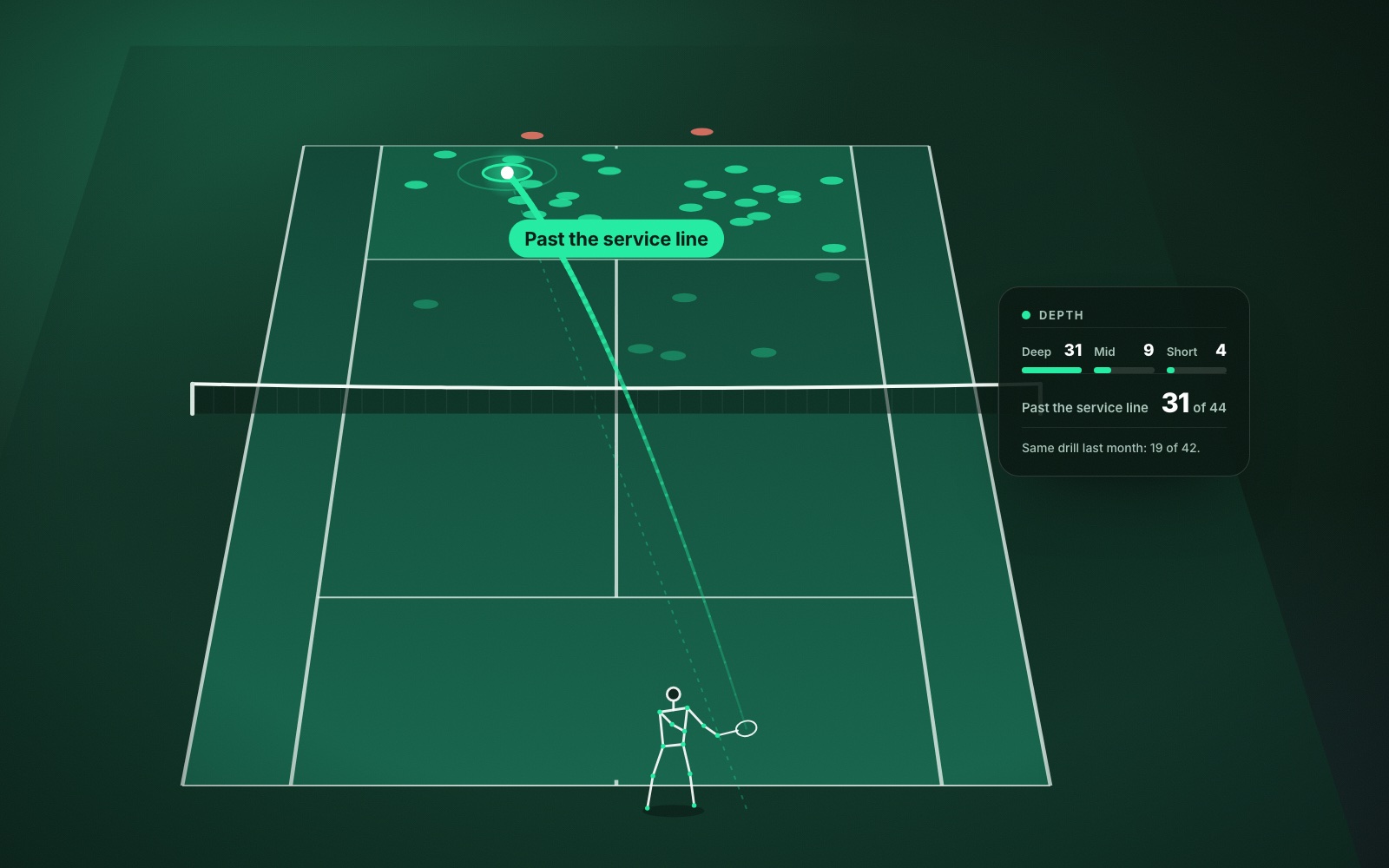
- Where the ball bounced. This is the one people forget. Heavy spin on a ball that lands on the service line is easy to attack. Depth has to come with it.
- How many landed in. The reason for all of this. More topspin should mean fewer balls long.
Say your forehands average 1,100 rpm at 98 km/h and 62% land in, with most misses long. After a month of the drills below you might see 1,500 rpm at 94 km/h with 75% in. That is a better forehand, even though it is slightly slower. These are example figures. Your own starting point is the only benchmark that matters, and tennis spin explained gives more background on rpm.
Three drills to hit more topspin
1. Service-box rallies with full spin
Rally with a partner using only the service boxes. The court is so short that the only way to swing properly and keep the ball in is to spin it. Swing low to high with a loose arm and let the ball loop over the net.
The number to watch: spin. This is where you teach your arm the upward path. Expect high rpm at low speed, which is fine for this drill. Ten minutes at the start of every session is enough.
2. Over the rope
From the baseline, rally crosscourt aiming to clear the net by well over a metre. If you can, tie a rope or string above the net between two posts or tripods as a visual guide. If you cannot, pick a point on the back fence and aim for it. The ball has to go high and still land in, which only works with topspin.
The numbers to watch: spin and bounce positions. You want rpm up from your baseline session and the bounce marks landing deep, between the service line and the baseline. If the balls are high and long, you need a steeper upward swing, not a gentler one.
3. Same speed, more spin
Off the ball machine, hit two sets of twenty forehands. In the first, hit your normal ball. In the second, try to keep the same pace but start the racket lower and finish higher. Use your legs: bend before the swing and push up through it.
The numbers to watch: spin and speed for each set. The goal is the second set showing more rpm with speed held within a few km/h of the first. That combination means racket speed went up, which is the real source of heavy topspin. If speed fell sharply, you traded pace for spin instead of adding to the swing.
Topspin on the backhand
Everything above applies to the backhand, with one difference: the gap in spin between the wings is normal, and closing it completely is not the goal. Two-handers generate topspin by letting the top hand drive up through the ball. One-handers need an early turn and contact well in front. Run drill one on the backhand side first. For the rest of the stroke, see how to improve your backhand.
On the Pro plan, shot mechanics score parts of the swing, including kinetic chain, and show a stick-figure replay of each contact. If the Next fix points to your legs or your preparation, do that drill first. Spin produced by the arm alone has a low ceiling.
How to re-measure and how long it takes
Repeat the same ball machine set, with the Topspin focus, every two weeks. Trends in ContactFrame will show rpm, speed and in-count across sessions.
In drills, spin can rise within two or three sessions. Holding it in a match is slower, because under pressure you go back to the old swing. Four to eight weeks is a fair expectation. Record a match once the practice numbers have settled and check that the spin has come with you. If it has, you should also see longer rallies, which ties in with becoming more consistent.
What the video cannot tell you
ContactFrame does not analyse your grip or the angle of the racket face. Grip has a large effect on how easily you can produce topspin, and if yours limits you, drills will only get you so far. Strings and racket set-up play a part as well, and the app knows nothing about them.
If your rpm will not move after a month of regular practice, have a coach look at your grip and swing path in person. And do not force spin with your wrist or forearm to chase a number. If your arm aches after a session, ease off and get advice.
Spin readings are part of the free plan. See how The Lab works.
Common questions
How do I hit more topspin on my forehand?
Start the racket below the ball and swing upwards through contact with a relaxed, fast arm, finishing high. The steeper and faster the upward path, the more spin. Keep driving forwards as well, or the ball will land short.
Why is topspin important in tennis?
Topspin makes the ball dip, so you can aim higher over the net and still land it in. That gives you margin over the net and at the baseline. The ball also kicks up after the bounce, which is awkward for your opponent.
How much topspin should a club player hit?
It varies enormously with level, swing style and equipment, so there is no single target. As a rough guide, club topspin forehands tend to sit well below what professionals produce. The useful comparison is your own rpm from one month to the next.
Can a phone app measure topspin?
ContactFrame measures spin in rpm from a single phone video on a tripod behind the baseline and labels it as topspin or slice. It only shows spin when the reading is solid, so some shots will not have a figure.
Does more topspin mean less power?
To a point. For the same swing speed, more of your effort going into spin means a little less going into pace. Most club players gain more from the extra safety than they lose in speed, because more balls land in.
See your spin in rpm.
Set a Topspin focus, hit a basket, and find out how much the ball is really turning.
See The Lab