The short version
- Height and stability matter more than anything else. A full-height tripod with a secure phone clamp is the safe choice.
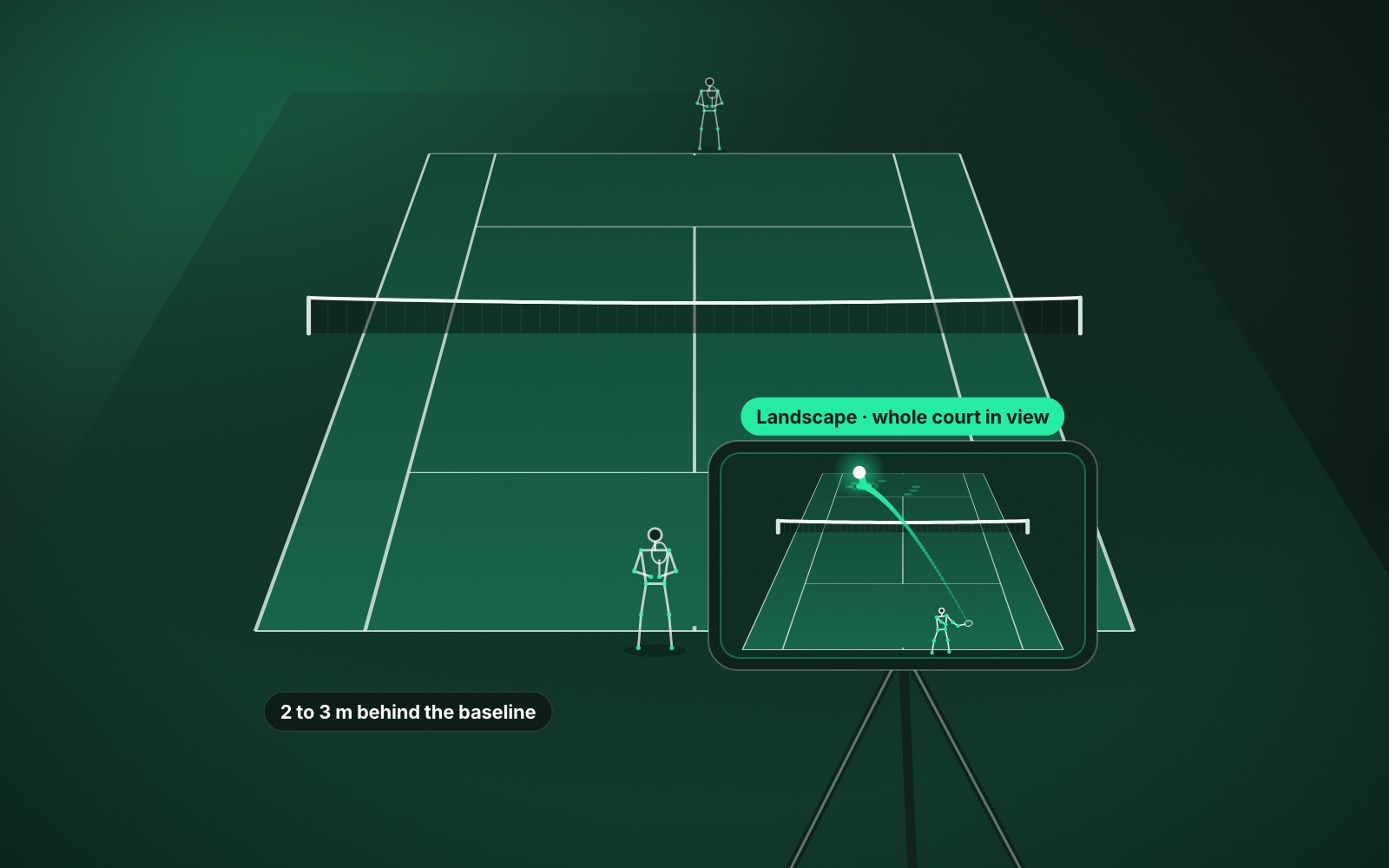
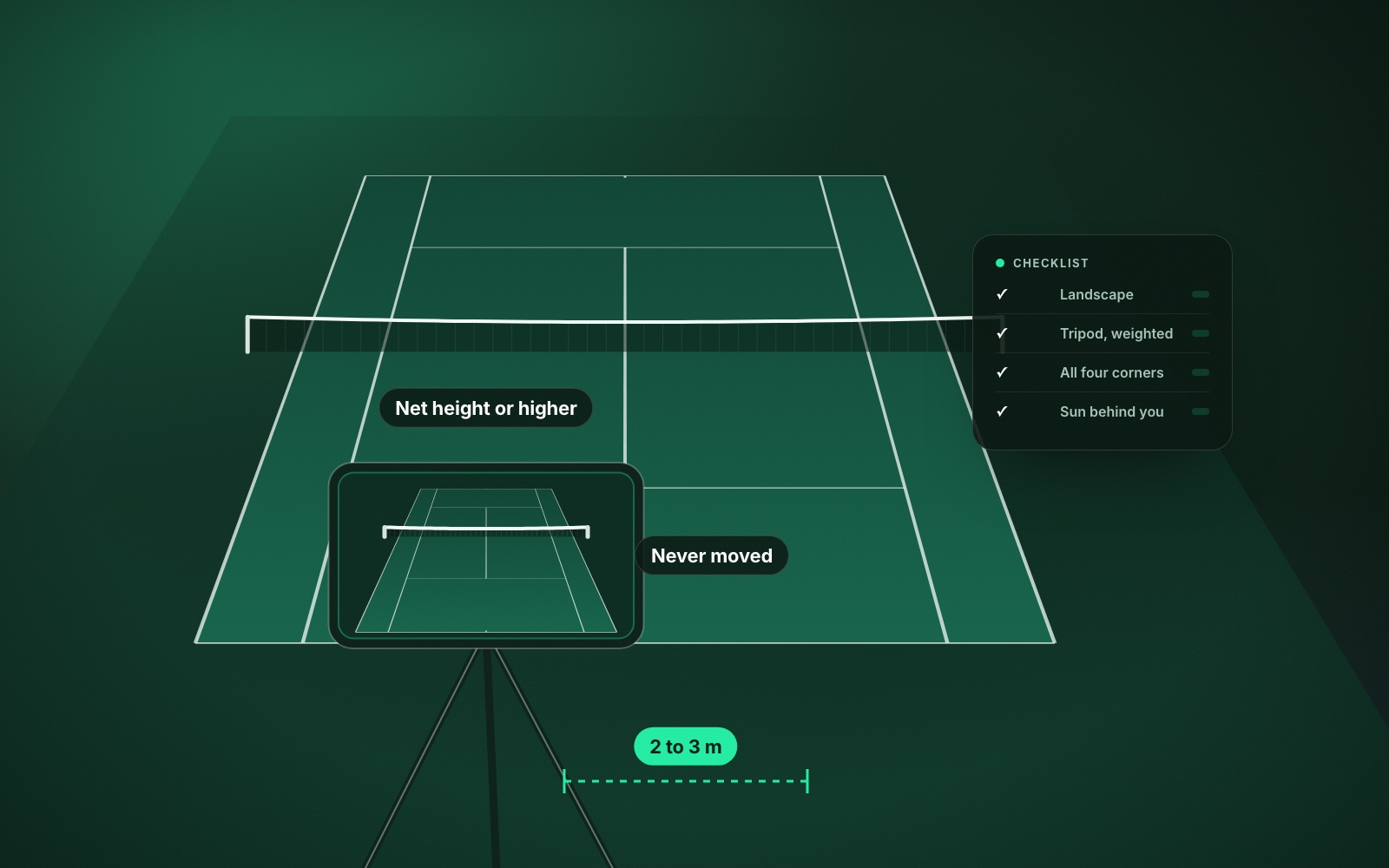
- Place the phone two to three metres behind the baseline, around net height or higher, in landscape, with the whole court in view.
- A fence mount is a good option on courts with little run-back, as long as the lens has a clear view.
- Never move the phone mid-session. Weigh the tripod down and keep it out of the playing area.
- Sort out battery, storage and notifications before you start, and avoid pointing the lens into the sun.
You prop your phone against a water bottle, play for an hour, and get home to find a video of the back fence and one corner of the service box. Or it fell over in the third game. The search for the best tripod for filming tennis usually starts right after an evening like that.
The kit is simple. What matters is the type of support, where you put it and a few phone settings. This guide goes through each by type, because the shape of the thing matters far more than the label on it. The positions given are the ones ContactFrame asks for when you film a session.
What a tennis filming setup has to do
Before choosing anything, be clear about the job. A setup for filming tennis has four requirements.
- See the whole court. Both baselines, both sidelines, all four corners.
- Stay still. For the whole session, in wind, with balls rolling past.
- Get high enough. Low cameras flatten the court and hide the far end behind the net.
- Last the session. Battery, storage and no interruptions.
If you are filming for analysis, the first two are strict. ContactFrame asks for the phone in landscape, on a tripod two to three metres behind the baseline, around net height or higher, with the whole court in view. You then line up the four corners of the court on screen. After that the phone must not move until the session ends, because everything it measures is tied to where those corners are.
The best tripod for filming tennis: what to look for
There are four broad types of support you will come across. Here is how each behaves on a tennis court.
Full-height tripod with a phone clamp
This is the default, and for most players the right answer. Look for these qualities:
- Height. It should bring the phone to net height at the very least, and comfortably above is better. Check the working height with the centre column down or only partly raised. A tripod is least stable at full stretch.
- A wide stance. Legs that spread well resist wind. Thin legs on a narrow base are the usual cause of a toppled phone.
- A hook under the centre. Hanging your bag from it adds weight low down, which is the cheapest stability upgrade there is.
- A proper phone clamp. Sprung or screw-tightened jaws that grip the phone firmly in landscape, with enough reach for your phone in its case.
- A head that locks. Once you have framed the court, the head should not creep downwards over an hour.
Light stand
Borrowed from photography, a light stand is a tall single pole on a folding base. It goes higher than most tripods and packs small. The trade-off is that it catches the wind more, so it needs weighting at the base. With a phone clamp on top and a bag over the legs, it gives an excellent high view.
Fence mount
A fence mount is a clamp or hook that holds the phone on the back fence. It suits courts where there is hardly any space behind the baseline, and it has two clear advantages: nothing stands on the ground to be knocked, and height is free.
It has conditions.
- The lens needs a clear view. Line it up with a gap in the mesh, or mount it above any windbreak netting. Wire across the lens ruins the picture.
- The fence has to be in the right place. It needs to sit centrally behind the court, far enough back that all four corners fit in the frame.
- The fence must be still. A loose panel that shakes when a ball hits it will shake the phone as well.
- Add a safety tether. A short lanyard from the phone or mount to the fence costs almost nothing and saves a screen.
Where the back fence is roughly two to three metres behind the baseline, a fence mount puts the phone in much the same position a tripod would, only higher.
Mini and flexible-leg tripods
These fit in a racket bag, but on their own they are too low for tennis: a camera at knee height cannot see the far baseline properly. Treat them as a backup for when there is something tall and solid to stand them on.
Where to put the phone for filming a tennis match
Good kit in the wrong place still gives a poor recording. Work through this in order.
- Go behind the centre of the baseline. A central view shows both sidelines evenly.
- Step back two to three metres. This gets the near baseline and corners into the frame, and keeps the tripod out of play.
- Raise it to net height or higher.
- Turn the phone to landscape. A court is wider than it is tall from this angle.
- Check all four corners are in view. Then tilt down slightly so you are not filming sky.
- Look at where the sun is. Do not point the lens into it. If the sun is low behind the far end, film from the other end.
- Lock everything and leave it.
There is a step-by-step version, including what to do on a cramped court, in how to record a tennis match on your phone.
One point of safety. A tripod behind the baseline is where a player might run. Tell whoever is at that end where it is, and never put it where it could be a hazard on a neighbouring court.
Phone settings that save a session
More recordings are lost to the phone than to the tripod.
- Battery. Start fully charged. For long sessions, a small power bank and a short cable, tucked so nothing dangles, removes the worry.
- Storage. Video is large. Clear space before you leave home, not at the court.
- Interruptions. Turn on do-not-disturb so a call does not cut the recording.
- Lens. Wipe it. A phone that has been in a pocket all day has a smeared lens, and it softens everything.
- Case and clamp. Check the clamp grips the case and is not pressing the side buttons.
What you get from a good setup
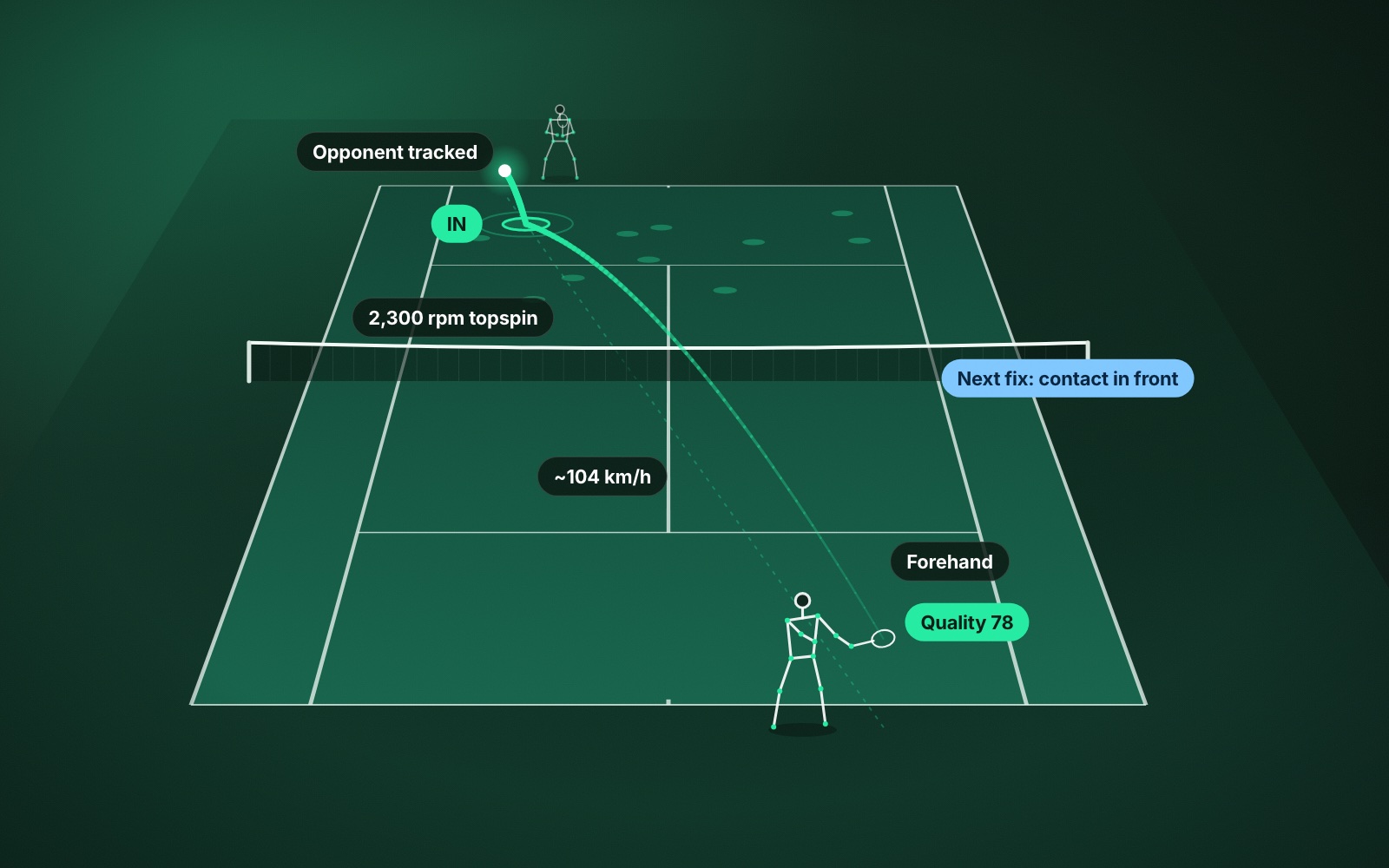
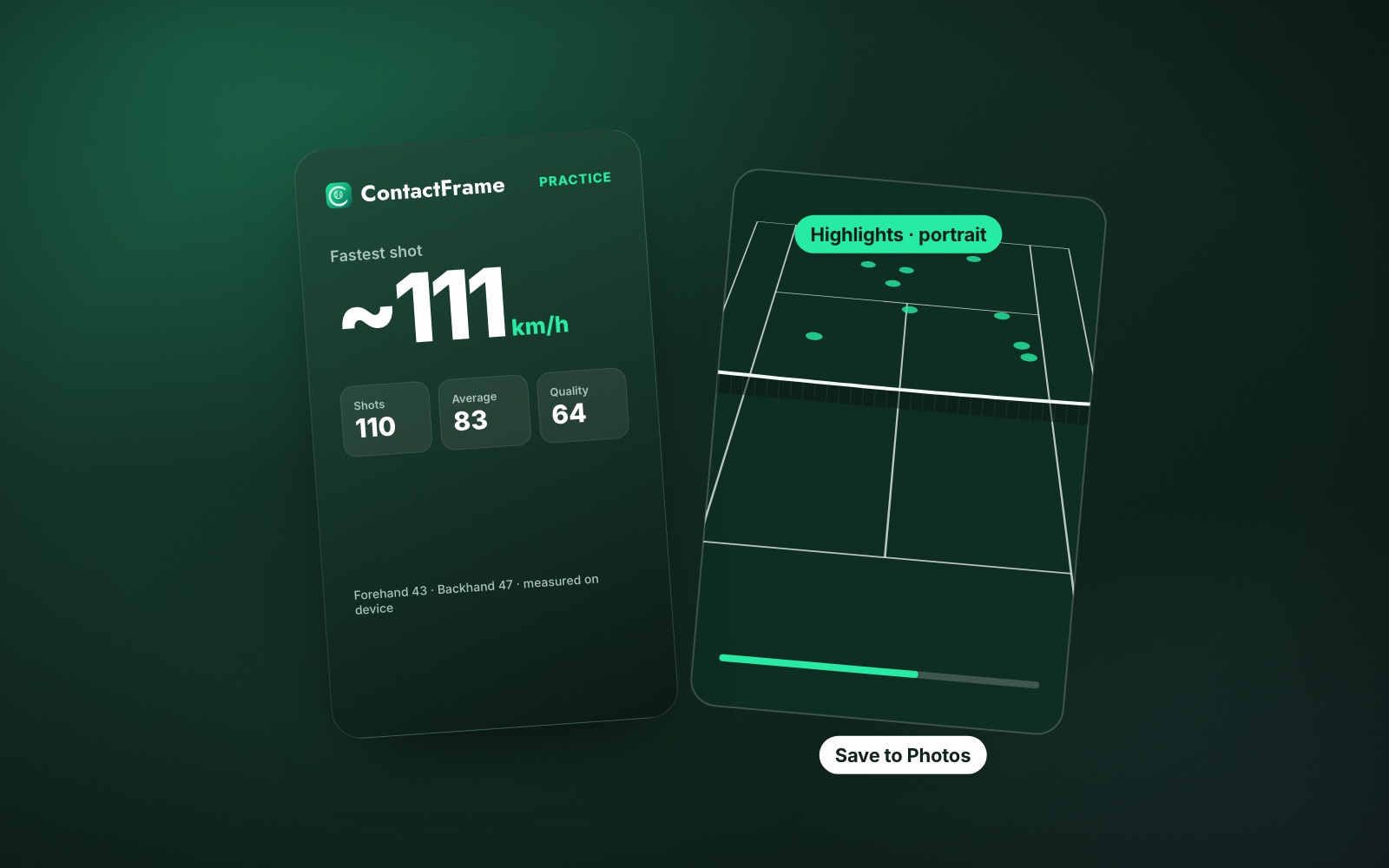
A steady, high, full-court view is what makes analysis possible. From that one angle ContactFrame measures ball speed, spin, where each ball bounced and whether it was in, out or close, with no sensors or court hardware. The full list is in what AI tennis video analysis measures.
ContactFrame does not show a number it is unsure of, so a steady, clear view is worth the two minutes it takes.
On the Free plan you get 15 minutes of recording a month, which is enough to test your setup properly before a full match. Basic and Pro have unlimited recording, and Pro adds sharper filming. Details are in the pricing section.
Once you have footage worth keeping, how to analyse your own match video explains what to look for, and how to share tennis highlights covers getting the best moments off your phone.
A two-minute pre-match checklist
- Tripod behind the centre of the baseline, two to three metres back, weighted.
- Phone in landscape at net height or higher.
- All four corners visible, sun not in the lens.
- Lens wiped, do-not-disturb on, battery and storage checked.
- Corners lined up in The Lab, then hands off until the last point.
Do it the same way every time and filming becomes one more thing you do before the warm-up, like opening a new can of balls.
Common questions
What is the best tripod for filming tennis with a phone?
A full-height tripod or light stand that reaches at least net height, with a wide base and a phone clamp that grips firmly. Stability in wind matters more than weight or extra features.
Where should I put my phone to film a tennis match?
Behind the centre of the baseline, two to three metres back, at around net height or higher, in landscape, with all four corners of the court in the frame. Keep the lens out of direct sun where you can.
Can I attach my phone to the fence to film tennis?
Yes, a fence mount works well when there is little room behind the baseline. Make sure the lens looks through a gap in the mesh or above any windbreak, and that the whole court is still in view.
How high should the camera be to film tennis?
Around net height is the minimum, and higher is usually better. A higher camera sees the far half of the court more clearly and separates the ball from the net.
Do I need a special camera to analyse tennis with AI?
Not with ContactFrame. It uses one phone on a tripod behind the baseline, with no sensors, wearables or court hardware, and the analysis runs on the phone.
One phone, one tripod, every shot.
See what The Lab measures from a single camera behind the baseline.
Explore The Lab