The short version
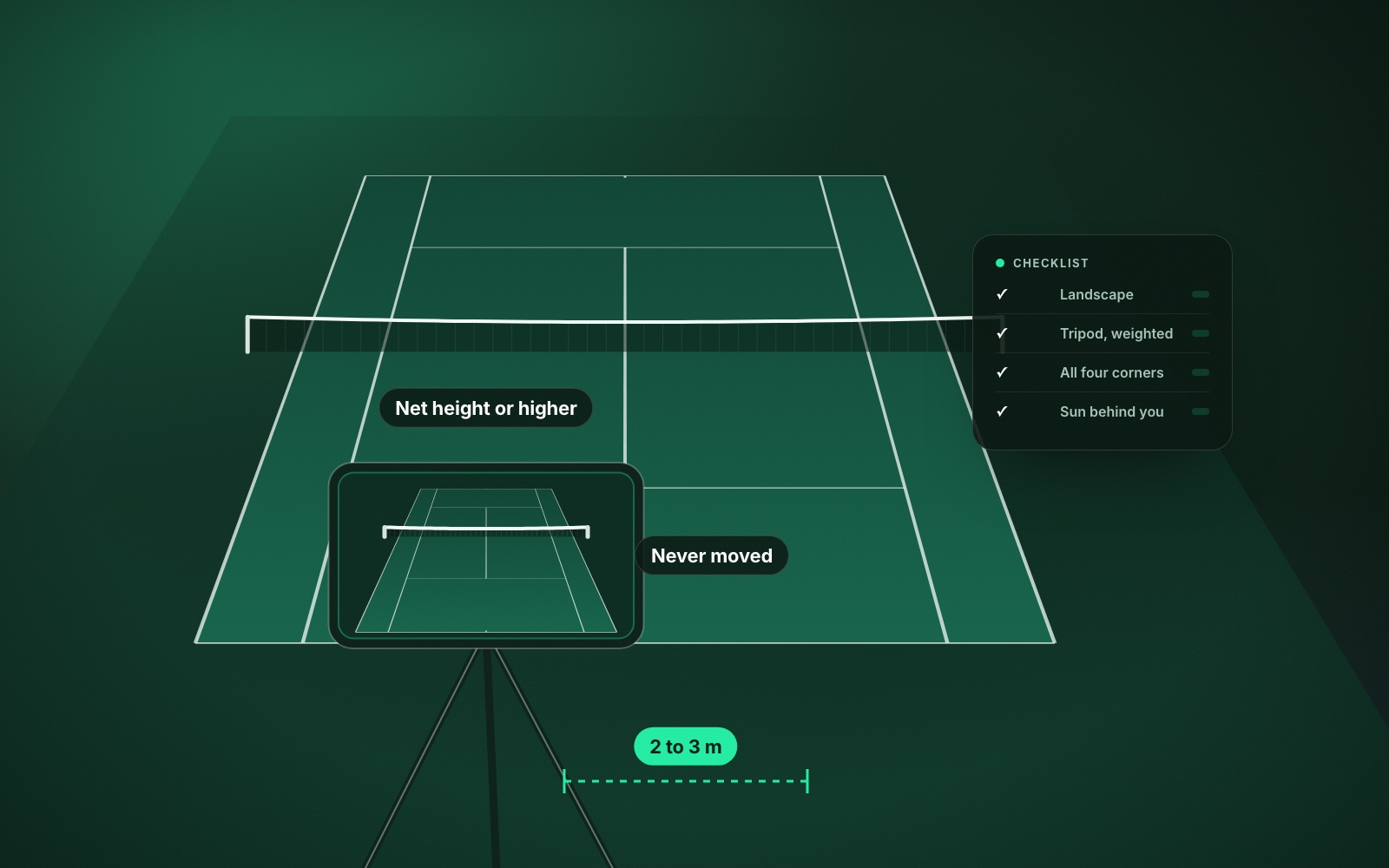
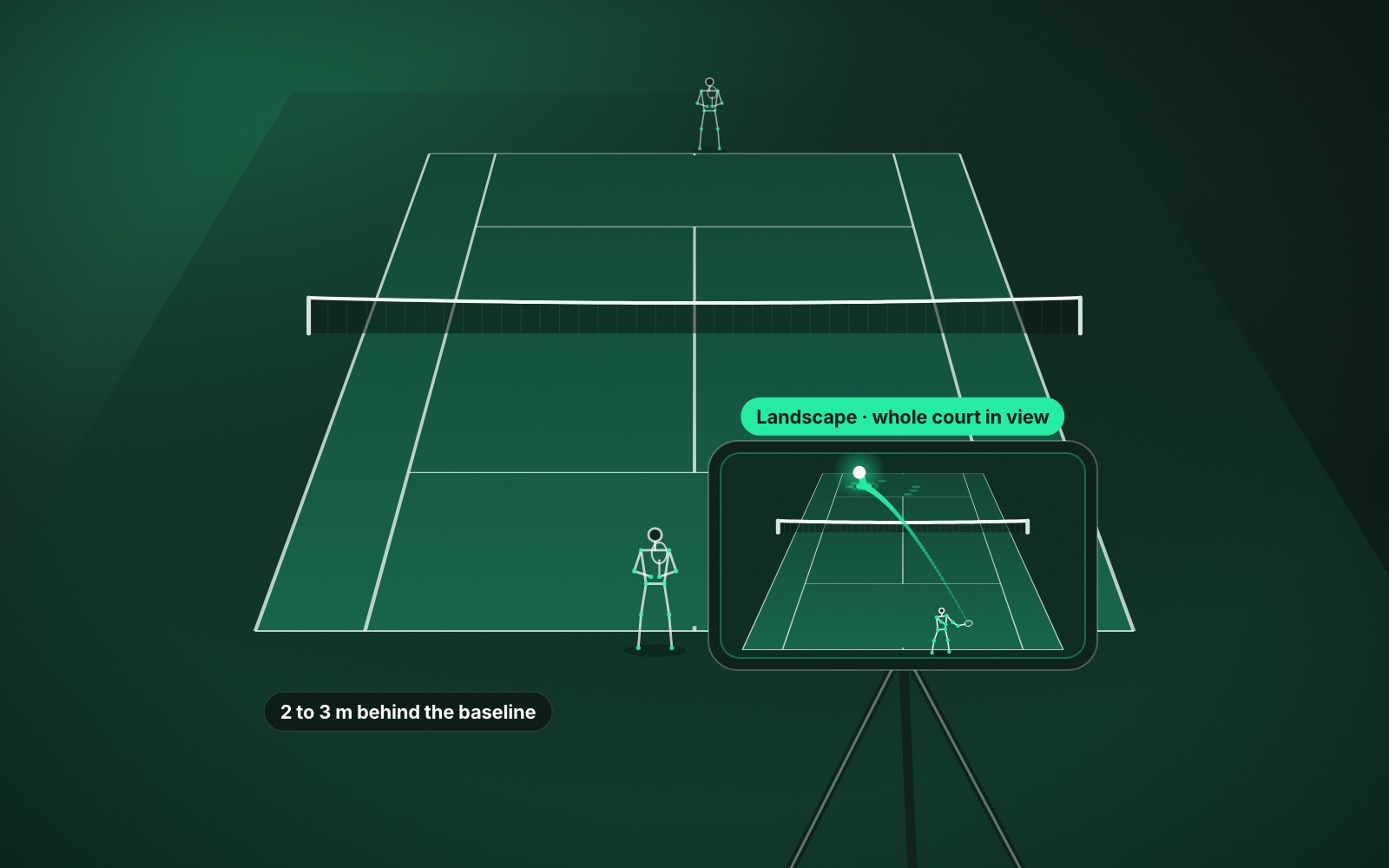
- Film from behind the baseline, in the centre, with the phone in landscape and the whole court in view.
- Height matters more than camera quality. Get the phone to net height or higher.
- Set it once and never move it during the session. A nudged tripod is the most common way to lose a recording.
- Keep the sun behind or beside the camera, never in front of it.
- Check storage, battery and a ten-second test clip before the first point.
You want to record a tennis match, so you prop the phone against a bag at the side of the court and press record. An hour later you have footage of one tramline, half a net and a ball that disappears every time it crosses the frame. Most first attempts end like this, and the fix has very little to do with the phone.
This guide covers how to record a tennis match on your phone so the footage is worth watching back: where the camera goes, how high, what to do about light, and the small mistakes that cost people a whole session.
What you need to record a tennis match
The kit list is short.
- A phone with enough free storage and a charged battery.
- A tripod that reaches at least net height, with a phone clamp that grips properly.
- Something to keep it steady in wind: a bag hung from the centre column works.
That is all. You do not need a sensor on the racket, a wearable or cameras fixed to the fence. If you want to compare tripods, fence mounts and clamps in more detail, there is a separate piece on the best phone setup for filming tennis.
Where to put the camera to film tennis with a phone
Behind the baseline, in the centre, looking straight down the court. This is the view broadcasters use, and for good reason: it shows the width of the court, both players, and the path of the ball from racket to bounce.
A side-on view looks tempting because you are closer to the action. It shows your swing nicely and almost nothing else. You cannot judge direction, you lose the ball whenever it goes to the far tramline, and one player is always much smaller than the other.
The setup ContactFrame asks for is a good standard for any filming, whether or not you use an app:
- Phone in landscape.
- Tripod two to three metres behind the baseline, on the centre line.
- Lens at net height or higher.
- The whole court in view, including both far corners and the near baseline.
- The camera not moved once play starts.
- The lens not pointing into the sun.
In ContactFrame you then line up the four corners of the court on screen, which tells the app where the lines are. If a corner is out of frame, move the tripod back or raise it before you start.
If there is no room behind the baseline
Many club courts have a fence close behind the baseline. Put the tripod hard against the fence, or outside it with the lens pushed right up to a gap in the mesh. A lens touching the wire sees through it. A lens a metre back focuses on it.
Why camera height matters more than camera quality
From a low position, the far half of the court is squashed into a thin strip. The service line and baseline at the other end sit almost on top of each other, and a ball landing a metre short looks the same as one landing on the line.
Raise the camera and that strip opens up. You can see depth, you can see the bounce, and the near player no longer blocks the view of the far one. Net height is the minimum. Above head height is better if your tripod is stable enough to manage it.
Light, sun and shadows
The sun is the one thing you cannot move, so choose your end. Film from the end where the sun is behind or beside the camera. A lens pointing into low sun washes the picture out and hides the ball against the glare.
Early evening is the hardest time. Long shadows from fences and trees stripe the court, and a ball passing from light into shade can be hard to follow on screen. Midday light or an evenly overcast sky is far kinder.
Under floodlights or indoors, footage is usually fine as long as the court is evenly lit. Check a test clip: if you can follow the ball by eye on the phone screen, the recording is usable.
Common mistakes when recording tennis matches
- Moving the tripod at the change of ends. Leave it alone. One fixed view of the whole match is worth more than a view that follows you.
- Portrait mode. A court is wide. Portrait cuts off the tramlines and wastes most of the frame on sky.
- Zooming in. Zoom to see yourself better and you lose the far corners. Keep the wide view.
- A wobbling tripod. Light tripods shake in wind and when a ball hits the fence. Weigh it down.
- Running out of storage. The recording stops without telling you. Clear space before you leave home.
- Notifications and calls. Switch on do not disturb so a call does not interrupt the recording.
- No test clip. Record ten seconds, watch it, check all four corners. It takes less time than a warm-up serve.
Before you press record
Tell your opponent you are filming and why. Most people are fine with it, and many ask for the footage. Some clubs and public courts have their own rules about cameras, particularly near junior sessions, so check if you are unsure.
Put the tripod where it will not be hit or tripped over, and where a ball rolling to the back fence will not knock it. Then leave it. The best recordings are the ones you forget about until the match is over.
It is worth filming the warm-up too. Five minutes of rallying gives you clean examples of each stroke without the pressure of the score, which is useful when you come to look at technique.
What to do with the footage afterwards
An hour of raw video is hard work to watch. Without a plan, most people scrub through for their best winner and stop there. A short method helps: see how to analyse your own tennis match video for what to look for and in what order.
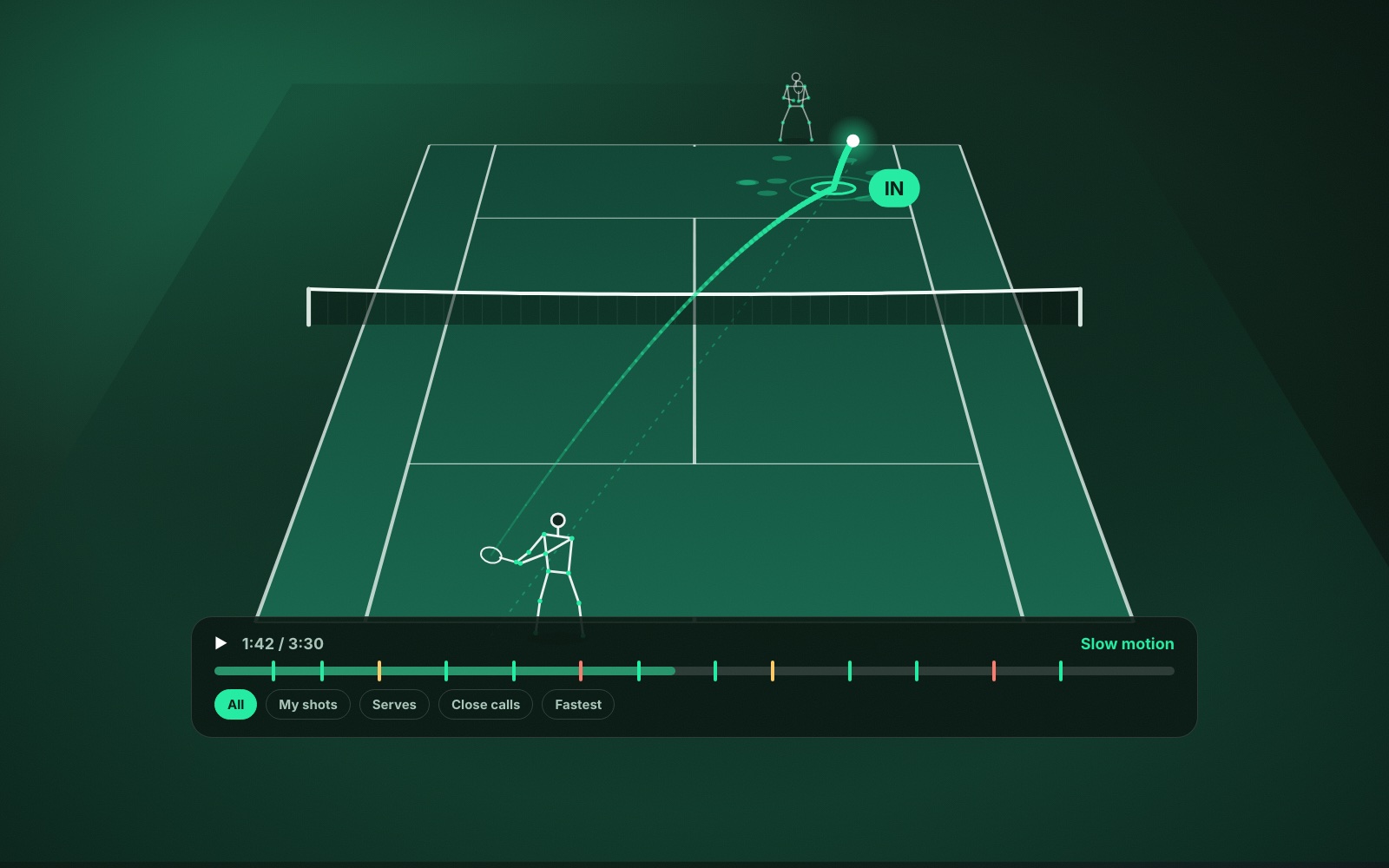
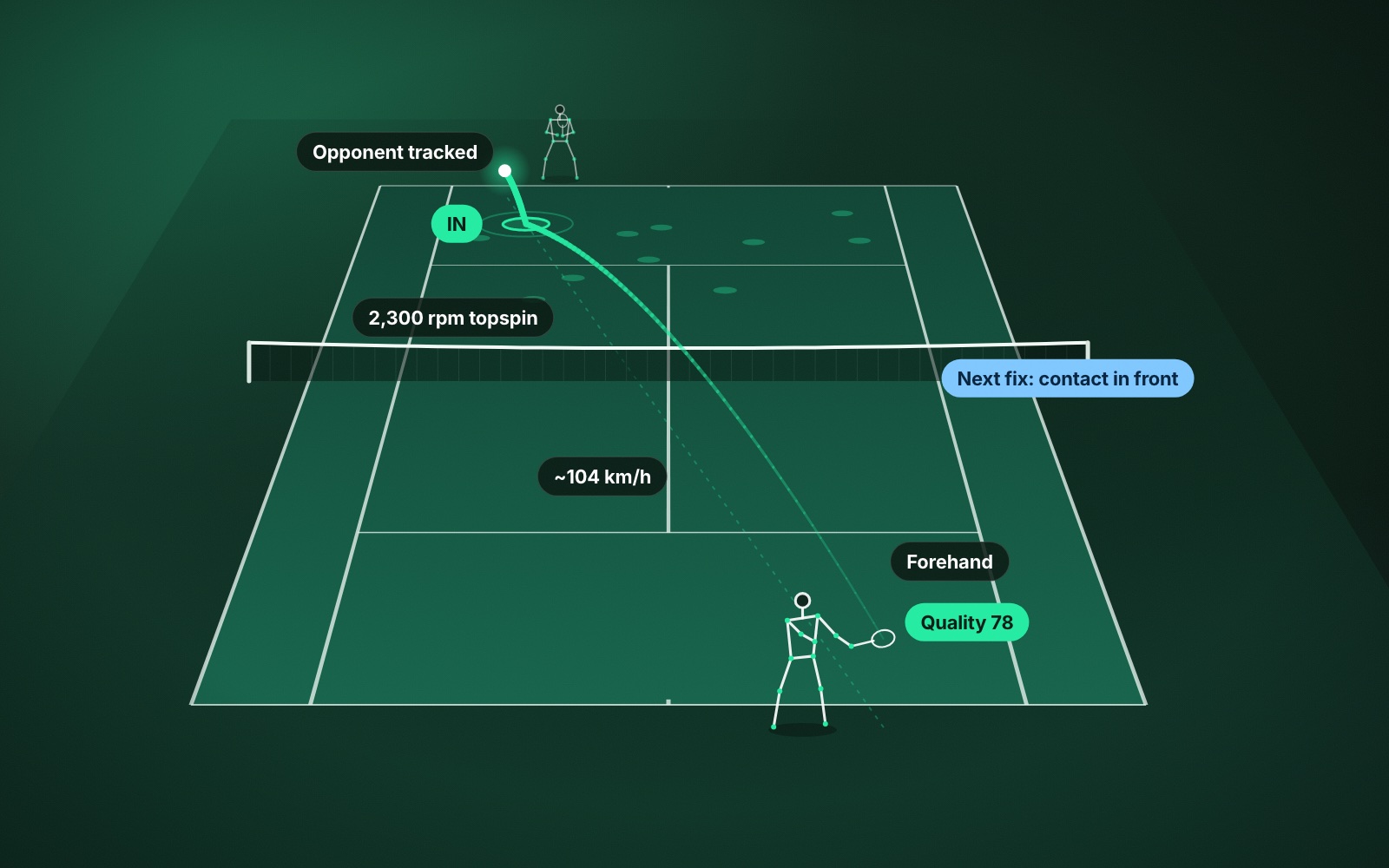
This is also where an app earns its place. Record a Match session in The Lab and ContactFrame measures ball speed, spin, where each shot bounced and whether it was in, out or close, then groups the shots into points with a draft score you can correct. You can jump straight to your serves, your fastest shots or the close calls instead of watching the whole hour. The piece on what AI tennis video analysis measures goes through the full list.
ContactFrame’s free plan includes 15 minutes of recording a month, which is enough to test your setup on a set of serves or a few games before you film a full match.
What a single phone cannot capture
One fixed camera gives you an honest record of what happened on the court. It will not give you close-up detail of your grip, which ContactFrame does not analyse in any case, and the player at the far end will always be smaller and harder to study than the one near the camera. If you want to look closely at your own strokes, play a few games from the near end.
That trade is worth making. A steady, wide, slightly boring view of the whole court is the footage you will learn the most from.
Common questions
Where should I put my phone to record a tennis match?
Behind the baseline in the centre of the court, two to three metres back, at net height or higher, with the phone in landscape. From there you can see all four corners of the court and both players for the whole match.
Do I need a special camera to film tennis?
No. A recent phone on a steady tripod is enough for reviewing your own matches and for AI analysis. Position and stability make far more difference than the camera itself.
How high should the camera be to film tennis?
Around net height at a minimum, and higher if you can manage it safely. A higher view separates the far baseline from the service line, which makes it much easier to see how deep shots are landing.
Can I film a tennis match through the fence?
Yes, if the lens is pressed close to a gap in the mesh so the wire falls out of focus. Filming from a metre behind the fence usually leaves the wire sharp and the court blurred, so get as close as you can.
How much phone storage does a tennis match take?
It varies with your phone and video settings, but an hour of video can run to several gigabytes. Clear space before you leave home and check it again at the court.
Film it once. See every shot.
ContactFrame turns one phone on a tripod into speed, spin, placement and a score for the whole session.
Explore the Lab