The short version
- Count your unforced errors from video, not from memory. The real total is usually higher.
- Sort misses into net, long and wide. Each has a different cause and a different fix.
- Most errors come from too little margin or the wrong shot choice, not from bad technique.
- Measure the shot that fails, not your whole game: errors by shot type point to one wing or one situation.
- Aim for fewer errors per set over a month, not for zero.
Every club player wants to know how to reduce unforced errors in tennis, and almost none of them know how many they make. Ask after a set and you will hear “a few”. Count from the video and it is often twenty or more, enough to account for the whole scoreline.
The good news is that unforced errors are the most fixable part of the game. Your opponent is not involved. The bad news is that you cannot fix them in general. You have to find out which errors, on which shot, in which situation.
Why your own error count is always wrong
Errors are unpleasant, so the mind lets go of them quickly. You shake your head, walk to the other side and start the next point. By the end of the set the routine misses have blurred into a general feeling of having played “a bit loose”.
You also remember errors by how much they hurt, not how often they happen. The smash you buried in the net at set point stays with you for a week. The eleven backhands that drifted long in neutral rallies do not, and those eleven cost you far more.
How to film a match to count unforced errors
Errors need a match, because that is where decisions are made under pressure. Put your phone on a tripod two to three metres behind the baseline, in landscape, around net height or above, with the whole court visible. Do not move it during the session and keep the lens out of the sun. Start a Match session in ContactFrame and line up the four court corners.
Play a full set at least. After the session, correct the draft score if it needs it. Then go to Session insights.
The numbers that show where your errors come from
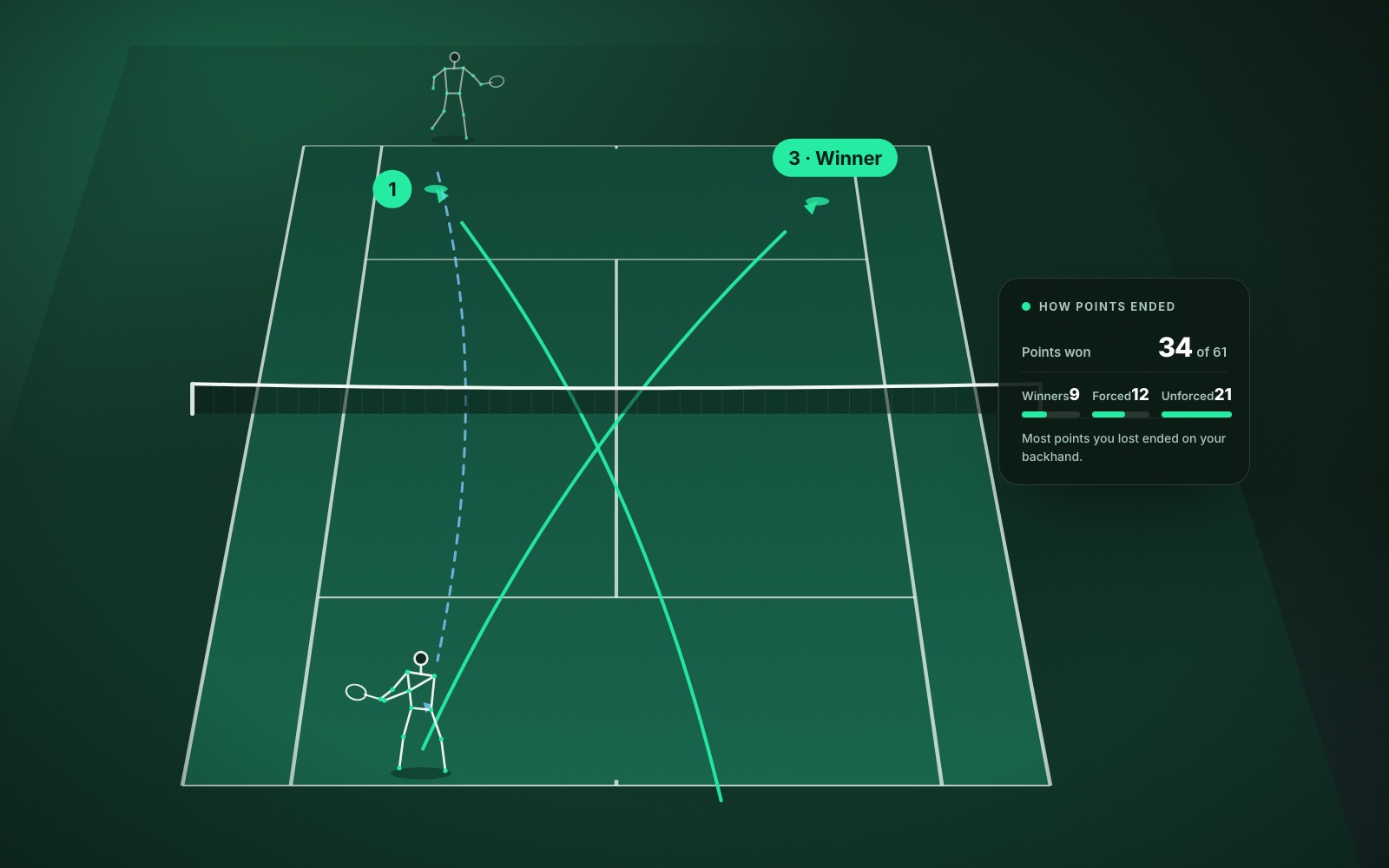
- Unforced errors and forced errors. The split tells you whether you are being pressured into mistakes or handing them over. If forced errors dominate, your opponent was simply better on the day and the answer is different.
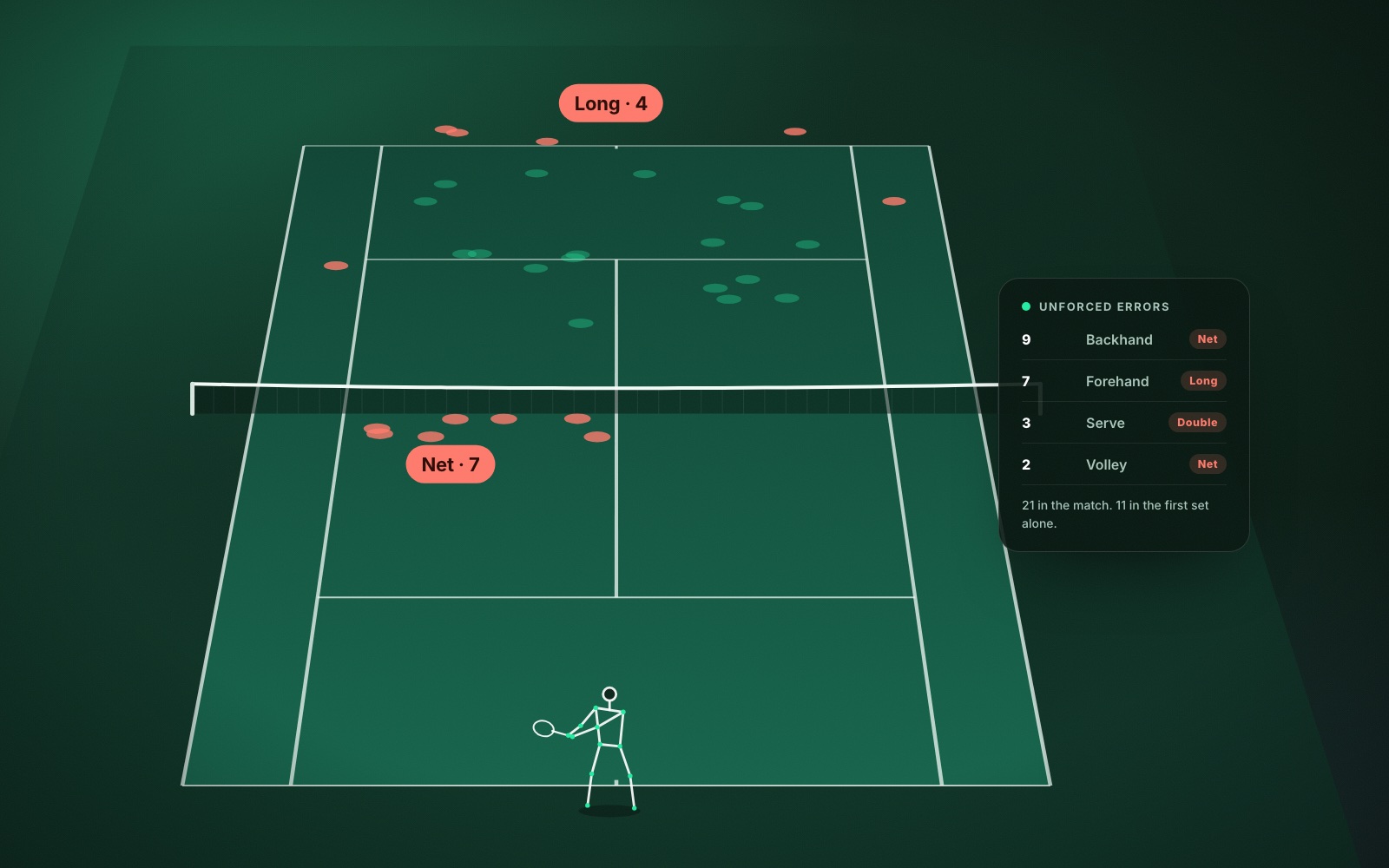
- Shot type breakdown. How many forehands, backhands, slices, volleys and serves you hit, and how many of each landed in. One shot will usually carry more than its share of the misses.
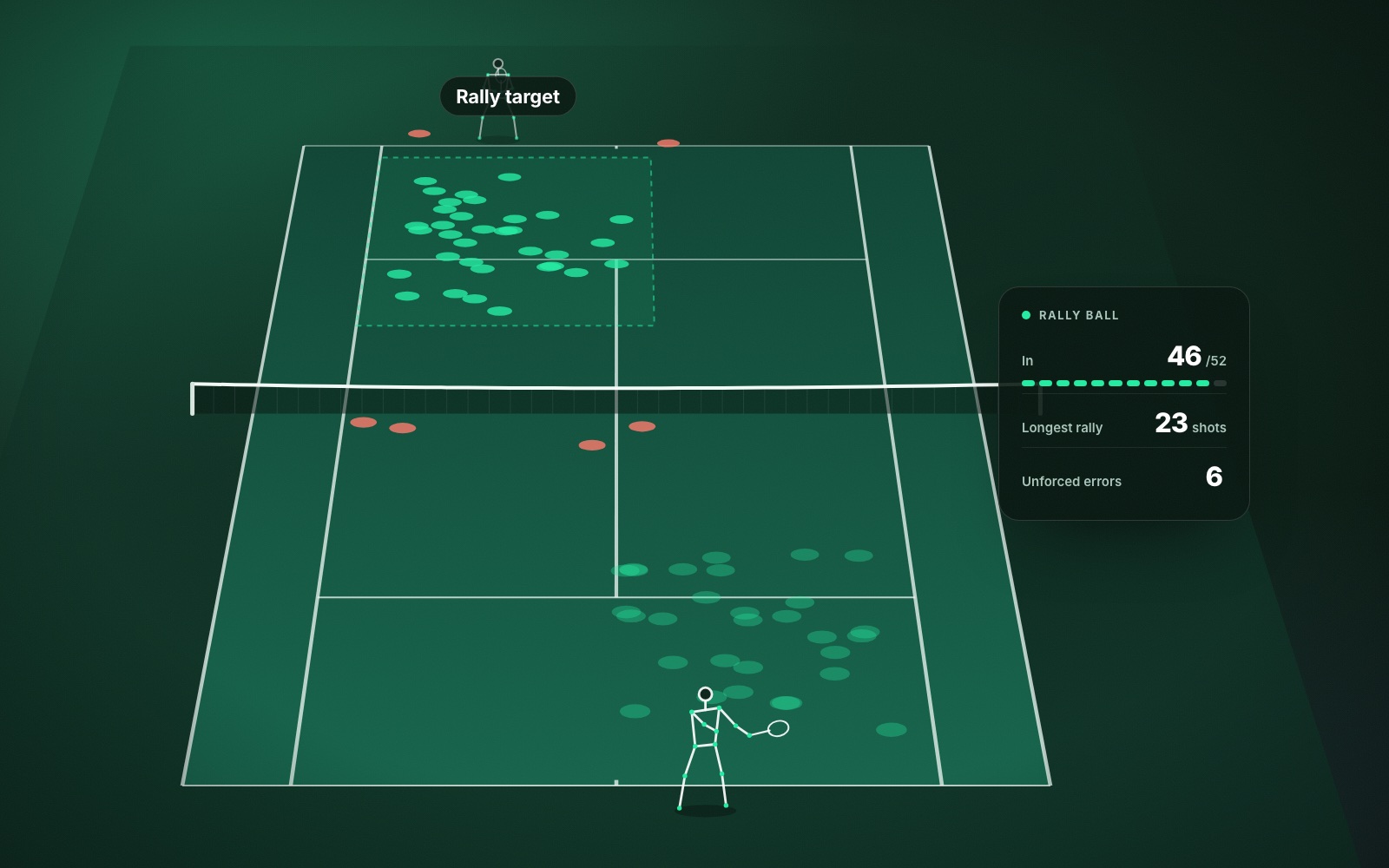
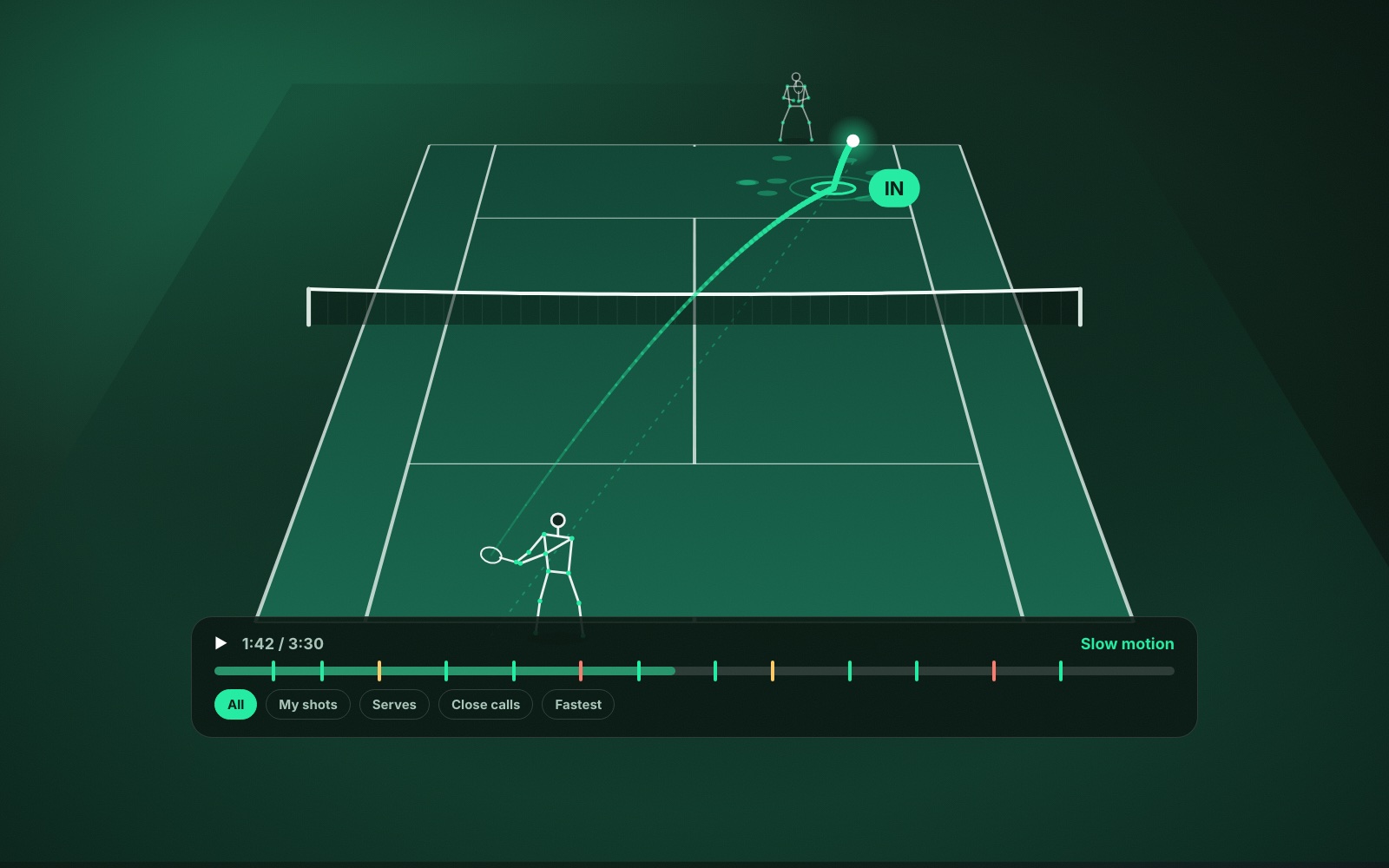
- In, out and close calls with the placement map. Balls that went long or wide show up where they bounced. Look for a pattern: long through the middle, or wide on one side.
- Winners. Hold these against the errors. If you hit four winners and twenty unforced errors, the chase for winners is costing you five points for every one it earns.
Then do the part no number can do for you. In playback, jump through your shots and tally each unforced error in one of three columns: net, long, wide. It takes about ten minutes. How to analyse your own match video has a routine for this.
Four ways to cut unforced errors in tennis
1. If you miss in the net: raise the target
The net is the only obstacle that wins the point outright every time. A ball that lands long at least made your opponent decide whether to play it. In practice, rally with the rule that every ball must cross the net at least a racket length above the tape. Bend your knees on low balls instead of dropping the racket head.
The number to watch: shots landing in by shot type in a Practice session, then your net column when you next tally a match.
2. If you miss long: add shape, not caution
Long balls tempt you to slow the swing down. That removes the topspin that was keeping the ball in. Keep the racket speed and swing more steeply from low to high so the ball dips. Set the session focus to Topspin or Consistency while you work on it.
The number to watch: spin in rpm on that wing next to balls called out long. Spin up and long misses down is the result you want.
3. If you miss wide: move your aim in
Wide errors mean your aim point is too near the line for the size of your spread. Shift it a metre or two inside the sideline. On any ball where you are behind the baseline or off balance, go cross-court, where the court is longer and the net is lower.
The number to watch: balls called out wide and the number of close calls. Both should fall. Improving shot placement covers aim in more depth.
4. If you miss when attacking: set a rule
Watch the points before your errors. Many come from attacking the wrong ball: going for a line from two metres behind the baseline, or changing direction on a ball that is still rising at you. Give yourself one rule for the next match. For example, attack only when you are inside the baseline and balanced. Otherwise, deep and cross-court.
The number to watch: unforced errors per set, with winners alongside. You are looking for errors to fall by more than winners do.
Keep swinging freely, but at bigger targets.
Re-measuring your error count
Film a match every week or two and compare unforced errors in Trends. Use errors per set so that a long match and a short one can be compared fairly. Expect the count to bounce around with different opponents, and look at the direction over four or five matches.
Margin and shot-choice changes can cut the count within two or three weeks. Fixes that depend on a more reliable stroke take longer, usually a couple of months. Building consistency is the practice-court side of the same work.
What the video can’t tell you about errors
Whether an error was forced or unforced is a judgement, and reasonable people would call some points differently. Use the split as a pointer. Netted balls are also best confirmed on playback, since the map shows where a ball bounced.
The video cannot measure nerves, tiredness or the decision you made in the half second before the swing. And ContactFrame does not analyse grip or racket-face angle. If one shot keeps failing no matter how much margin you give it, the cause is probably technical, and a coach is the fastest route to finding it. Bring the recording. The plans, including a free one, are set out on the pricing page.
Common questions
What counts as an unforced error in tennis?
An unforced error is a missed shot on a ball you had the time and balance to play comfortably. A miss caused by your opponent’s pace, depth or placement is a forced error. The boundary is a judgement, so use the count as a guide and not as a verdict.
How do I stop making so many unforced errors?
Give yourself more margin. Aim higher over the net, further inside the lines and cross-court on neutral balls, and only attack when you are balanced and inside the baseline. Then check on video whether the error count has actually fallen.
Why do I hit so many balls into the net?
Netted balls usually come from aiming too low, meeting the ball late or not bending the knees on a low ball. Raising your target over the net by a racket length fixes a surprising share of them. Tired legs late in a set make it worse.
How many unforced errors is normal for a club player?
It varies enormously with level, opponent and how the errors are judged, so there is no reliable benchmark. A better measure is your own count per set, compared match by match. If it is falling, you are improving.
Should I play safer to reduce errors?
Play with more margin, which is not the same as pushing the ball. Keep swinging freely, but at bigger targets with more height and spin. Slowing your swing down often creates more errors, because a guided ball has less spin to bring it in.
Count the errors you can’t remember.
Film a match and see every miss, by shot and by type.
Explore The Lab