The short version
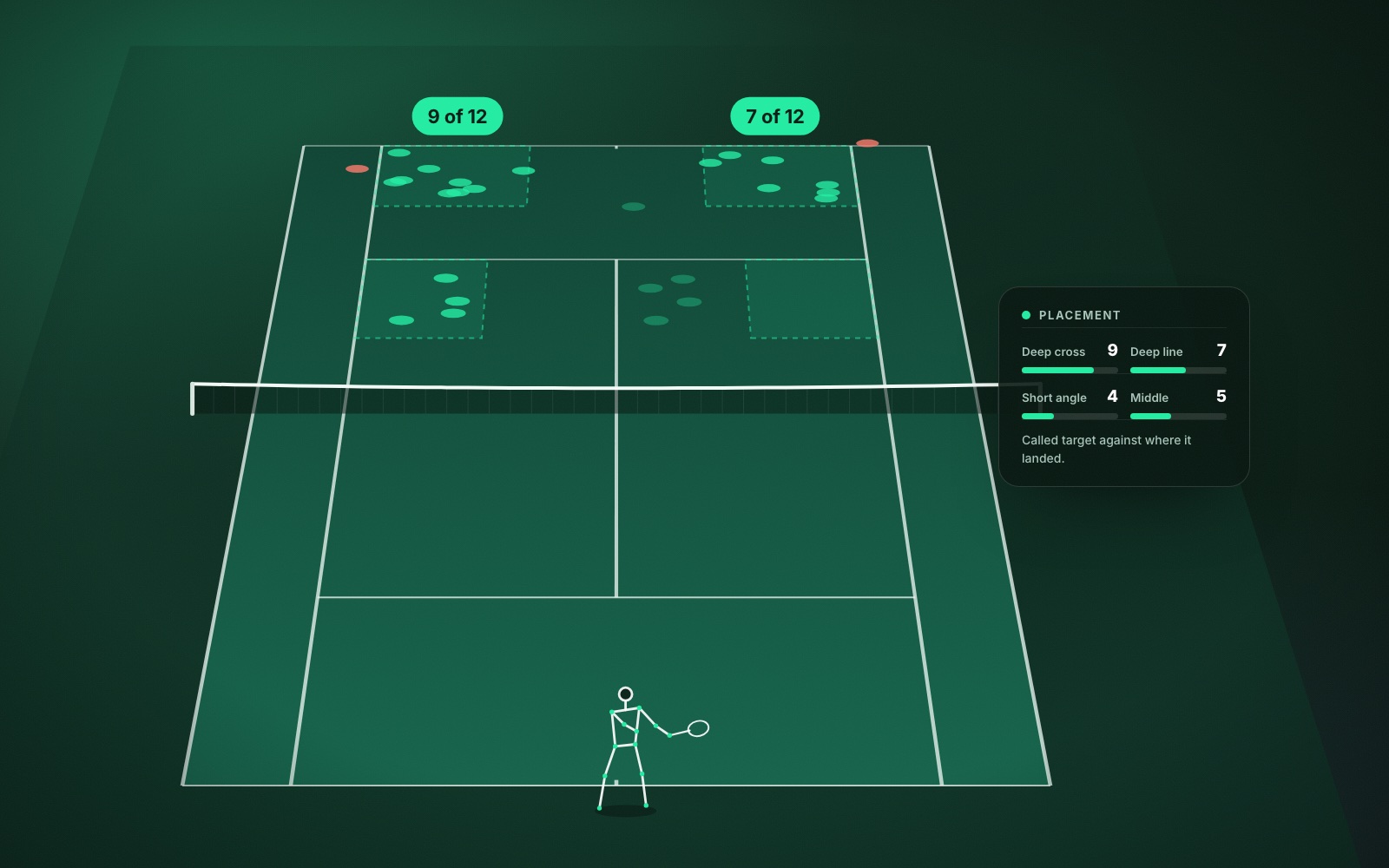
- You remember where you aimed. A placement map shows where the ball landed, and the two are often far apart.
- Good club accuracy means hitting large areas reliably, not painting lines.
- Aim a metre or two inside the lines. Your misses then land in the court.
- Train serve placement separately: wide, body and T on both the deuce and ad sides.
- Change one target at a time and compare the same drill across sessions.
Tennis shot placement is the difference between a rally you control and one you only survive. Most club players believe their accuracy is decent, because they know where they were aiming. The trouble is that the intention is what stays in your memory, and the ball does not always follow it.
Ask a player after a set how many backhands they sent cross-court and they will give you a confident answer. Show them the bounces and it is often a different picture: a loose pile in the middle of the court, with a few strays near the lines.
Why accuracy feels better than it is
Three things fool you. First, you are busy. The moment the ball leaves your strings you are recovering and watching your opponent, not noting the bounce. Second, a ball down the middle that stays in play feels like a success. Third, the misses you do notice are the dramatic ones, wide by a metre, and not the quiet ones that land safely two metres from where you wanted.
Those quiet misses matter most. They are the balls that land in your opponent’s hitting zone and hand them the point.
How to film a session for shot placement
Set one phone on a tripod two to three metres behind the baseline, in landscape, around net height or higher, with all four corners of the court visible. Keep it still for the whole session and keep the sun out of the lens. ContactFrame asks you to line up the court corners on screen before you start.
Use a Practice session with a partner, or a Ball machine session if you want identical feeds, and set the focus to Placement. A machine is useful here because it takes the incoming ball out of the equation. If the feed is the same every time, the spread of your bounces is all yours.
Reading the shot placement map
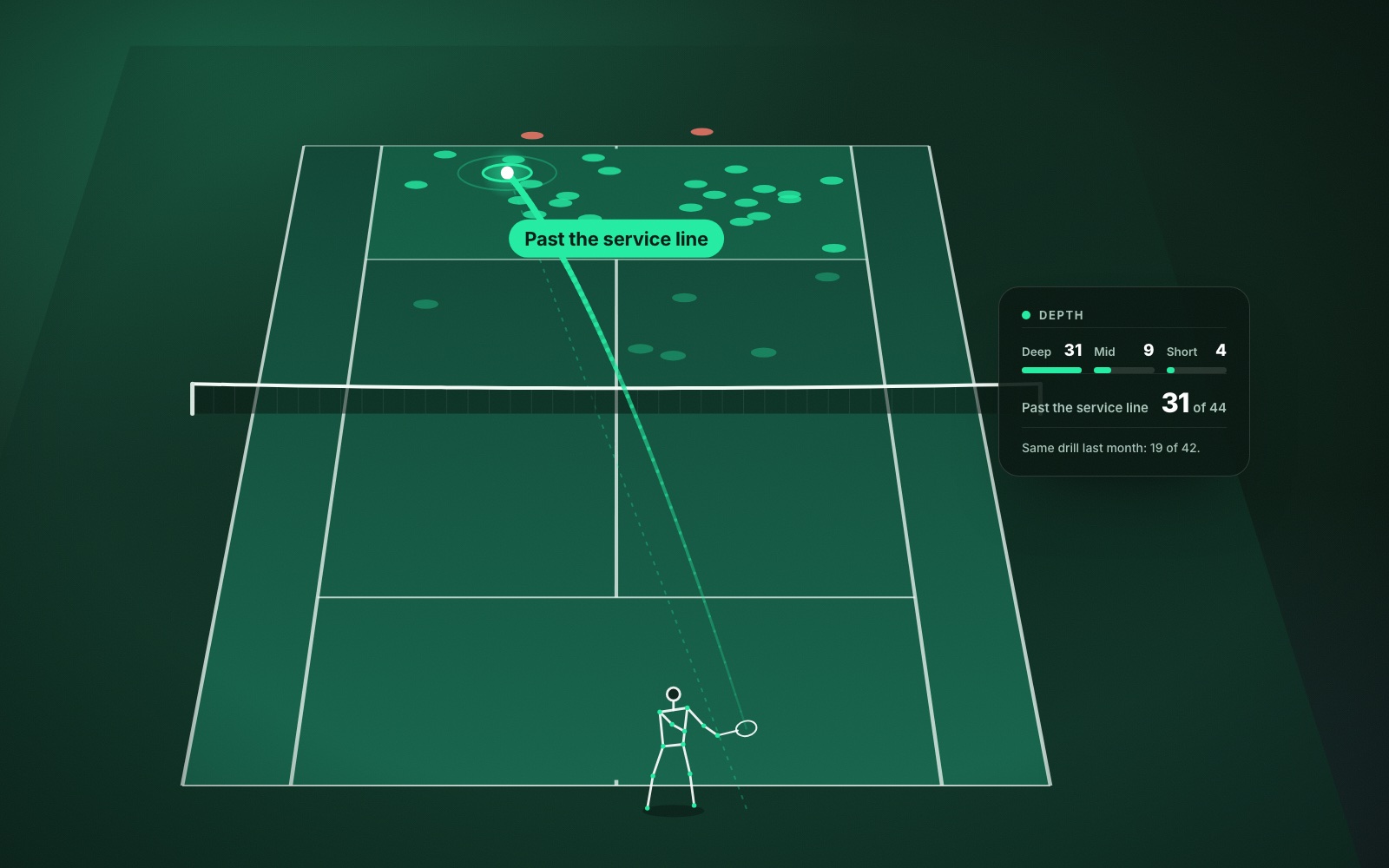
In Session insights in The Lab, the shot placement map shows every bounce on a drawing of the court. Look at it by shot type, because your forehand and backhand rarely share a pattern.
- Where is the centre of the group? If you aimed cross-court and the middle of the cluster sits near the centre line, your aim point and your result are different places.
- How wide is the spread? A tight group in the wrong place is easy to fix. You move your aim. A wide scatter needs steadier contact first.
- Which way do you miss? The in, out and close calls show whether your errors go long or wide. Players who miss wide are usually aiming too near the line.
- Close calls. A lot of close calls is not a badge of honour. It means you are living on the edge of the court with no margin.
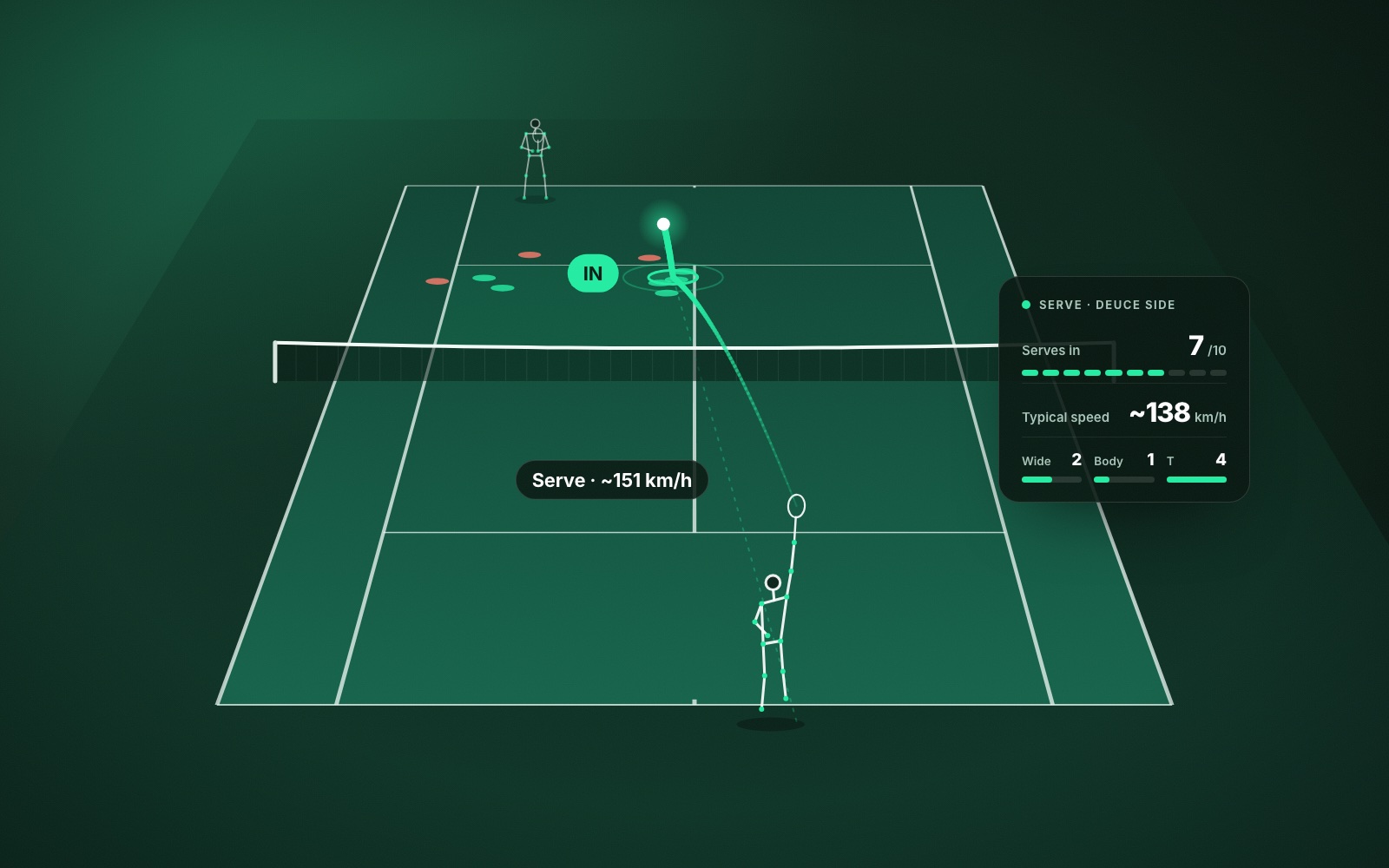
For serves, ContactFrame shows where they landed on the deuce and ad sides: wide, body or T. That is the clearest placement reading in the whole session, because every serve starts from the same spot.
A tight group in the wrong place is easy to fix. You move your aim.
Four drills for better tennis accuracy
1. Three lanes
Split the far court in your head into three lanes running from net to baseline: left, middle, right. Hit twenty forehands to the left lane, then twenty to the right. Repeat on the backhand. These are big targets on purpose.
The number to watch: on the placement map, count how many of each twenty landed in the lane you chose. When that reaches a comfortable majority on both wings, split the court into four.
2. Move the aim point inside the lines
Put a marker a metre or two inside the sideline and a similar distance inside the baseline. Aim at the marker, not the corner. Your spread stays the same size, but now most of it lands in the court.
The number to watch: shots called out, by shot type. This should drop quickly. Close calls should drop with it.
3. Two cross, one line
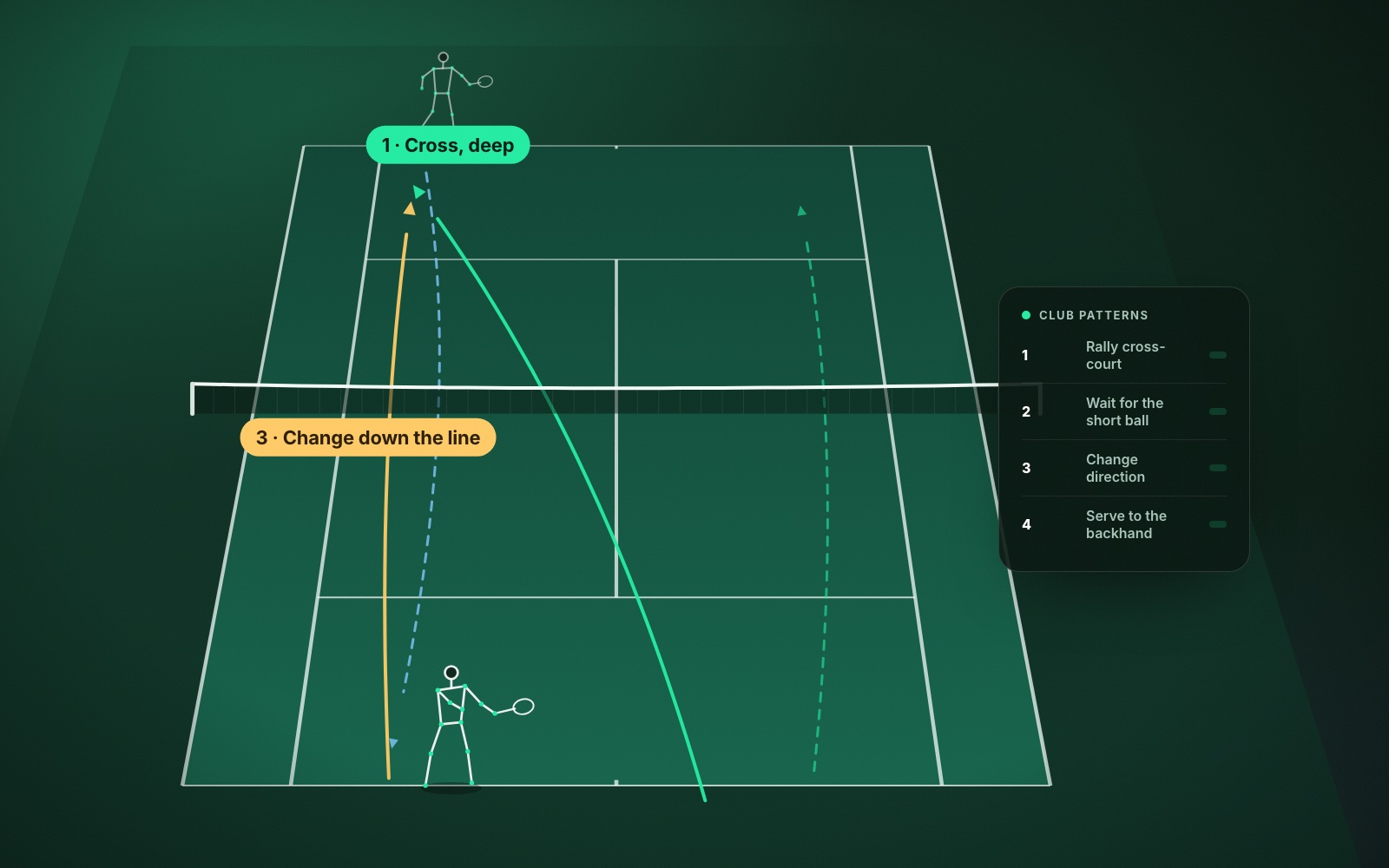
With a partner, rally two balls cross-court and send the third down the line. Changing direction is where most accuracy falls apart, because the ball arrives on one angle and has to leave on another.
The number to watch: the down-the-line bounces on the map. Are they in the lane, or drifting back towards the middle? Check that the count of balls landing in has not fallen on that shot.
4. Serve to three targets
Hit ten serves each to wide, body and T on the deuce side, then the same on the ad side. Say the target out loud before each serve so you cannot cheat afterwards.
The number to watch: where your serves landed against what you called, and how many went in. Many players find they have one reliable target per side and two hopeful ones. There is more in how to improve your serve.
Re-measuring your placement
Run the same drill, with the same number of balls, once a week and compare sessions in Trends. Placement improves in two stages. The group moves to the right place first, often within two or three weeks, because that is mostly a change of aim. The group getting tighter takes longer, commonly a couple of months, because that depends on repeatable contact.
Once drills look good, film a Match session. Placement in a match is the real test, since you are also moving, tired and thinking about the score. If you are not sure how to read a match recording, start with how to analyse your own match video.
What a placement map can’t tell you
A map shows where the ball went. It does not know where you meant it to go, which is why calling your target in drills matters. It also cannot judge whether the target was a good one. Hitting your spot is a skill. Choosing the spot is tactics, and singles strategy for club players covers that side.
And it will not explain a wide scatter on its own. The Pro plan’s shot mechanics gives swing scores and a Next fix, which helps, but ContactFrame does not analyse grip or racket-face angle. If one wing sprays the ball however carefully you aim, that is a job for a coach standing next to you. See AI coach versus human coach for how the two fit together.
Common questions
How do I improve my shot placement in tennis?
Pick large targets, hit a fixed number of balls at each one, and record where they land. Narrow the target only when you can hit the large one most of the time. Filming the drill removes the guesswork about how many you really made.
Where should I aim my groundstrokes?
For most rally balls, aim cross-court and well inside the lines. The net is lower in the middle and the court is longer on the diagonal, so the cross-court ball gives you more margin. Save the lines for when you are balanced and inside the court.
Why do my shots go down the middle when I aim for the corners?
Usually because contact is late or the body stops turning, so the ball leaves straighter than you intended. It also happens when you guide the ball carefully instead of swinging through it. Seeing the pattern on a placement map tells you which wing it affects.
Can AI track where tennis shots land?
Yes. An AI video app such as ContactFrame records where each ball bounced, marks it in, out or close, and draws the bounces on a map of the court. It is for coaching and review, not official line calling.
Is accuracy more important than power in tennis?
At club level, usually yes. A medium-paced ball to a good target wins more points than a hard ball to the middle or into the fence. Power becomes useful once you can place the ball where you intend.
Find out where the ball really went.
A shot placement map for every session, from one phone on a tripod.
Explore The Lab