The short version
- Crosscourt is the default. The net is lower in the middle and the court is longer on the diagonal, so you get more margin for the same swing.
- Deep down the middle is an underrated shot. It takes away your opponent’s angles.
- Plan the serve and the next ball together, and decide before you serve.
- Change direction only when you are balanced and the ball is comfortable.
- Pick two patterns for a match, not seven, and review afterwards which ones won points.
You hit the ball as well as the player across the net, sometimes better, and you still lose 6–3, 6–4. That is nearly always a matter of singles tennis strategy, not strokes. They are choosing easier shots than you are, and you are giving them the points they need.
Strategy at club level needs to be simple enough to remember when you are out of breath at 4–4. Here are seven patterns that hold up, why each works, and how to find out which suit your game.
The idea behind club singles strategy
At club level, more points are lost than won. Most rallies end with someone missing, not with a clean winner. So the aim of a good pattern is modest: give yourself a comfortable shot and your opponent an awkward one, again and again, and wait.
Every pattern below does that, with shots you already own.
Seven singles tennis patterns that win at club level
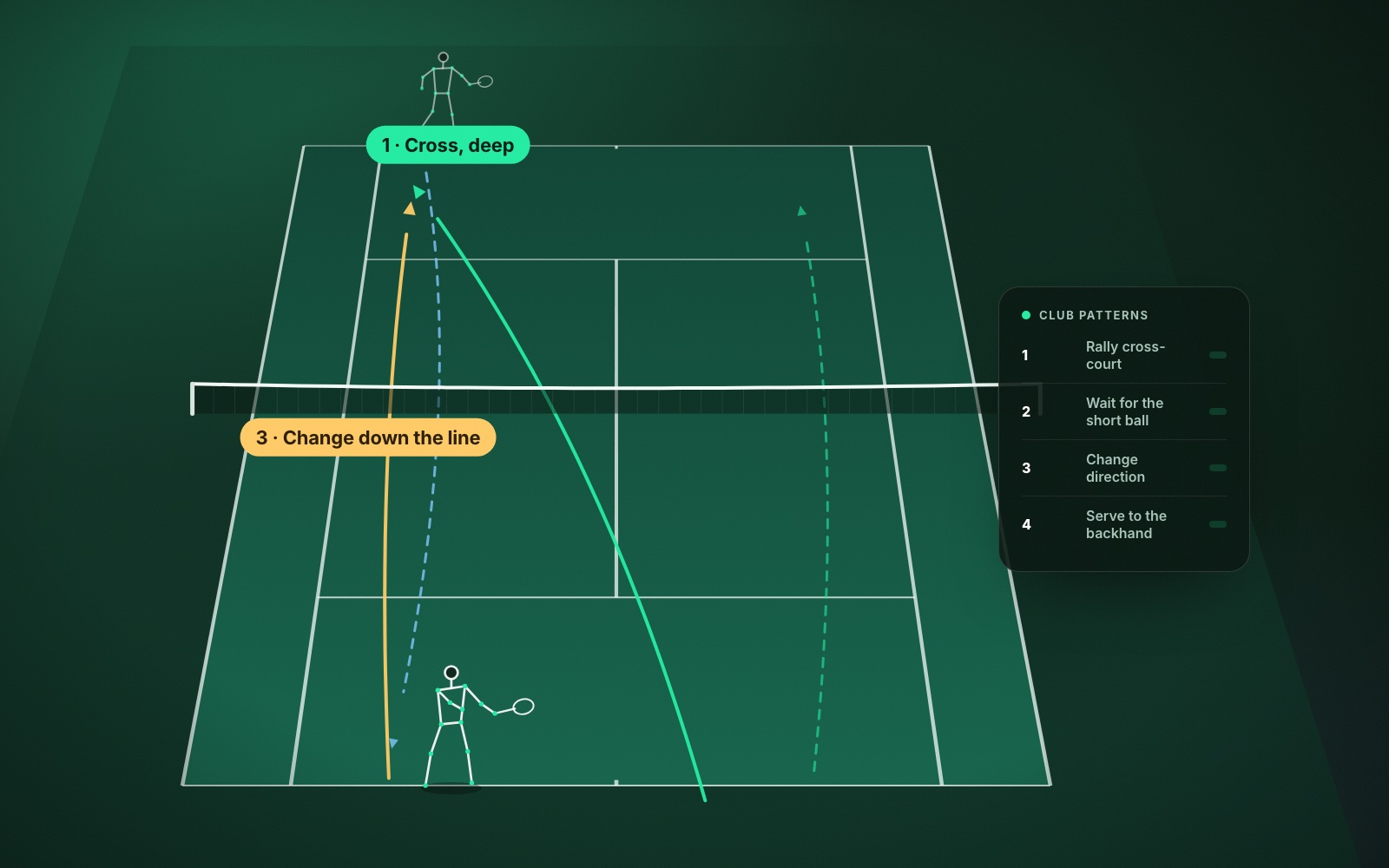
1. Rally crosscourt by default
The net is lower in the middle than at the posts, and a crosscourt ball travels over the middle. The court is also well over a metre longer on the diagonal than straight down the line. So the same swing has more margin in both height and length.
There is a third benefit. After a crosscourt shot you are already close to the right place to cover the reply, so you run less. Make crosscourt your default and leave it only for a reason.
2. Deep down the middle when in doubt
A deep ball through the middle of the court looks unambitious and is very hard to attack. Your opponent has no angle to work with and the two sidelines are as far away as they can be. Use it when you are stretched, when you are nervous and on big points. Depth is the part that matters, and how to hit deeper shots covers it.
3. Find the weaker wing and keep going there
Most club players have one side that breaks down first, usually the backhand. Find it in the first few games, then send most of your balls there, especially high and deep ones. You do not need to hide what you are doing. A weakness under steady pressure tends to get worse, not better.
4. Serve and the first ball as one plan
Decide before you serve where it is going and what you expect to hit next. A simple version: serve to the backhand, expect a shorter or weaker return, and play your first groundstroke into the open space or back behind the receiver.
Placement matters more than speed here. A medium-paced serve to the backhand corner or into the body does more for this pattern than a fast one down the middle of the box. The rest is in how to improve your tennis serve.
5. Return deep through the middle, and attack the second serve
On a first serve, your job is to start the point on level terms. Block or drive the return deep through the middle and take the server’s easy second shot away.
On a second serve, step in a pace or two. Take the ball earlier and aim deep to the weaker wing. You are not going for a winner. You are making the server hit their first ball from behind the baseline. See how to improve your return of serve.
6. Attack the short ball, usually down the line
When a ball lands short, move forward and play an approach shot deep, most often down the line, then follow it to the net. Going down the line keeps the ball in front of you and makes the passing shot harder, because you can cover the line and still reach most crosscourt replies.
If the net makes you uneasy, how to improve your volleys will help.
7. Change direction only on a comfortable ball
Redirecting a crosscourt ball down the line is one of the commonest sources of errors in club tennis. You are hitting over the higher part of the net into the shorter length of court, and changing the angle of the incoming ball.
Give yourself a rule. Go down the line only when you are balanced, the ball is in your strike zone, and you are on or inside the baseline. Otherwise, send it back crosscourt and wait for a better one.
How to play the big points
At 30–40 or in a tie-break, use the pattern you trust most. Get the first serve in, even at reduced pace. Hit crosscourt with margin. Make your opponent win the point.
Adjusting your singles tactics to the opponent
- The steady player who never misses. Do not try to hit through them. Stay patient, keep it deep, and use short balls and the net to take them out of their comfortable rhythm.
- The big hitter. Give them nothing to swing at freely. High, deep and slow balls, some slice, and plenty of balls back in play. Their errors will come.
- The net rusher. Keep your returns low and your rally balls deep so they cannot approach. Use the lob early in the match so they know you have it.
- The player with one big weapon. Hit away from it, and accept that you will lose some points when they find it anyway.
If plan A is losing clearly after a set, change something.
How to check which patterns win you points
Tactics are easy to misjudge from memory. You remember the three down-the-line winners and forget the eight you missed.
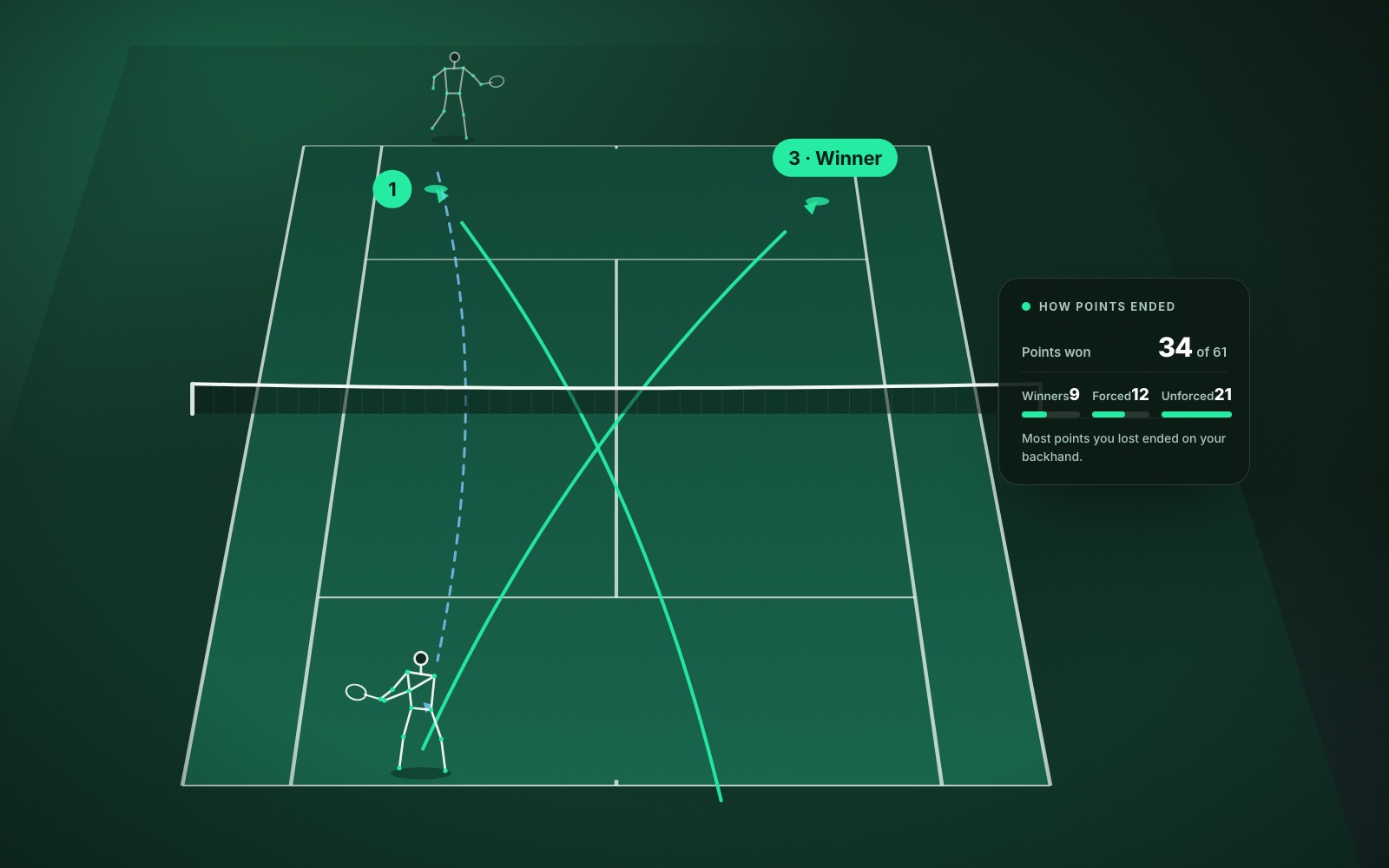
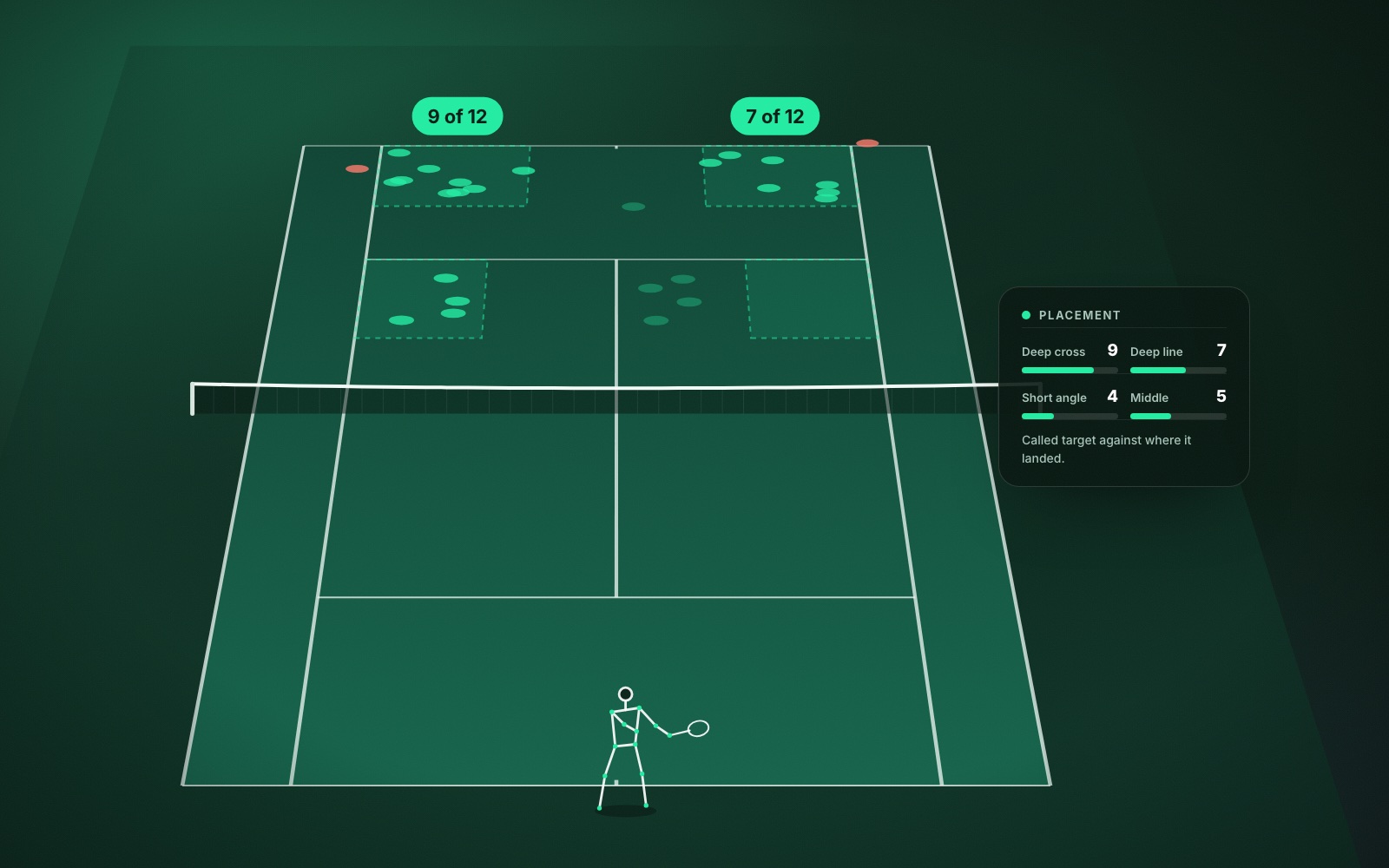
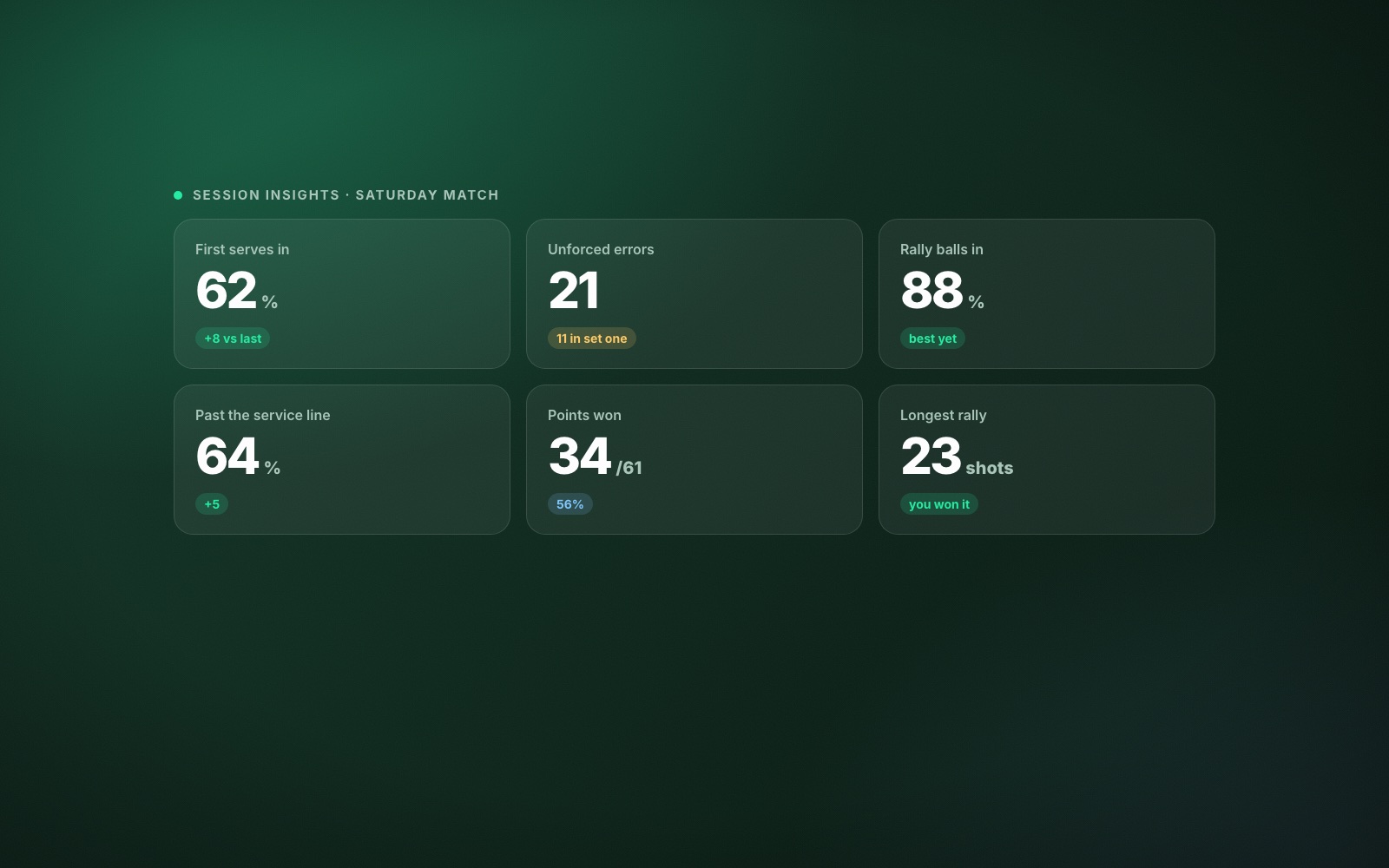
Filming a match settles it. In a Match session, ContactFrame tracks the points and gives you Session insights afterwards. A few are directly useful for strategy:
- Shot placement map. Were you really hitting crosscourt and deep, or landing most balls in the middle of the court around the service line?
- Serve placement. Where your serves landed on the deuce and ad sides: wide, body or T. Compare it with what you intended.
- Winners, forced errors and unforced errors. If unforced errors lead, your patterns need more margin, not more ambition.
- Rally summary and points won. Whether you do better in short points or long ones tells you what kind of match to try to play.
- Movement. How well you recovered to the middle and how often you were ready when your opponent hit.
ContactFrame measures what happened. It will not read your opponent’s mind or choose a plan for you, and it does not coach during play. The thinking is still yours. For more on reading a match this way, see how to win more tennis points and the tennis stats that matter for club players. What ContactFrame measures is set out on The Lab page.
Practise the patterns before you need them
A pattern you have never rehearsed will not appear at 5–5. Build each into practice:
- Crosscourt games. Play points using only the crosscourt half of the singles court. First to eleven.
- Serve plus one. Serve, and play out the point with your planned first ball. Ten on each side.
- Short ball approach. Your partner feeds a short ball, you approach down the line and play the point out at the net.
Then take two patterns into your next match. Two, not seven. Next month, add a third, and film a match now and then with ContactFrame to see whether they are holding up. If your placement lets the plan down, how to improve shot placement is the next thing to read.
Common questions
What is the best singles tennis strategy for beginners?
Hit crosscourt, aim well inside the lines and keep the ball deep. Let your opponent make the errors. At newer levels, the player who gets one more ball in play wins most of the points.
Should I hit crosscourt or down the line in singles?
Crosscourt most of the time, because it gives more margin over the net and more court to hit into. Go down the line when you are balanced, inside the baseline and have a ball you can hit comfortably.
How do I beat a pusher in singles?
Be patient and accept long rallies. Keep the ball deep, bring them forward with a shorter ball if they dislike the net, and come in yourself behind a good approach. Trying to hit through them from the baseline usually produces errors.
Where should I serve in singles?
Serving to the weaker side, usually the backhand, is a sound default, with the occasional serve into the body or to the other side to stop the receiver settling. A reliable placement beats a fast serve that misses.
How do I know which tactics are working for me?
Keep a simple tally of how points end, or film the match and review it. Looking at where your shots landed and which points you won shows whether your plan held up or only felt as though it did.
See which patterns win you points.
Join the list for ContactFrame and review your matches with the placement map, rally summary and points won.
See The Lab