The short version
- Good footwork is mostly two habits: a split step as your opponent hits, and recovering straight after your own shot.
- ContactFrame measures how often you were ready when your opponent hit and how well you recovered to the middle.
- Distance covered is not a score. Moving further can mean you are recovering well or being run around.
- Fix readiness first. It makes every other part of your movement easier.
- Footwork habits take six to eight weeks to hold in matches, because they fade when you are tired.
When a forehand flies long, the usual verdict is “bad swing”. Watch the video and the swing is often fine. The problem is that you arrived half a step late, hit the ball too close to your body and leaning back. If you want to know how to improve tennis footwork, it helps to accept that many of your stroke errors are really movement errors.
Footwork is the least glamorous thing to practise and one of the most rewarding. It needs no talent, only habits, and habits are something a camera is very good at checking.
Why you cannot feel your own footwork
During a point your attention is on the ball. You have almost no awareness of what your feet did, and afterwards you remember the shot, not the two seconds before it.
So players hold firm beliefs that the video does not support. “I always split step.” “I get back to the middle.” Then they watch themselves stand and admire a crosscourt forehand while the reply goes down the line into open court. Nobody does this on purpose. You simply cannot see it from the inside.
How to film your movement
Record a Match session or a Practice session with live rallies. Movement only shows up properly when you do not know where the next ball is going, so a predictable feed tells you less.
The standard setup matters more than usual here, because the app needs to see you across the whole court: phone in landscape on a tripod, two to three metres behind the baseline, around net height or higher, with all four corners in view. Keep it out of the sun’s line and do not move it during the session. Line up the corners when ContactFrame asks. For more on positioning the camera, see the best phone setup for filming tennis.
Play for at least twenty minutes. Movement habits change as you tire, and the last ten minutes are often the most honest.
The footwork numbers ContactFrame measures
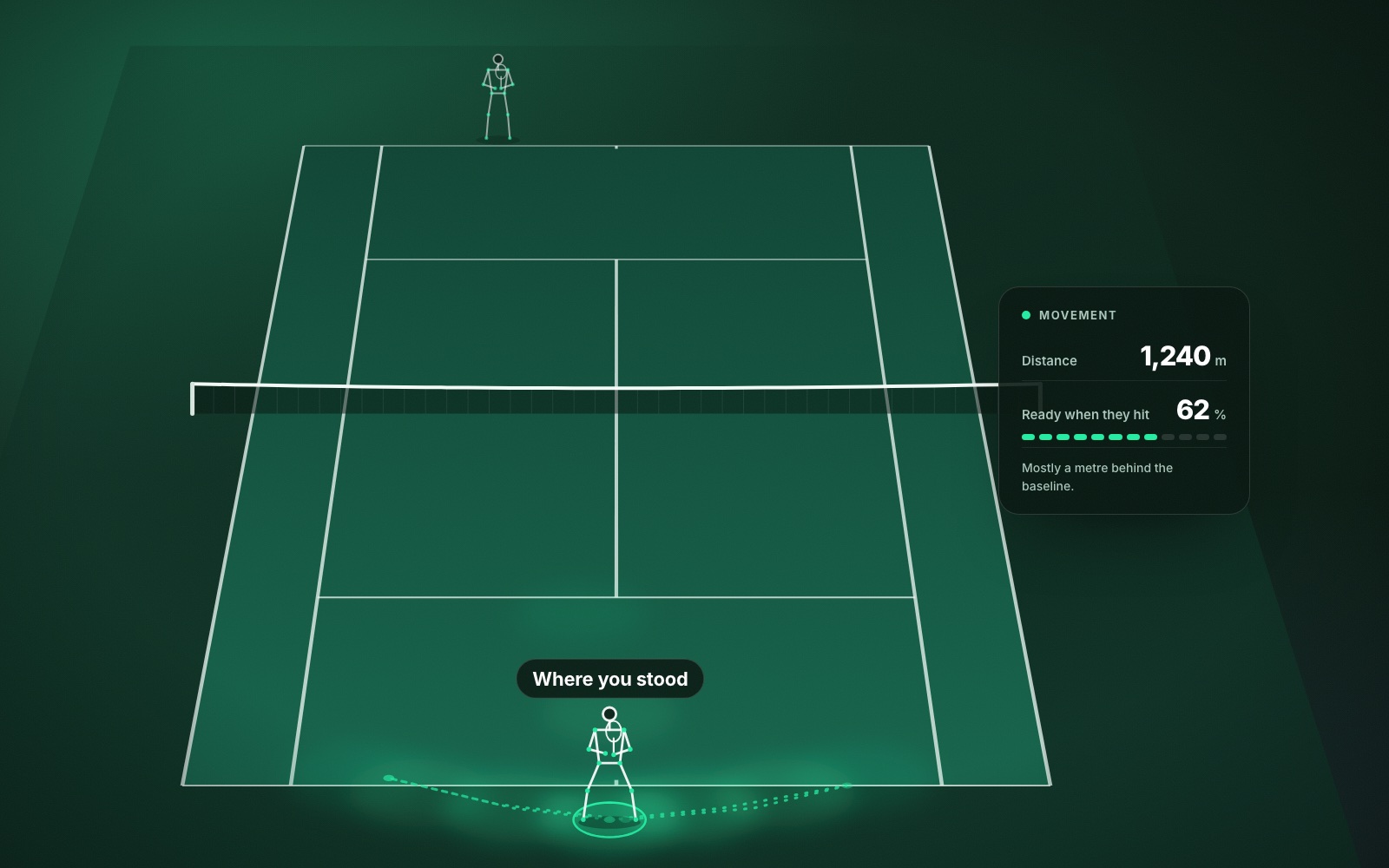
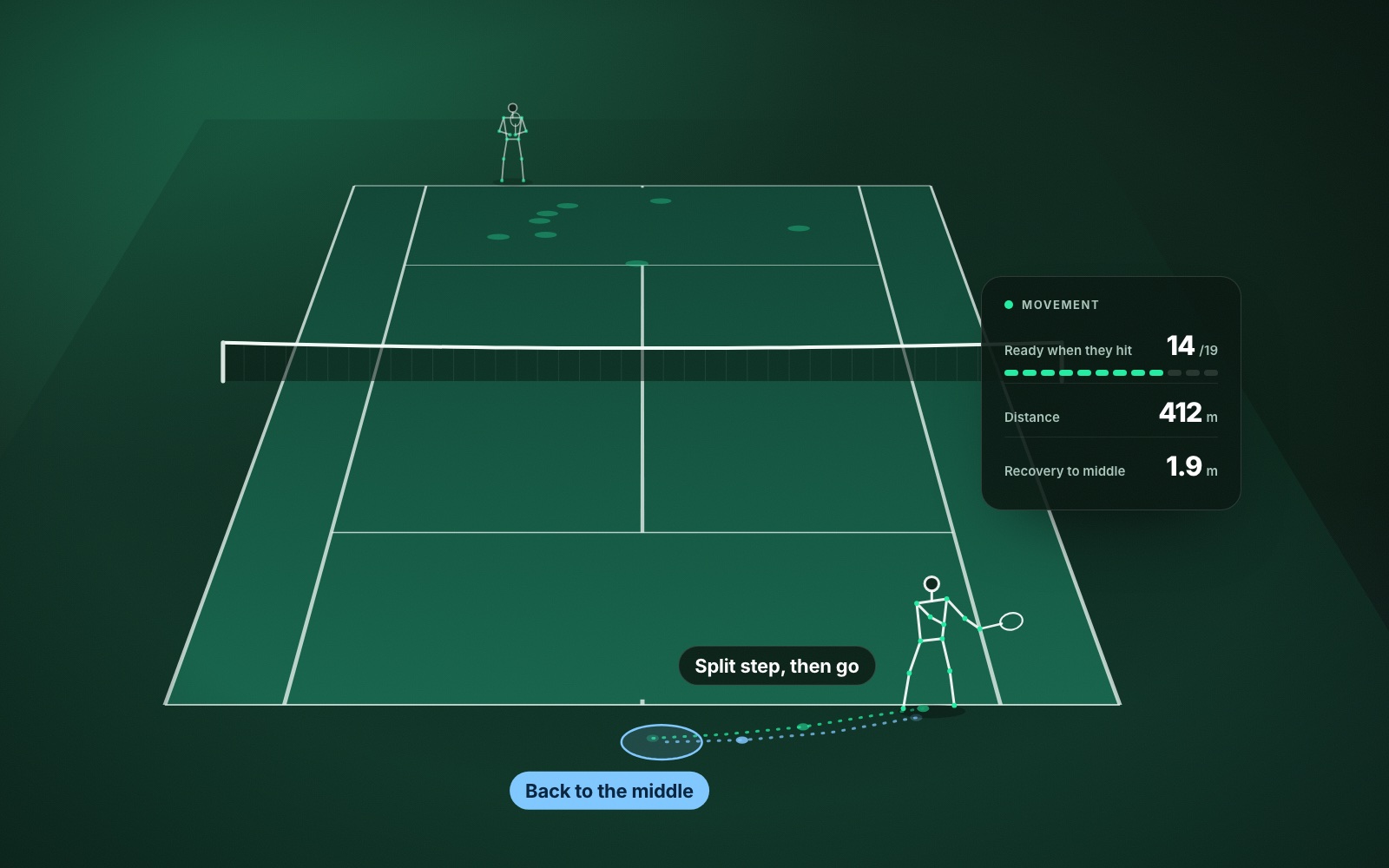
- Ready when your opponent hit. How often you were set and balanced at the moment the ball was struck at the other end. This is your split step, measured.
- Recovery to the middle. How well you got back towards a central position after your own shots.
- Where you stood. Your court position through the session. Look for long spells a couple of metres behind the baseline, or a drift towards your forehand side.
- How far you moved. Total distance. Treat this as context, not a score.
On the Pro plan, shot mechanics add a footwork score for each swing alongside preparation, contact and kinetic chain, with a stick-figure replay of the contact. That shows how you were set up at the moment of the hit, which is the other half of the story.
Four drills to improve tennis footwork
1. Say “hit”
In a cooperative rally, say “hit” out loud at the moment your partner makes contact, and land your split step on the word. It feels silly for about a minute. It works because it forces your eyes onto their racket and ties your feet to their timing.
The number to watch: ready when your opponent hit. This tends to jump straight away in practice. Say you start at 45% in a match session. A realistic target after a month is to have that figure clearly higher in matches, not only in drills.
2. Hit and go
Rally crosscourt with a partner. The rule: you must be moving back towards the centre mark before your ball crosses the net. No watching. Use quick side steps or a crossover step to recover, facing the net the whole time.
The number to watch: recovery to the middle. This is the habit that stops opponents hitting into open court behind you. It is also covered from a tactical angle in how to improve your court coverage.
3. Side to side, twenty balls
Have a ball machine or partner alternate one ball to your forehand corner and one to your backhand corner, twenty in a row. Recover to the middle after each. Focus on small adjusting steps as you reach the ball, so you are balanced and the right distance from it at contact.
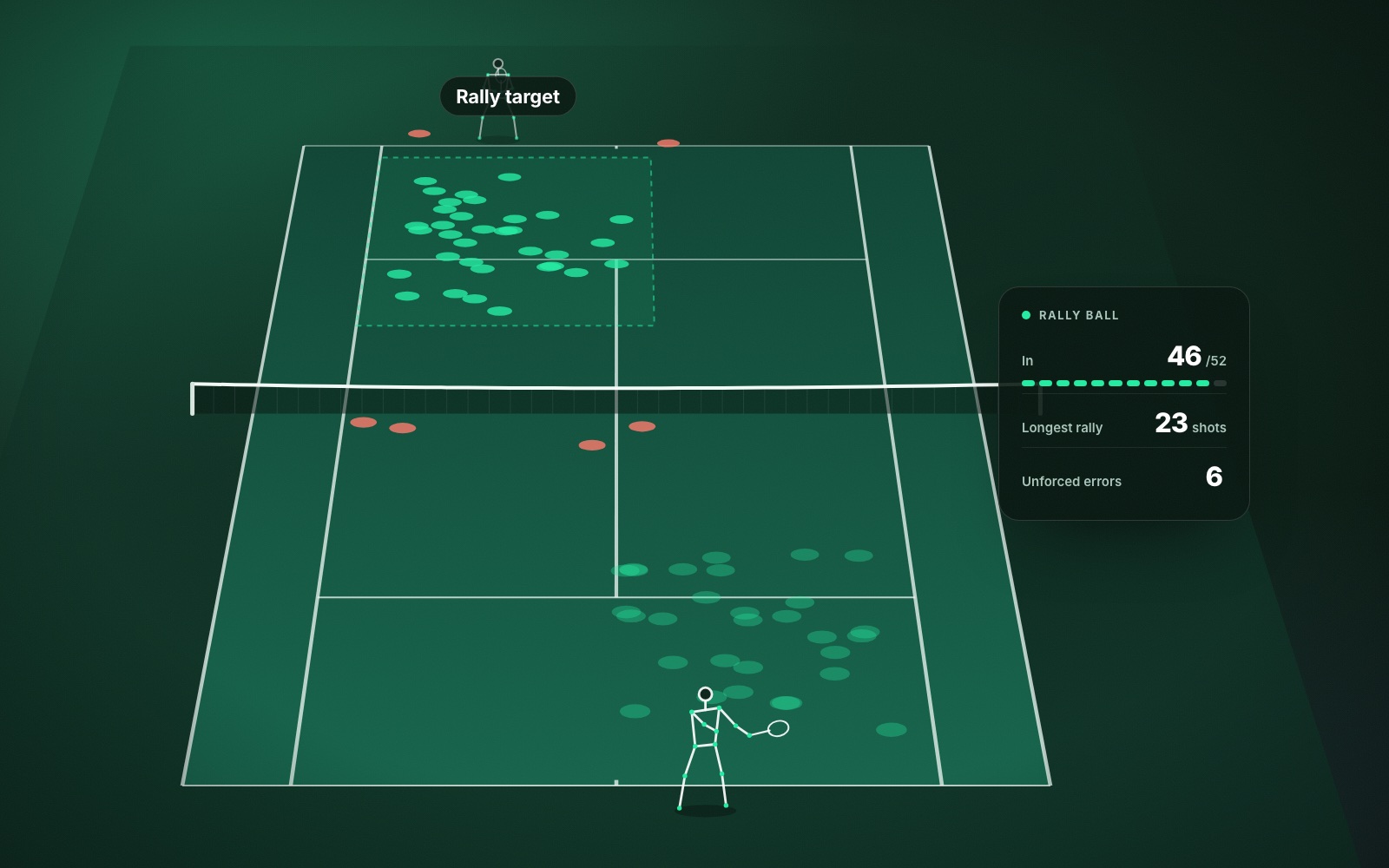
The numbers to watch: how many landed in across the twenty, and recovery. Compare balls one to ten with eleven to twenty in playback. If your shots fall apart in the second half, your feet stopped adjusting when you got tired. On Pro, check whether the footwork score drops over the same stretch.
4. On the line
Play practice points with one rule: after every shot you must recover to on or just behind the baseline, not two metres back. Many club players drift backwards through a rally and end up defending from the fence.
The number to watch: where you stood. Over a few sessions your position should shift forwards. You will take the ball earlier and give your opponent less time, without hitting any harder.
Footwork away from the court
Skipping, side shuffles and shadow swings with a split step all help, and they need no court. Five minutes before you play is a sensible warm-up as well. They build the patterns. Linking those patterns to a live ball still has to happen on court, which is why the drills above come first.
How to re-measure and how long it takes
Record a match or rally session every two weeks. In ContactFrame’s Trends, watch readiness and recovery across sessions. Check them in the final games of a match as well as the opening ones, using playback, because that is where habits slip.
Readiness can improve in a single session once you are thinking about it. Making it automatic takes longer. Six to eight weeks is a fair expectation before it holds when you are tired and the score is tight. As it does, your stroke numbers usually improve with it, because you are hitting more balls on balance. That shows up in your consistency and on the return of serve, where the split step matters most of all.
What the video cannot tell you
ContactFrame measures where you were and when you were ready. It does not judge anticipation: reading your opponent’s body and racket to guess where the ball is going before it is hit. That comes from experience and from a coach pointing out what to look for.
It also knows nothing about your fitness, your shoes or your joints, and it does not give live coaching during play. If you are slow because something hurts, see a physiotherapist or doctor, not a drill. And if your movement numbers are good but you are still late to the ball, a coach can look at your first step and your stance in person.
ContactFrame’s movement measures come with every recorded session. See how The Lab works.
Common questions
How can I improve my footwork in tennis?
Build two habits: a small split step timed to your opponent’s contact, and an immediate recovery towards the middle after every shot you hit. Add small adjusting steps before contact. Practise them in simple drills before expecting them in matches.
What is a split step in tennis?
It is a small hop you make as your opponent strikes the ball, landing on the balls of your feet with your knees bent. It leaves you balanced and ready to push off in either direction once you see where the ball is going.
Why am I always late to the ball?
Usually because you start moving late, not because you are slow. Watching your own shot instead of recovering, and standing flat-footed when your opponent hits, both cost you the first step. That first step matters more than raw speed.
Can I practise tennis footwork at home?
Yes. Shadow swings with a split step, side shuffles, and skipping all help, and they need very little space. They build the patterns, but you still need time on court to link them to a moving ball.
Can AI measure my movement on a tennis court?
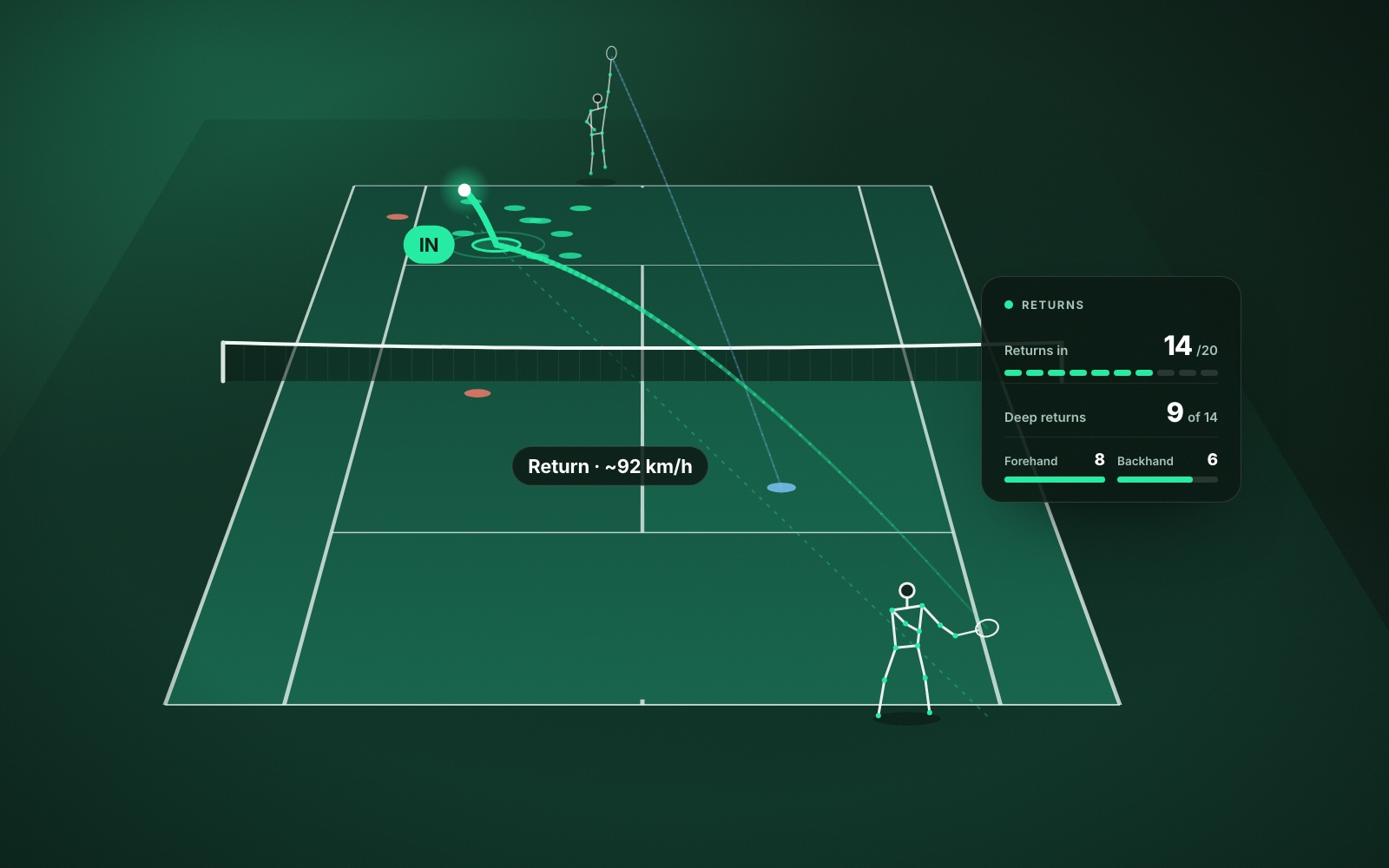
ContactFrame measures how far you moved, where you stood, how well you recovered to the middle and how often you were ready when your opponent hit, all from one phone on a tripod. On the Pro plan, shot mechanics also include a footwork score.
See how you really move.
Readiness, recovery, distance and court position from a single phone behind the baseline.
See The Lab