The short version
- One player logs the result and the opponent confirms it. Only a confirmed result counts.
- A result nobody disputes is confirmed automatically after 24 hours, so a match is never left hanging.
- Agree the score at the net before you leave the court. Most disputes are honest mistakes of memory.
- If a logged result is wrong, dispute it inside the 24 hours and sort it out in the match chat.
- After a match you can privately rate your opponent, which feeds a Trust score on profiles.
You finish a good match, shake hands, and then nothing happens. Nobody writes the score down, or one of you does and the other remembers the second set differently a week later. If you have ever wondered how to record tennis match results so that they actually count for something, the answer is less about the app you use and more about getting two people to agree.
This guide covers how that works on ContactFrame: logging a result, opponent confirmation, the 24-hour rule, disputes and the Trust score. It also covers the habits on court that make all of it painless.
Why a tennis result needs two people
Any system that lets one player type in a score and have it stand is easy to abuse and easy to get wrong by accident. A ranking built on those scores is not worth much.
A system that needs a referee, on the other hand, does not suit local tennis. There is no umpire at a park court on a Sunday morning.
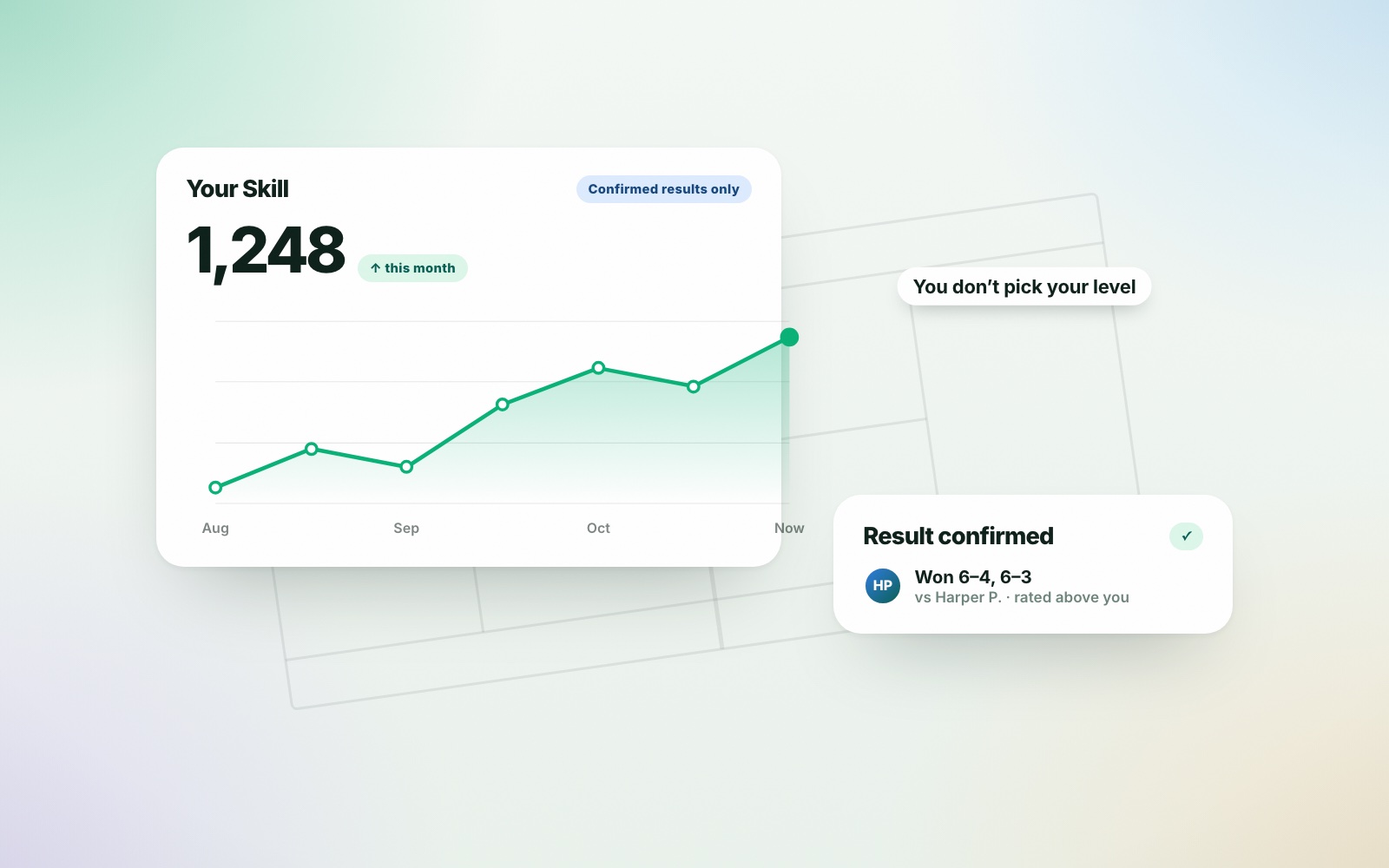
The middle path is the one tennis has always used informally. Both players were there, so both players vouch for the score. ContactFrame formalises that: one logs, the other confirms. A confirmed result is the only kind that moves your Skill rating, your rankings or a league table. The reasoning is covered in how the Skill rating works.
How to record tennis match results in ContactFrame
The process has three steps.
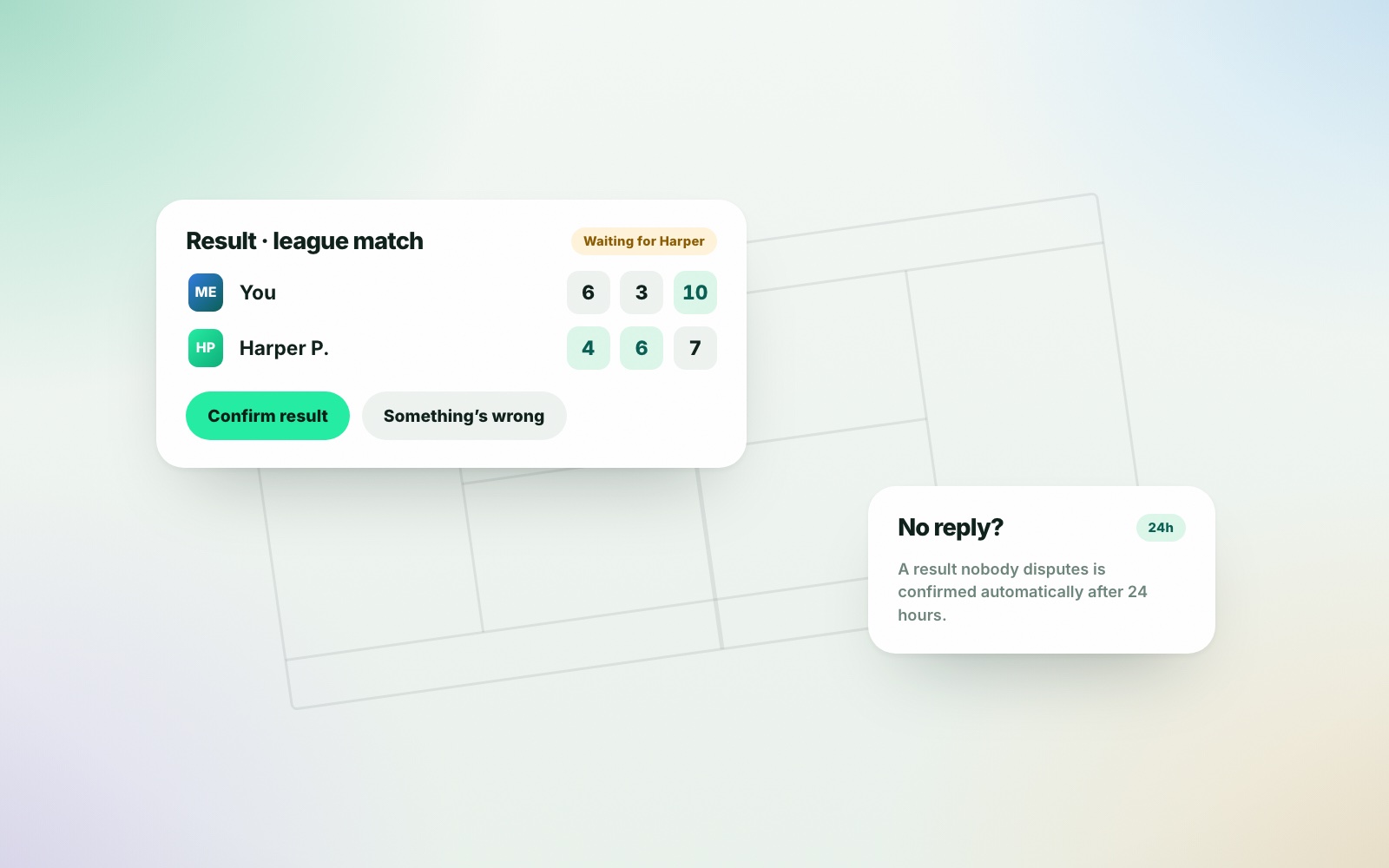
- One player logs the result. It does not matter which of you does it. Enter the score as it was played.
- The opponent is asked to confirm. They see what was logged and either confirm it or dispute it.
- The result is confirmed. From that point it counts.
For a league or tournament match, the result card also appears in the chat for that match and for the division, so everyone following the table or the draw can see it.
The best time to log a result is before you have left the court. You are both standing there, the score is fresh, and if there is any disagreement you can settle it face to face. A result logged on the bench is almost never disputed. A result logged three days later from memory sometimes is.
The 24-hour rule
Confirmation by both players has one obvious weakness. What if the other person simply does not respond? They might be busy. They might be sulking. They might have deleted their notifications.
ContactFrame’s answer is a time limit. A result that nobody disputes is confirmed automatically after 24 hours.
This matters more than it first appears.
- Nobody can block a result by ignoring it. A player who has lost cannot keep the loss off their record by staying silent.
- You do not have to chase. Once you have logged the result, your part is done.
- Leagues and tournaments keep moving. A table or a draw is not left waiting on one person.
The rule cuts the other way too. If your opponent logs the result, you have that same window to look at it. Check it properly. Once the 24 hours pass with no dispute, silence has counted as agreement.
What to do if a tennis result is disputed
Most disputes are not arguments about who won. They are slips: the sets entered the wrong way round, a tie-break score mistyped, the wrong player marked as the winner by a careless thumb.
If you see a result that is wrong, do two things.
Dispute it within the 24 hours. This stops it being confirmed automatically while the two of you sort it out.
Message your opponent straight away. Every match has its own chat. Say what you think the score was and ask them to check. Assume a mistake, not bad faith. Usually the reply is an apology and a correction.
Genuine disagreements are rarer, and they nearly always start on court, not in the app. Two players lose track of the score mid-set and each remembers it in their own favour. Prevention is much easier than cure:
- The server calls the score before every point, loudly enough to be heard.
- Agree the format before the first ball: how many sets, and what happens at one set all.
- If you lose track, go back to the last score you both agree on and play from there.
- Change ends at the right times. It is a natural checkpoint for the game score.
These are standard practice in unofficiated tennis, and there is more in etiquette for local matches.
Can video settle a dispute?
If you filmed the match in The Lab, you have something useful: a recording you can watch back, with a draft match score that you can correct. That is a good memory aid when two players honestly cannot recall whether it was 5-4 or 4-5.
Be clear about its limits, though. ContactFrame’s in and out calls are for coaching and review, not official line calling, and a draft score is a draft. Video can help two reasonable people remember what happened. It does not overrule the agreement between them, and it is not a way to reopen a line call from the second game. For more on what the calls are for, see AI line calling explained, and for filming in the first place, how to record a match on your phone.
Trust: the other thing you record
A score tells you who won. It says nothing about whether the match was a pleasure.
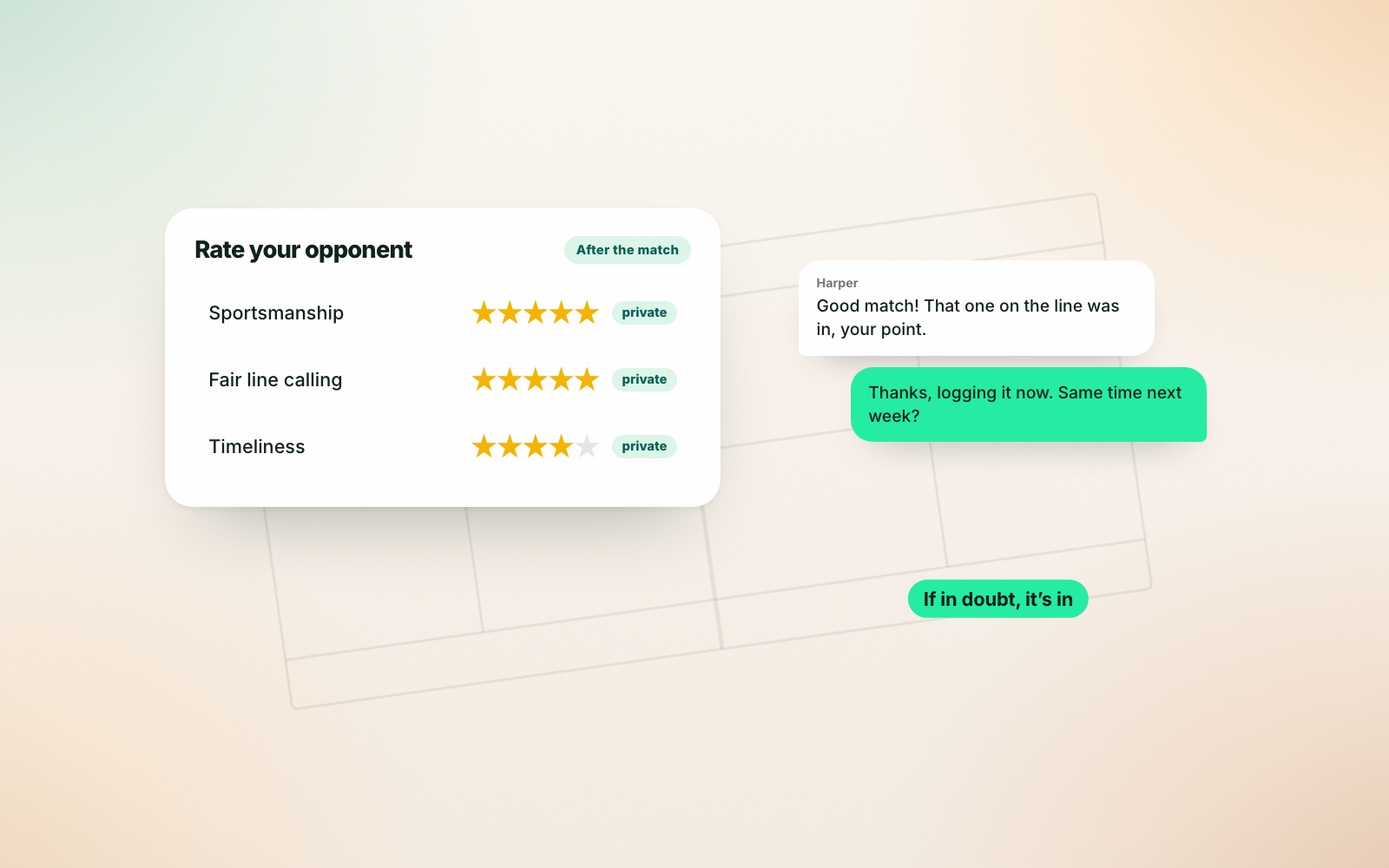
After a match on ContactFrame you can rate your opponent privately on three things:
- Sportsmanship. How they behaved, in winning and in losing.
- Fair line calling. Whether close balls on their side were called honestly.
- Timeliness. Whether they turned up when they said they would.
Those ratings feed a Trust score that appears on profiles. Your individual rating of an opponent stays private, so you can be honest without it becoming personal.
Trust is separate from Skill. A strong player who makes poor calls and arrives twenty minutes late has a high rating and may not have many people keen to play them twice. When you are choosing who to join for a friendly, both numbers are worth a look. If you are setting one up yourself, how to arrange a friendly explains how posting a match works.
The simplest way to look after your own Trust score is to do the unglamorous things well. Turn up on time. Give your opponent the benefit of the doubt on close balls. Log or confirm the result promptly.
A short routine for every match
- Agree the format before you start.
- Call the score before each point.
- At the handshake, say the final score out loud and agree who will log it.
- Log it before you leave, or confirm it as soon as the request arrives.
- If something is wrong, dispute it inside 24 hours and message your opponent.
- Rate the match honestly.
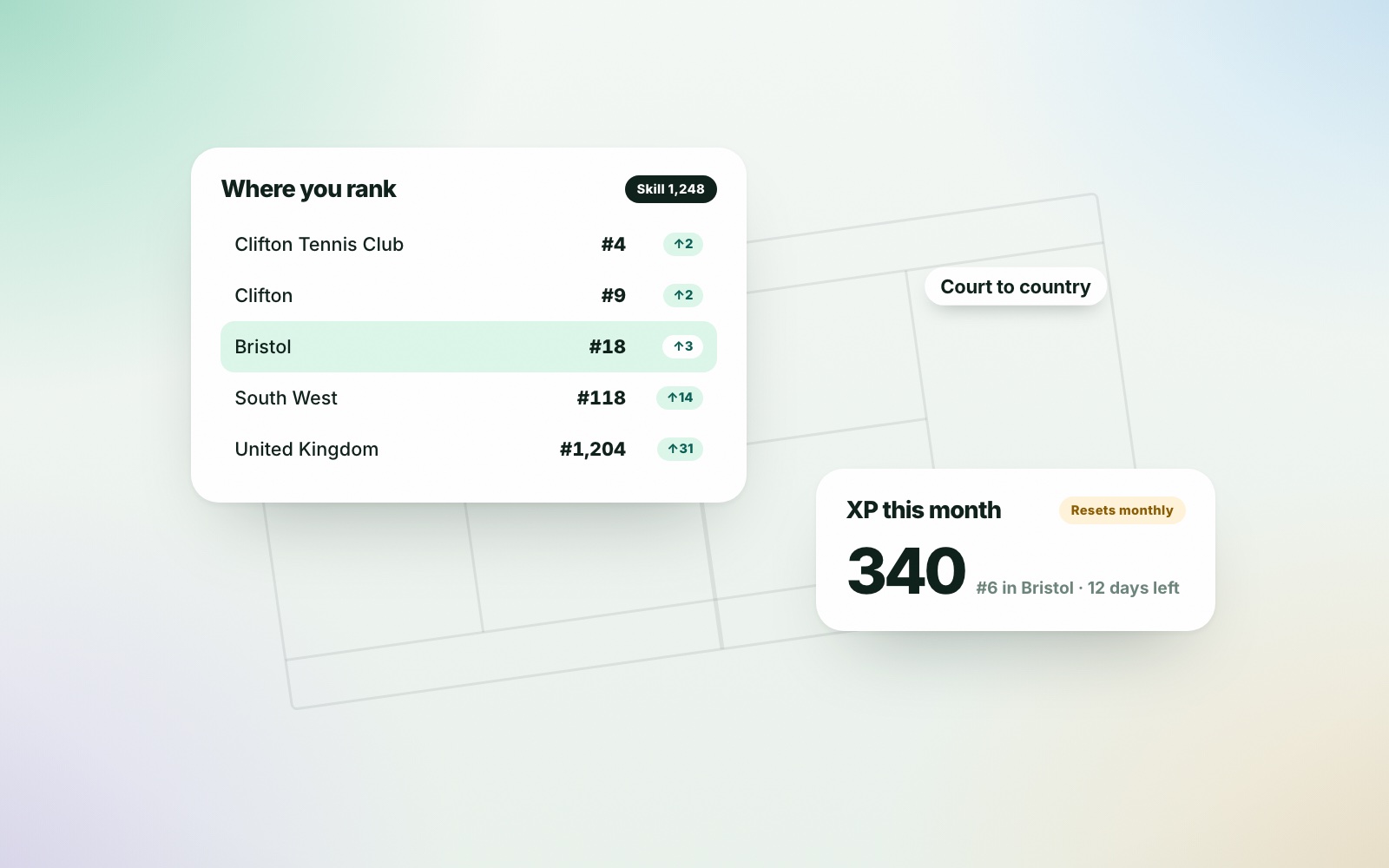
Do that and every match you play ends up on your record, counted once, with both players behind it. That is what makes a local ladder worth climbing. You can read more about it on the Ladder page.
Common questions
How do I record a tennis match result on ContactFrame?
After the match, one of the two players logs the result in the app. The opponent is then asked to confirm it, and once confirmed it counts towards Skill, rankings and any league or tournament the match belongs to.
What happens if my opponent does not confirm the result?
A logged result that nobody disputes is confirmed automatically after 24 hours. You do not need to chase anyone, and a match cannot be held up by a player who has stopped checking their phone.
What should I do if my opponent logs the wrong score?
Dispute it within the 24 hours, before it is confirmed automatically. Then message your opponent in the match chat, since most wrong scores are simple slips that are fixed in a minute.
Who should log the result, the winner or the loser?
Either player can. The simplest habit is to agree at the net who will log it, and for that person to do it before leaving the court.
What is the Trust score on ContactFrame?
After a match you can rate your opponent privately on sportsmanship, fair line calling and timeliness. Those ratings feed a Trust score shown on profiles, so players can see who is good to play against.
Results both players stand behind.
Join the UK ladder and build a Skill rating from confirmed matches.
Explore the ladder