The short version
- The serve is the one shot you never need a partner for, and the one most players under-practise.
- Solo practice lacks feedback. A filmed session supplies it: serves in, speed and landing spot.
- Self-fed balls are good for swing shape, spin and aim, less so for timing a moving ball.
- A wall is still worth using for rhythm, though a court recording will not measure it.
- Keep solo sessions short and structured: 30 to 45 minutes with counted blocks.
The message arrives an hour before you are due on court: sorry, can’t make it. The court is booked and your bag is by the door. Most players stay at home. The ones who know how to practise tennis alone go anyway, and often get more from that hour than from the hit they had planned.
Solo practice has one weakness. Nobody is there to tell you how it went. No opponent punishes the weak serve, and nobody says “that was long”. You hit a basket of balls, collect them and leave with a vague impression.
Why practising tennis alone needs a scorekeeper
With a partner, the rally itself is feedback. If your ball is short, it comes back hard. Alone, a serve that drops into the box and a serve that hits your target look alike from where you stand, and after forty of them you have lost count of both.
So people drift. They hit first serves flat out because it is fun, skip second serves because it is dull, and stop when the basket is empty and not when the job is done. A phone on a tripod changes that. It counts, it marks where each ball landed, and it gives the session a result.
What to film when you’re on court alone
Set the phone on a tripod two to three metres behind your baseline, in landscape, at net height or higher, with the whole court in view. Keep it still and do not point it into the sun. In ContactFrame you line up the four corners of the court before you start. Stay at the end nearest the camera if you are on the Pro plan, since shot mechanics covers the player nearest the camera.
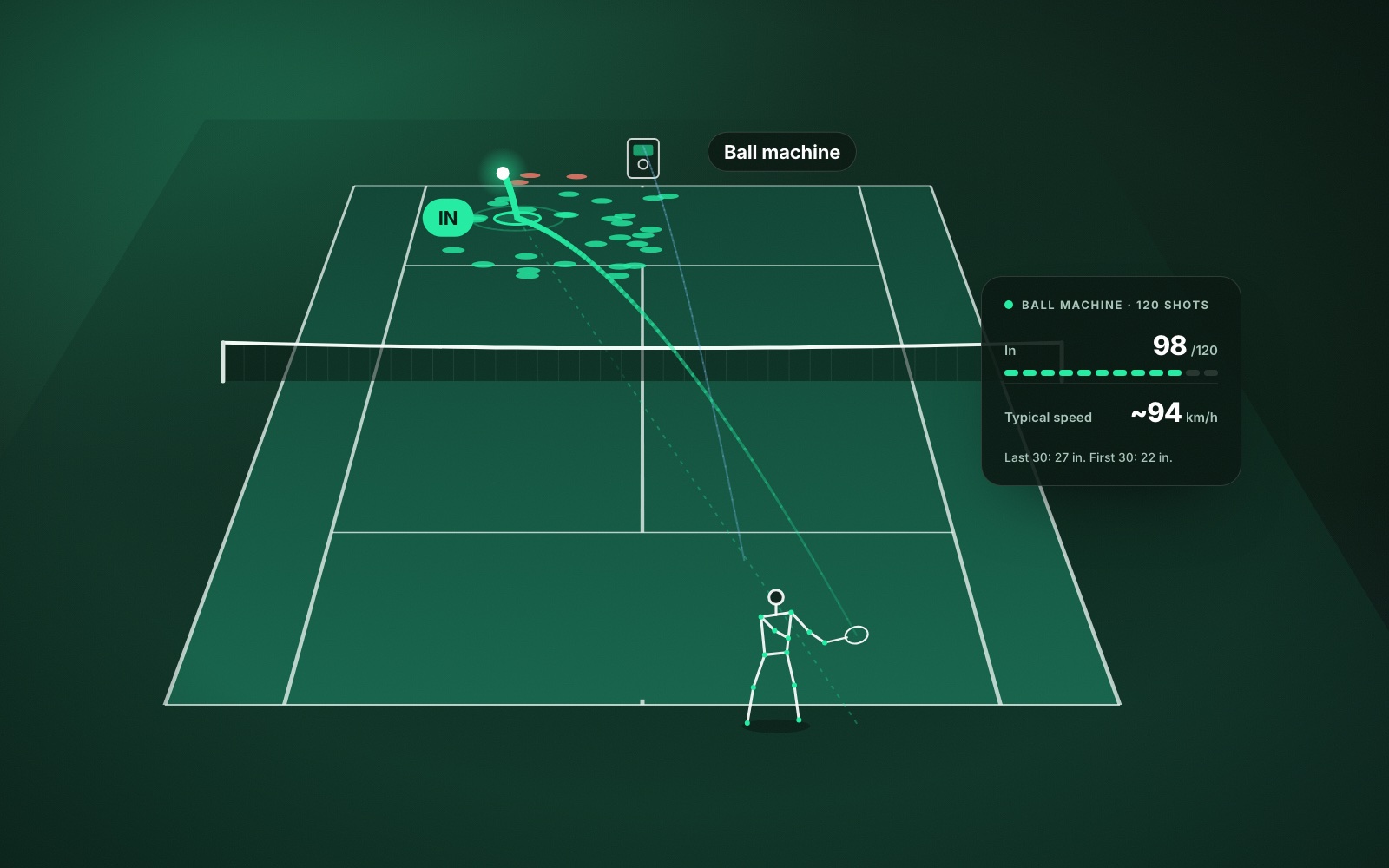
Record serves and self-fed balls as a Practice session, and use the Ball machine type if you have a machine. Choose a focus to suit the day: Placement for serve targets, Topspin or Depth for self-fed groundstrokes.
Which numbers matter in solo tennis practice
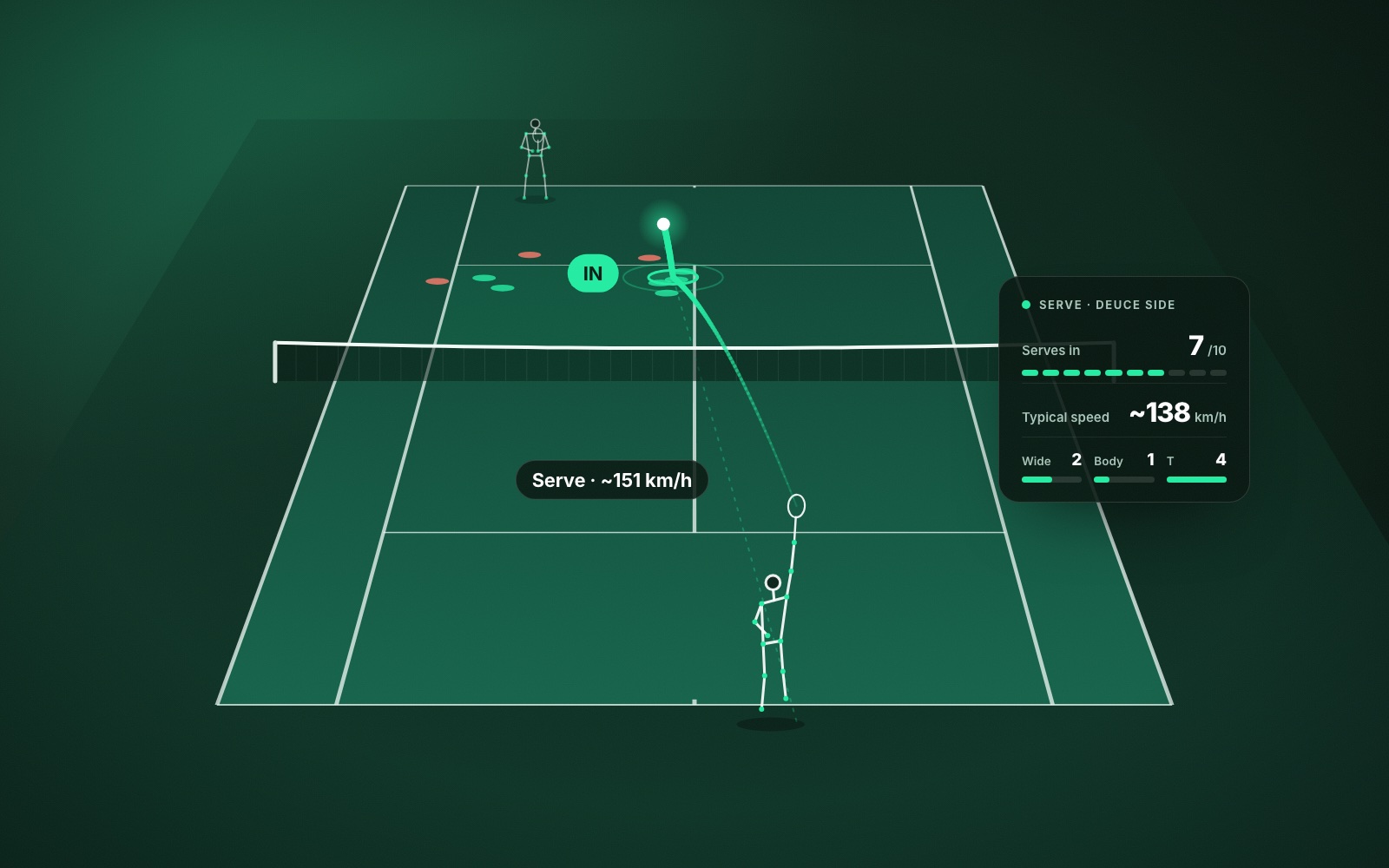
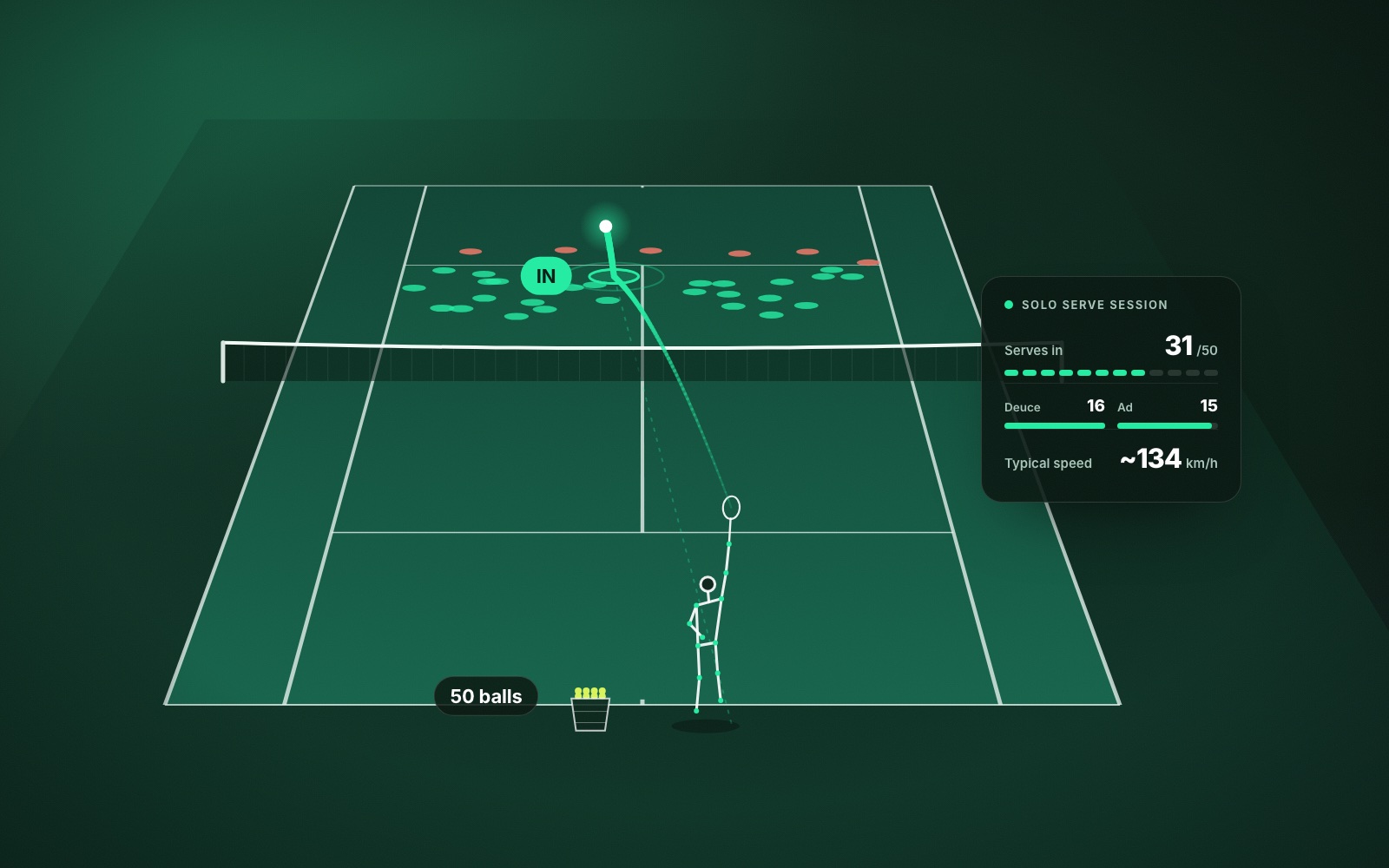
- Serves in. The basic count, out of however many you hit.
- Serve speed. Read it beside serves in. Faster and fewer in is not progress.
- Where serves landed. Wide, body or T, on the deuce and ad sides.
- Spin and speed on groundstrokes. With a self-fed ball, you supply all the pace and spin yourself, so these are a clear reading of your swing.
- The shot placement map and in / out calls. Where your self-fed balls bounced, and how many stayed in.
With shot mechanics on the Pro plan, a solo session is also a good time to look at the stick-figure replay of each contact and your Next fix, because you can repeat the same swing with no distractions.
Four ways to practise tennis alone
1. The target ladder
Hit ten serves to each target in turn: deuce wide, deuce body, deuce T, then the same three on the ad side. Sixty serves in all. Name the target before every one. Take the same time between serves as you would in a match, and do not rush through the basket.
The number to watch: serves in, and where they landed against where you aimed. You will probably find one or two targets you own and several you only visit. Next time, start with the worst. How to improve your serve goes into the detail.
2. First serve, second serve
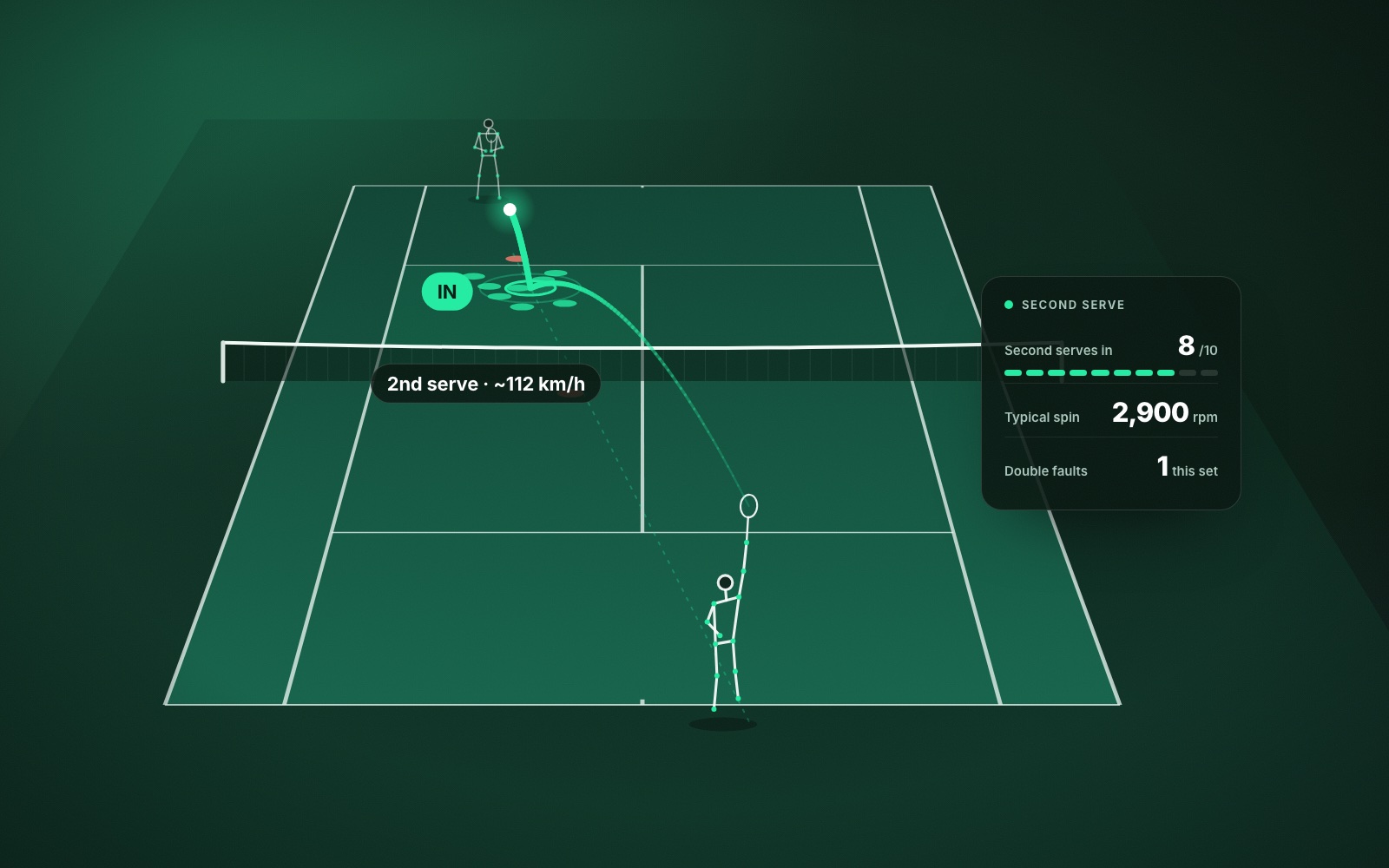
Serve in pairs, as in a match. If the first serve goes in, move to the next pair. If it misses, you must make the second. Play twenty pairs and count double faults. This puts a little pressure on the second serve, which is the thing solo practice usually lacks.
The number to watch: second serves in, and second serve speed and spin. You want a second serve that lands almost every time with enough shape that it is not a gift. See how to improve your second serve.
3. Drop-feed to a target
Stand on the baseline, drop a ball in front of your hitting side, let it bounce and hit it cross-court to a marked area. Do fifteen forehands, then fifteen backhands. Because the ball is nearly still, you can attend to one thing: a full turn, a low-to-high swing, a balanced finish.
The number to watch: spin in rpm and where the balls bounced. If you are working on topspin, the spin figure should rise while the bounces stay deep and in. ContactFrame shows spin only when the reading is solid, so look at the block as a whole. More in how to hit more topspin.
4. Serve, then move
After each serve, split step, take two quick steps to where a return might come and shadow a forehand or backhand. It turns a static serving session into something closer to a point and stops the habit of serving and standing still.
The number to watch: serves in for this block against the target ladder. If the count falls when you add movement, you are rushing the serve to get to the next part. Slow down and finish the service action first.
How to re-measure, and what to expect
Repeat the target ladder at the start of every solo session and compare the results in Trends. Serving responds well to regular short practice. Two sessions of thirty to forty-five minutes a week will usually show more serves in within three or four weeks. Speed comes later and should not be chased at the cost of the count.
Stop when your shoulder is tired. A hundred or so serves is plenty for most club players in one go, and fewer if you are not used to it. Anything that hurts is a reason to stop for the day.
What solo practice and video can’t give you
A self-fed ball teaches you nothing about timing a ball that is coming at you with pace and spin. Serving to an empty court does not show whether a returner would find your serve easy. Those need another person, so book the next hit as well. If partners are the problem, how to find tennis partners near you may help, and in the UK you can post a friendly on The Ladder.
On the analysis side, ContactFrame does not look at your ball toss, your grip or the angle of the racket face. Those are common roots of serving trouble. If your count will not move after a month of honest practice, a single lesson on the serve is money well spent. Take the recording with you.
Common questions
Can you practise tennis by yourself?
Yes. You can practise serves, self-fed groundstrokes, footwork patterns and, if you have access to one, ball machine drills without a partner. What you cannot practise alone is reading and reacting to a live opponent, so mix solo sessions with rallies and matches.
What is the best way to practise serving alone?
Use a basket of balls, pick a target for every serve and count how many land in out of a fixed number. Practise second serves at least as much as first serves. Filming the session gives you serve speed and landing spots as well as the count.
Is hitting against a wall good tennis practice?
It is good for rhythm, early preparation and volleys, because the ball comes back quickly and often. It does not show you where your shot would have landed on a court. Treat it as a useful warm-up and do your measured practice on a court.
How do I practise groundstrokes without a partner?
Drop the ball in front of you, let it bounce and hit it to a target. It is slower than a rally but lets you concentrate on swing shape and spin. A ball machine is the next step if you want a moving ball.
Can an app analyse my tennis when I practise alone?
Yes, on a court. ContactFrame measures serves and groundstrokes from one phone on a tripod, including speed, spin, where each ball bounced and whether it was in. It needs the court in view, so it is not meant for wall hitting.