The short version
- A dedicated radar such as Pocket Radar is built for one job, measuring speed, and does it without a tripod or setup.
- A tennis serve speed app that works from video can also show where each serve landed, first and second serves in, and spin.
- ContactFrame is our pick for most club players: serve speed plus placement on both sides, with no gadget. It is not out yet, so join the list.
- Pocket Radar Smart Coach is US$399.99 and Ball Coach US$299.99 on Pocket Radar’s own site (November 2026).
- Whichever tool you use, compare your serve with your own earlier readings on the same tool.
You want to know how fast you serve, and you are weighing up a tennis serve speed app against a radar gun. Both can give you a number. The question is what else you want to know, and what you are willing to carry to the court.
A disclosure before the list: we make ContactFrame, so weigh our pick accordingly. Everything we say about the other products comes from their own websites and app store pages, checked in November 2026. Prices change, and US prices may not match what you pay in the UK.
Radar gun or serve speed app: the real difference
A radar gun measures how fast the ball is travelling and shows you a number. That is all it does, and it does it with very little fuss. Point, serve, read. Some radars, like Pocket Radar’s Smart Coach, pair with an app that records video with the speed on it.
A video app works from a phone on a tripod behind the baseline. It measures speed from the footage, and because it sees the whole court it can also show where each serve landed, whether it went in, and which were first and second serves. Our guide on what counts as a good tennis serve speed explains why that matters: for most club players, a serve that lands in and goes where you meant it to wins more points than a few extra km/h.
The honest summary: a radar is purpose-built for speed. A video app trades a little setup for a lot more context.
How we judged the Pocket Radar alternatives
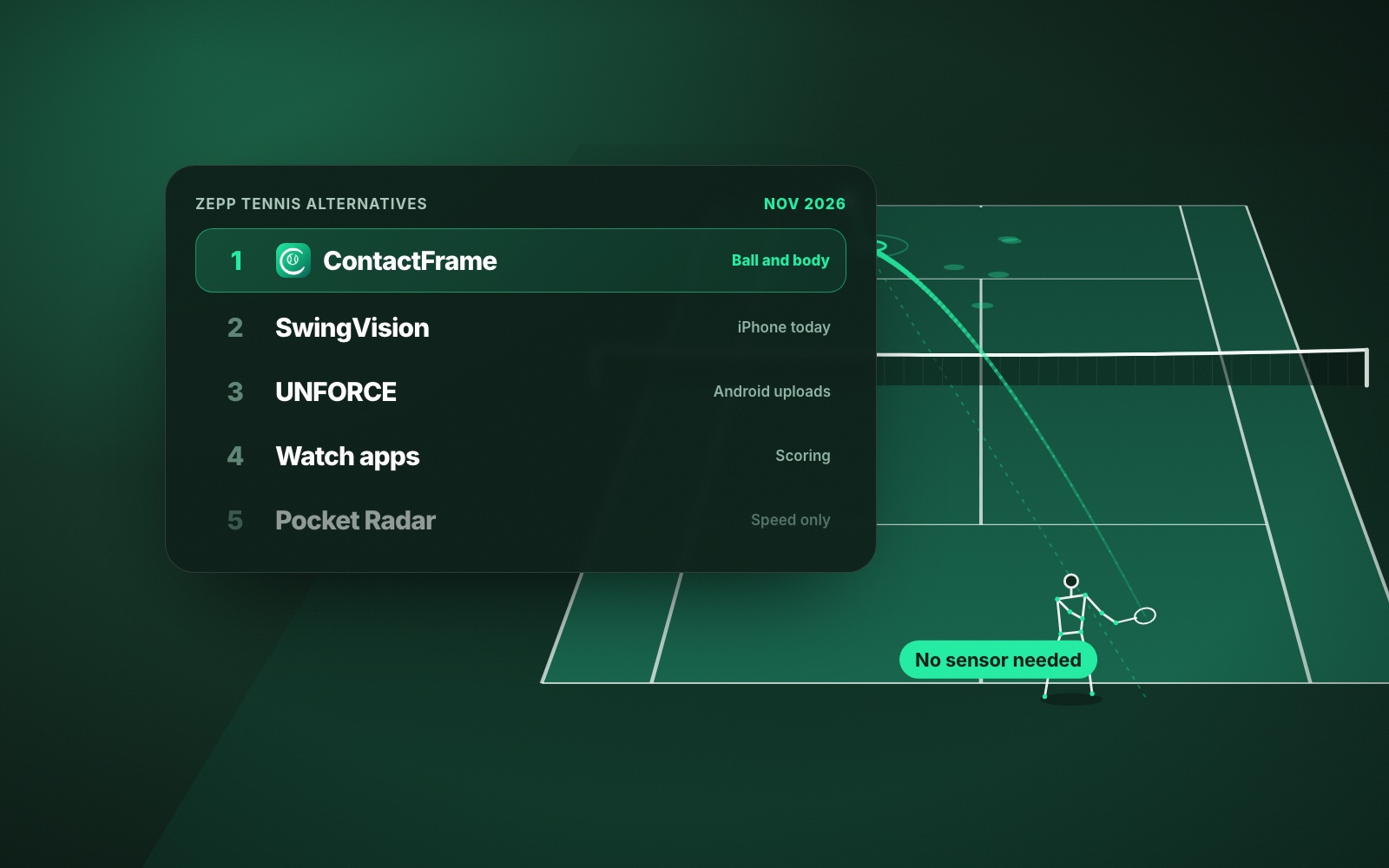
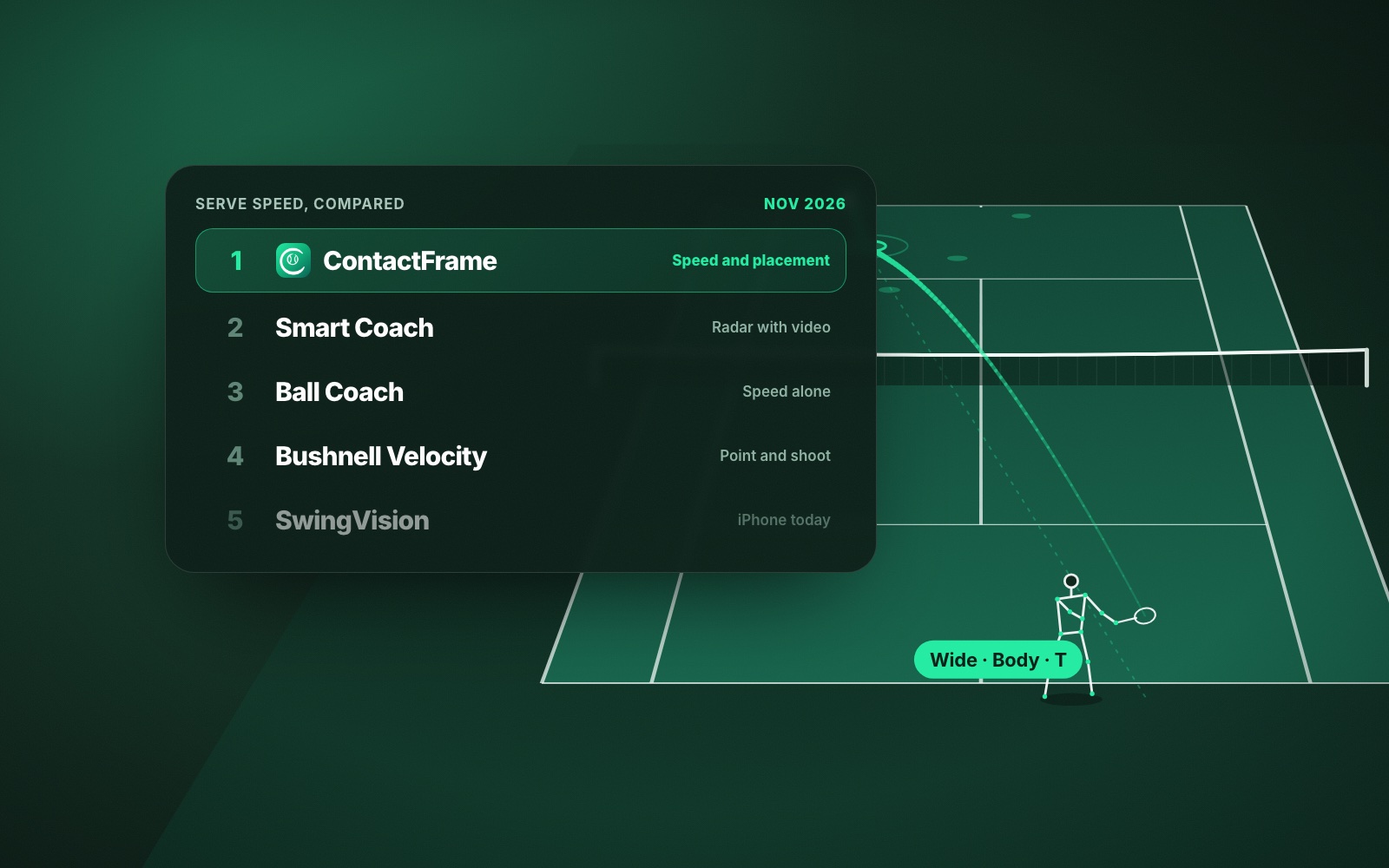
We compared what you need to buy, what each option measures, price (with the storefront named), which phones it works with and whether it is still sold. The shortlist:
- ContactFrame: best overall for club players who want serve speed with placement
- Pocket Radar Smart Coach: best dedicated radar with video
- Pocket Radar Ball Coach: best for speed alone, without the app system
- Bushnell Velocity Speed Gun: best for a simple point-and-shoot reading
- SwingVision: best for iPhone owners who want a video app now
1. ContactFrame: best serve speed app for club players
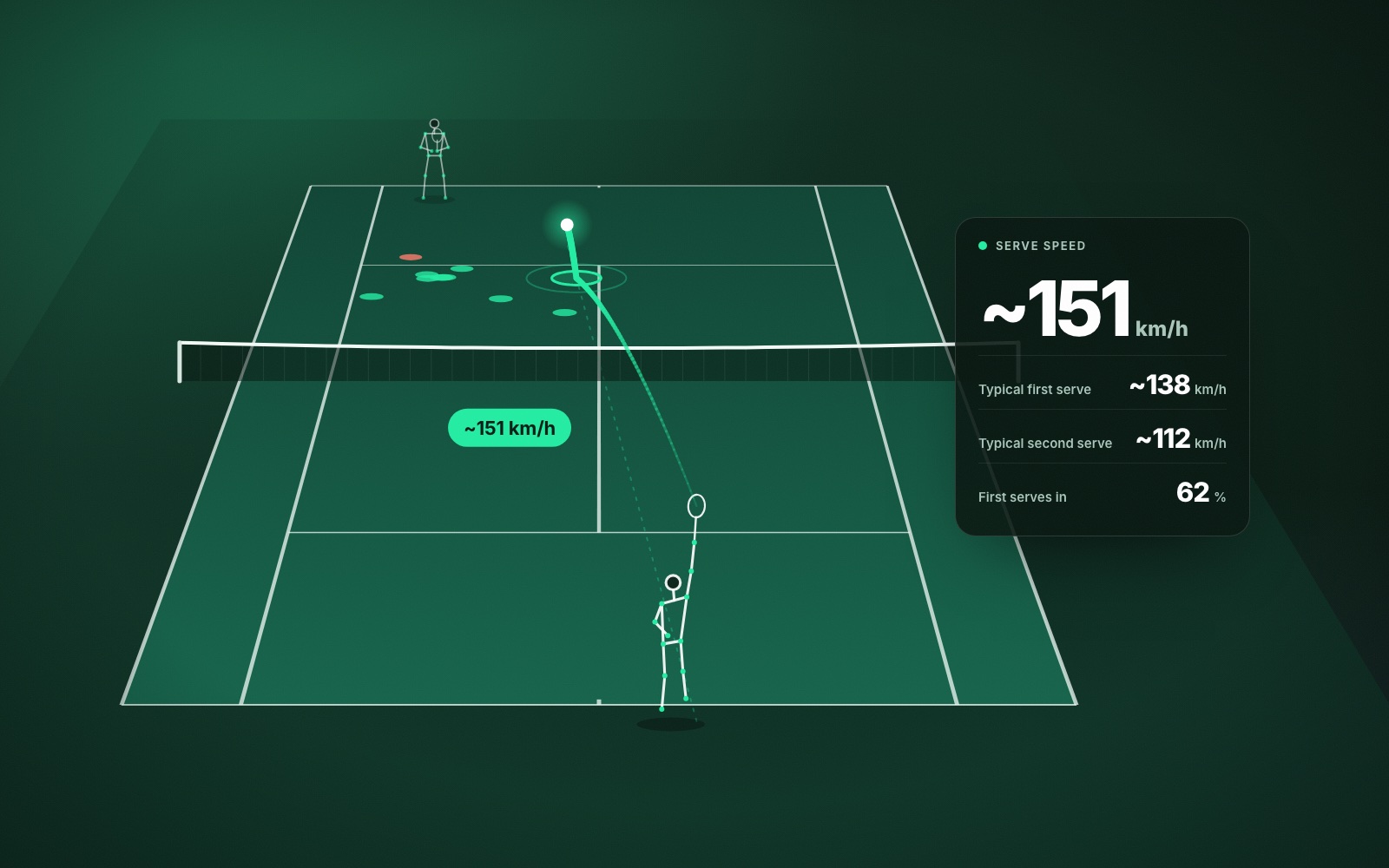
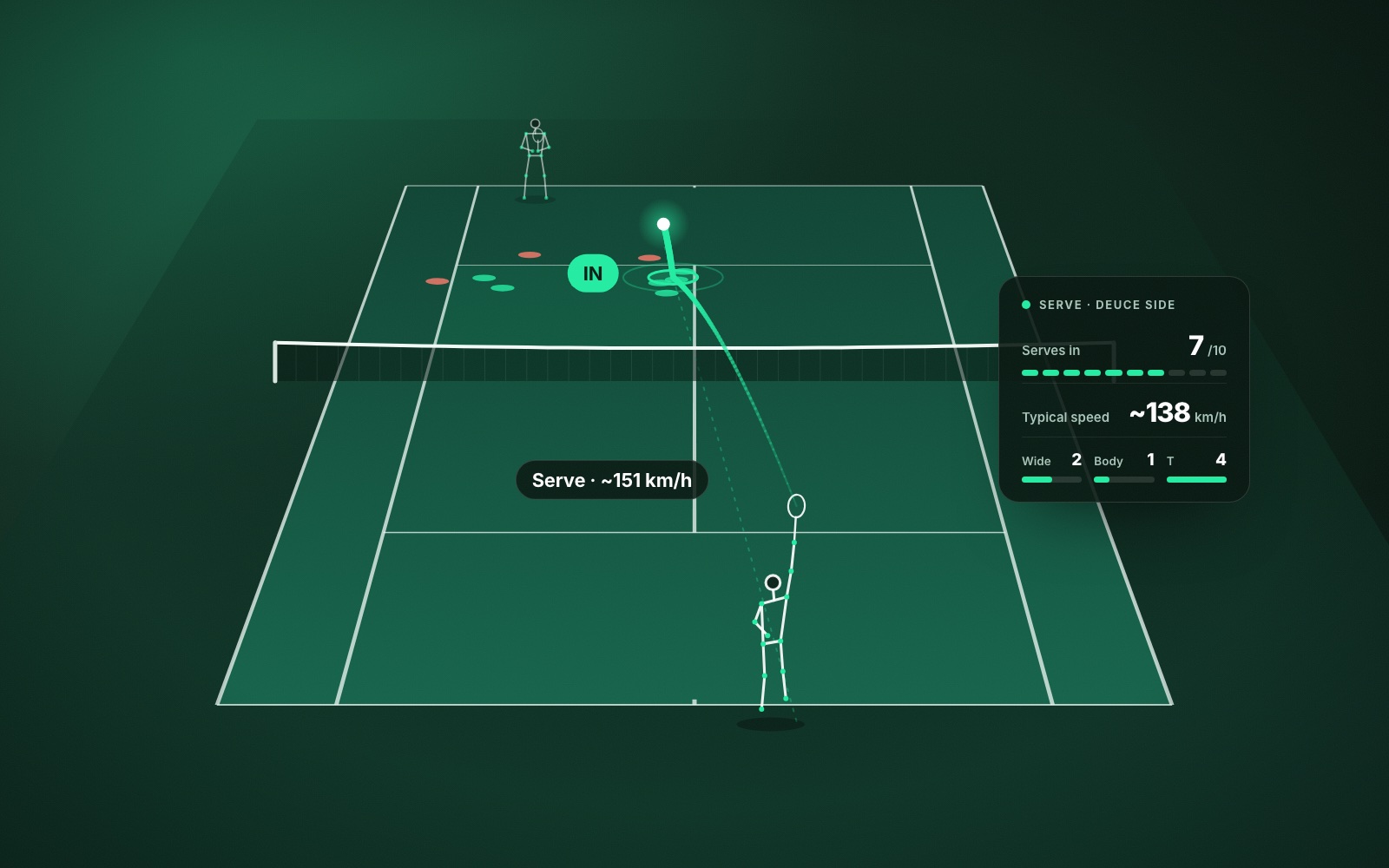
ContactFrame measures serve speed from video filmed on one phone, with no radar or sensor. Alongside the speed, it shows how many serves went in, first and second serves in a match, and where each serve landed on the deuce and ad sides: wide, body or T. It also measures spin, in rpm with topspin or slice, when the reading is solid.
Speed is one number among many. You also get a shot quality score out of 100 for each serve, slow-motion playback with the ball track and bounce marks drawn on the video, and trends session after session, so you can see whether a change to your serve held up. On Pro, shot mechanics adds body tracking through the swing and one Next fix with a drill.
Two honest caveats. ContactFrame does not show a number it is unsure of, so a serve speed it cannot read cleanly is marked approximate or left out. A radar is built to read speed and nothing else. And it is not out yet: ContactFrame is launching on iOS and Android, with a waitlist.
- Needs: a phone and a tripod.
- Platforms: iOS and Android at launch.
- Price (Nov 2026): Free £0 with 15 minutes of recording a month, including speed, spin, placement and in/out; Basic £9.99 a month, unlimited recording; Pro £17.99 a month with shot mechanics.
- Good at: speed with placement, serves in and spin in one place; no gadget to buy.
- Watch out for: needs setup, small free tier, not official line calling, and it will leave out a speed rather than guess.
2. Pocket Radar Smart Coach: best dedicated radar with video
The Smart Coach (model SR1100) is a handheld radar that measures ball speed, including tennis serves, and pairs with the Pocket Radar app, which records video with the speed embedded. If speed is the only number you want and you want it every single serve, this is the specialist tool. See pocketradar.com.
- Needs: the radar (it runs on two AAA batteries), plus a phone or tablet for the app features.
- Price (Pocket Radar’s US site, Nov 2026): US$399.99. We could not confirm the price of the app subscription.
- Good at: purpose-built for speed, quick to use, speed burned into the video.
- Watch out for: speed only: no placement, spin or in/out. It is another device to buy and carry.
3. Pocket Radar Ball Coach: best for speed without extras
The Ball Coach is Pocket Radar’s handheld ball-speed radar without the Smart Coach app system. It suits a player or coach who just wants the number.
- Needs: the radar.
- Price (Pocket Radar’s US site, Nov 2026): US$299.99.
- Good at: simple, dedicated speed readings.
- Watch out for: speed only.
4. Bushnell Velocity Speed Gun: best point-and-shoot radar
The Bushnell Velocity is a classic radar gun. Bushnell rates it for tennis at 10 to 110 mph (about 16 to 177 km/h), and it shows the top speed when you release the trigger.
- Needs: the gun, and someone to hold it.
- Price: we saw different prices on Bushnell’s own listings and at retailers, so we could not confirm a current price. Check before you buy.
- Good at: no app, no phone, no setup.
- Watch out for: tops out at 110 mph, and has no app, video or placement.
5. SwingVision: best for iPhone owners who want video now
SwingVision films from an iPhone or iPad and tracks shots, ball speed, placement, line calls and the score. If you want a video-based serve speed app this week and you use Apple devices, it is the established choice.
- Needs: an iPhone 11 or newer on iOS 18+, or an iPad on iPadOS 18+, and a mount.
- Platforms: Apple only. No Android app.
- Price (UK App Store, Nov 2026): free tier with 8 recording hours a month; Pro £24.99 a month or £179.99 a year.
- Good at: a free tier far bigger than ours, Apple Watch control. SwingVision says shot speeds are accurate to within 10% with an ideal setup at 60fps.
- Watch out for: Apple only. Its plan page lists shot stats and heatmaps for speed, depth and consistency; it does not list spin readings, movement or swing mechanics.
For a side-by-side, see SwingVision vs ContactFrame.
How to choose a tennis radar gun or serve speed app
- You only want the number, every serve: a dedicated radar.
- You want to know why your serve wins or loses points: a video app that adds placement and serves in.
- You coach several players on one court: a radar is quick to pass around; video gives each player a record to review.
- You want to work on technique too: video with body tracking.
Using serve speed to actually improve
Chasing a bigger number is tempting, but a faster first serve that lands in less often can cost you points. Watch speed and first serves in together, and check where the serves went. Our guides to improving your serve with AI and improving your second serve set out drills tied to those numbers.
Verdict
If speed is all you want, a dedicated radar such as the Pocket Radar Smart Coach is purpose-built for it, and we would not argue. For most club players, though, speed alone does not explain why a serve wins or loses the point. ContactFrame is our pick because it measures serve speed along with placement on both sides, serves in and spin, from one phone, with no gadget to buy. It is launching on iOS and Android, so join the list for The Lab. Need something this week? Use a radar or, on an iPhone, SwingVision meanwhile. If you came here from an old racket sensor, see Sony Smart Tennis Sensor alternatives and Babolat Play alternatives.
Common questions
Is there an app that measures tennis serve speed?
Yes. Video apps such as ContactFrame and SwingVision measure ball speed from footage filmed behind the baseline. ContactFrame also shows where each serve landed and how many first and second serves went in.
How much is a Pocket Radar for tennis?
Pocket Radar’s own comparison page listed the Smart Coach at US$399.99 and the Ball Coach at US$299.99 in November 2026. Prices can change, and UK prices may differ.
Does Pocket Radar work for tennis serves?
Yes. Pocket Radar sells its Smart Coach as a handheld radar for ball speed, including tennis serves, and it pairs with an app that records video with the speed shown on it. It measures speed only, not placement or spin.
Is a radar gun more accurate than a phone app for serve speed?
A radar is purpose-built for speed, and that is a real strength. We know of no published head-to-head tests between radars and video apps, so the safest habit is to track your own serve on one tool over time.
What is a good serve speed for a club player?
It varies a lot with age, level and the type of serve. Our guide to what counts as a good tennis serve speed gives rough ranges and explains why placement often matters more.
Speed, placement and spin. No gadget.
ContactFrame measures every serve from one phone. It is coming to iOS and Android.
See The Lab